9 Dark Cozy Bedroom Looks That Work in Real Homes
9 Dark Cozy Bedroom Looks That Work in Real Homes
After a long day, you flick the switch, and the bedroom still looks sterile, the white walls reflecting every stray beam. The glare makes it hard to unwind, and you start wondering if darker hues could actually feel more inviting.
Inside this list, you’ll find nine real‑world bedroom makeovers: matte charcoal paired with warm walnut, forest‑green velvet curtains, a monochromatic espresso scheme, navy with cognac leather, flat black with oatmeal linen, dusty plum with black accents, textured graphite clay, slate blue with mustard pops, and deep teal layered with sage.
Each entry breaks down paint choices, lighting temperature, texture tricks, and budget‑friendly sourcing tips, so whether you rent a studio or own a master suite, you can walk away with a concrete plan to curl up under softer, richer light tonight.
1. Matte Charcoal and Warm Walnut wood
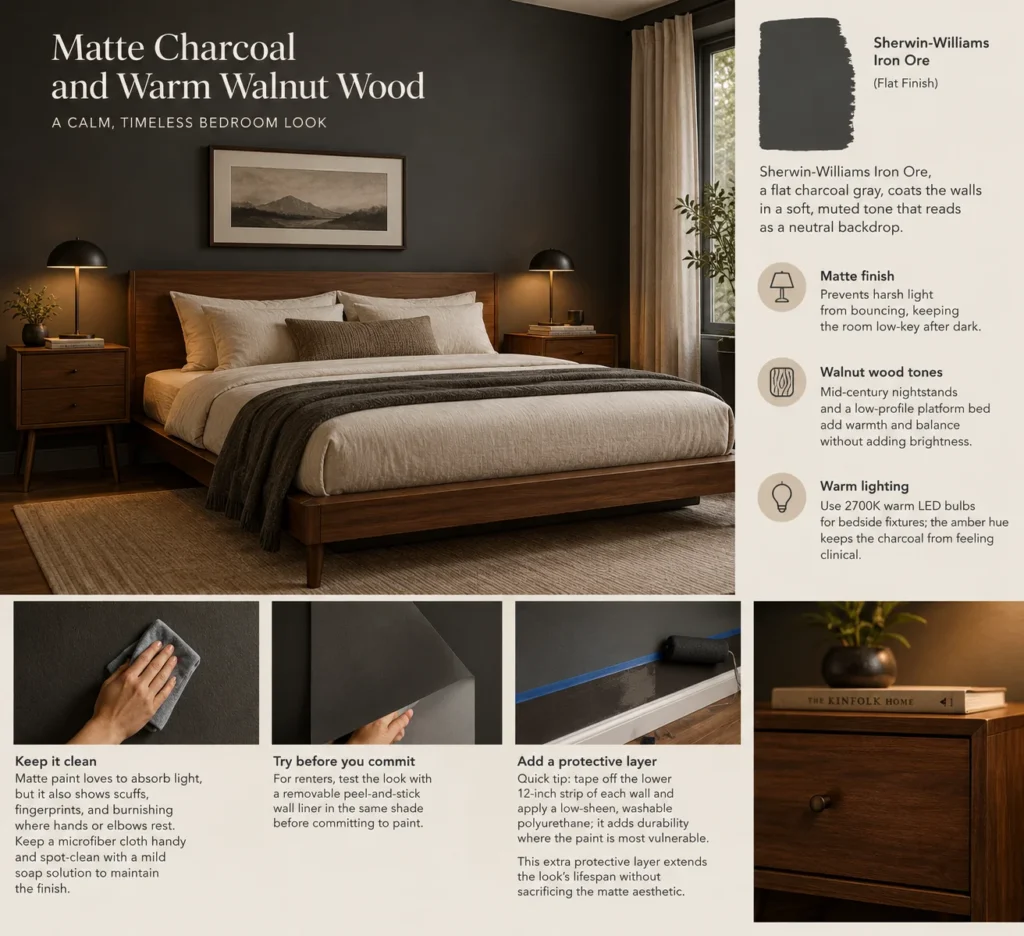
Sherwin‑Williams Iron Ore, a flat charcoal gray, coats the walls in a soft, muted tone that reads as a neutral backdrop.
The matte finish stops bedside lamps from bouncing harsh light, so the room stays low‑key after dark.
Pair the walls with mid‑century walnut nightstands and a low‑profile walnut platform bed; the warm wood tones lift the gray without adding brightness.
Choose 2700K warm LED bulbs for any bedside fixtures; the amber hue prevents the charcoal from feeling clinical.
Matte paint loves to absorb light, but it also shows scuffs, fingerprints, and burnishing where hands or elbows frequently rest.
Keep a microfiber cloth handy and spot‑clean with a mild soap solution to maintain the finish.
For renters, test the look with a removable peel‑and‑stick wall liner in the same shade before committing to paint.
Quick tip: tape off the lower 12‑inch strip of each wall and apply a low‑sheen, washable polyurethane; it adds durability where the paint is most vulnerable.
This extra protective layer extends the look’s lifespan without sacrificing the matte aesthetic.
2. Forest Green Velvet and Aged Brass
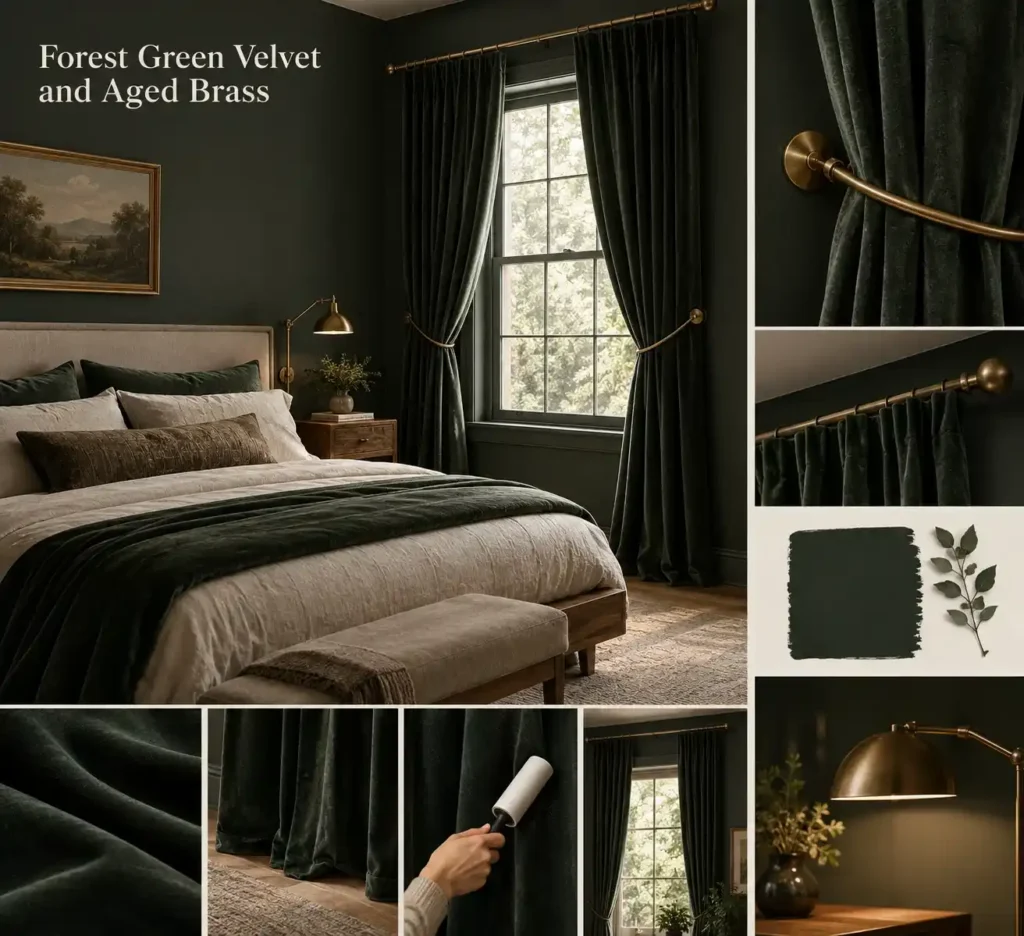
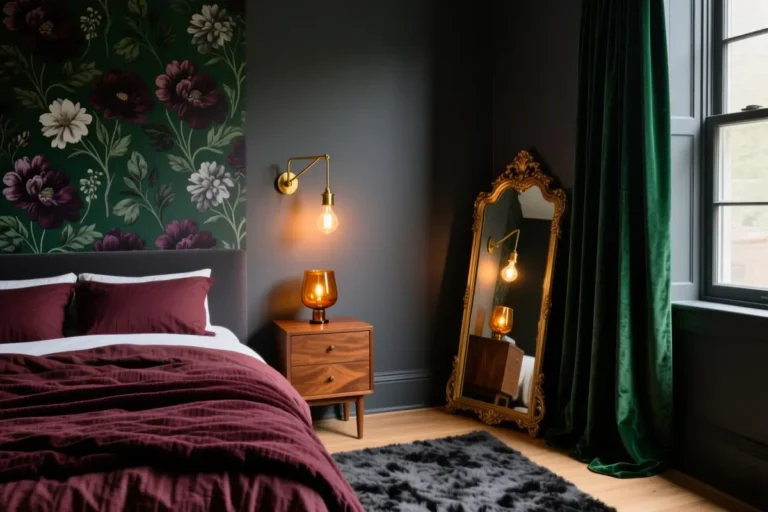
A floor‑to‑ceiling curtain in deep forest‑green velvet frames the window like a plush canopy, while aged‑brass tie‑backs catch the light and anchor the look.
The rich hue, such as Farrow & Ball Studio Green, absorbs sound, turning the bedroom into a quiet retreat.
Hang the rod four to six inches beyond the window jamb and mount it near the ceiling; the wide spread prevents the dark fabric from shrinking the window’s visual footprint.
Heavy velvet drapes feel luxurious, but they attract pet hair and dust, so set a schedule to vacuum the folds weekly and keep a lint roller handy for quick touch‑ups.
The fabric holds up best in rooms at least twelve feet wide; smaller spaces can feel cramped unless the rod is positioned high to draw the eye upward.
Pair the curtains with a brass‑finished lamp or a narrow picture rail above the headboard to echo the hardware and reinforce the cohesive, cozy vibe.
3. The Monochromatic Espresso ‘Color Drenched’ Look
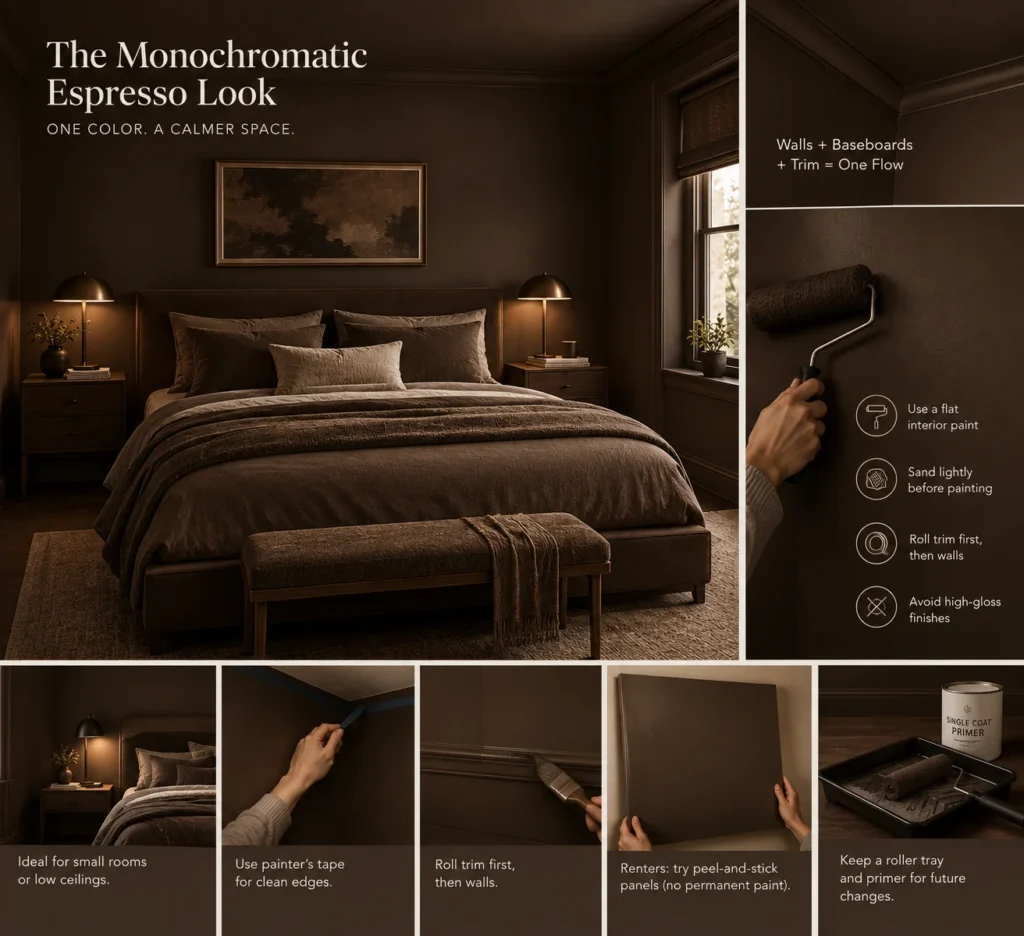
Painting the walls, baseboards, and trim the same flat espresso hue removes visual borders and lets a cramped bedroom feel like one continuous space.
The uniform dark chocolate tone pulls the eye inward, which is why it works in rooms under 150 sq ft or with low ceilings. It especially suits couples who enjoy a snug, intimate retreat.
Use a low‑sheen flat interior paint and sand each surface lightly before applying the first coat; this ensures the finish stays smooth and the color stays even.
A quick tip: tape the ceiling line with painter’s tape and roll the trim first, then the walls, to avoid lap marks.
The seamless effect disappears if you choose a high‑gloss trim paint, so stick to flat for all surfaces.
Renters should ask permission before committing, or consider removable peel‑and‑stick panels that mimic the color‑drenched look without permanent paint.
The downside is that swapping the color later becomes a massive, multi‑coat priming project. Keep a small roller tray and a single‑coat primer on hand for the next refresh.
4. Inky Navy and Cognac Leather
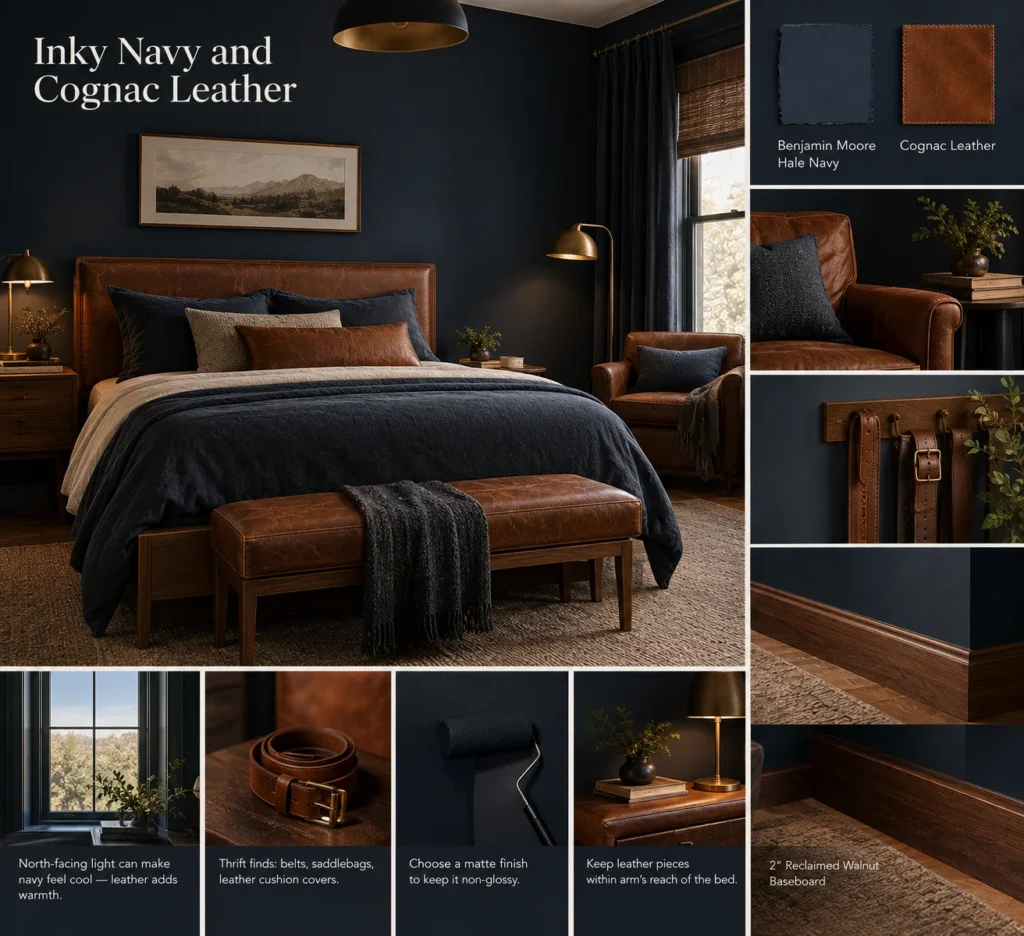
North-facing windows can turn a deep navy like Benjamin Moore Hale Navy into an icy gray that feels more clinical than cozy.
Pairing that hue with cognac leather breaks the chill. A worn leather armchair or a leather‑topped nightstand introduces rich amber tones that instantly soften the blue.
The contrast works because leather reflects warm light, while navy absorbs it, creating a balanced, inviting depth.
For a budget-friendly approach, hunt thrift stores for leather belts, vintage saddlebags, or cushion covers; a single belt can be stretched over a simple wooden frame to make a striking wall accent.
Quick tip: choose a matte paint finish to keep the navy from looking glossy under cool daylight.
When arranging the room, keep the leather pieces within arm’s reach of the bed so the warmth is felt first thing in the morning.
Install a 2‑inch reclaimed walnut baseboard strip to ground the navy walls and amplify the leather’s warmth.
5. Flat Black and Heavy Oatmeal Linen

Unlike matte charcoal that still reflects a hint of light, flat black paint absorbs every ray, turning walls into a true night‑sky backdrop.
Pair that backdrop with heavyweight oatmeal linen sheets; the rough weave catches stray light and softens the room’s edges.
The contrast between the light‑eating surface and the light‑catching fabric creates visual depth and a tactile warmth that feels adult, not teenage goth.
Before you commit, sand the drywall smooth, fill nail pops, and apply a high‑quality primer; any flaw will shout through the flat finish.
A single coat of a dust‑resistant black paint, such as a low‑VOC matte formula, keeps the hue even for years.
If flawless walls aren’t feasible, swap the black for a deep navy, still moody but more forgiving of imperfections.
Linen bedding will wrinkle with use, so a gentle steam cycle once a month preserves its texture without shrinking.
Regularly dust the walls with a microfiber cloth to hide fingerprints and dust. Add a short, oat‑colored woven bench at the foot of the bed to introduce another tactile layer and protect the floor.
6. Dusty Plum and Matte Black Accents
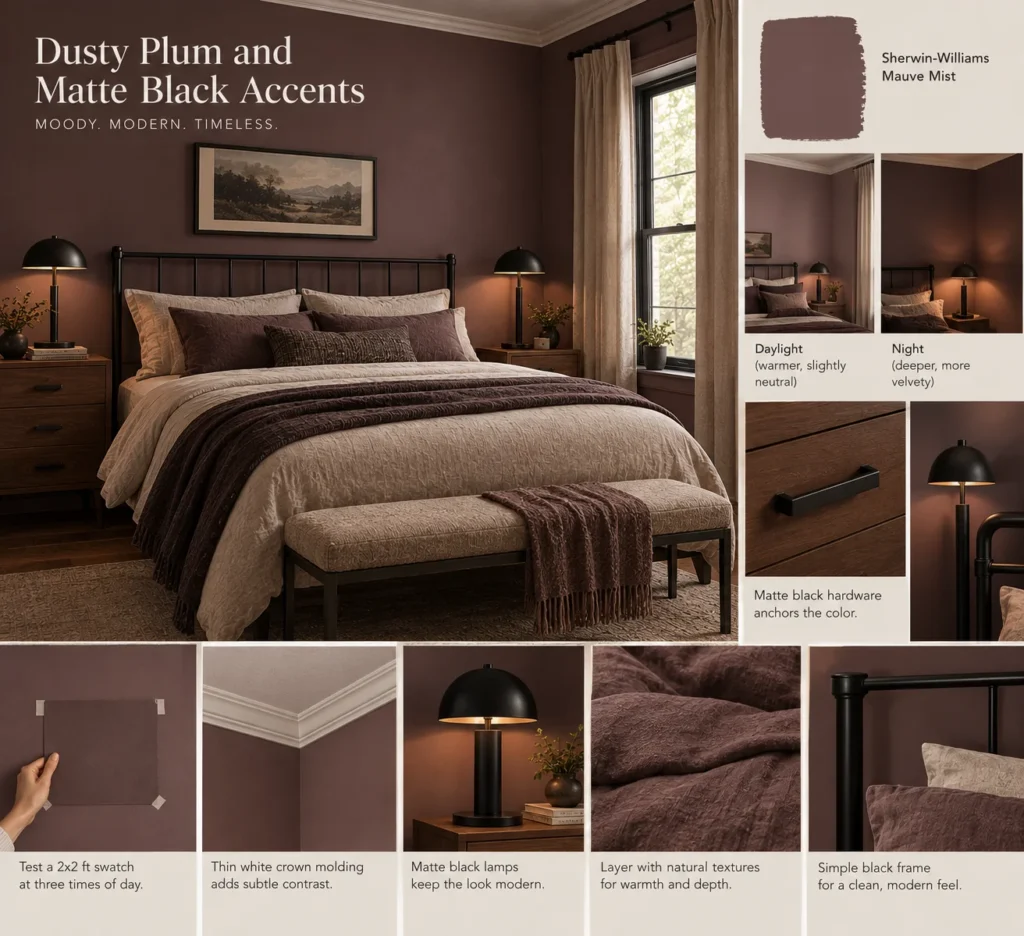
A matte‑finish dusty plum paint such as Sherwin‑Williams “Mauve Mist” spreads a muted, brown‑purple tone across the wall.
In daylight, the hue leans toward a warm, slightly yellow‑tinged neutral, especially where windows let in direct sun.
After sunset, the same surface deepens into a cozy, almost velvety shade that feels like a soft, enveloping blanket.
Pair the walls with simple black iron drawer pulls, a sleek metal headboard frame, and matte‑black lamp bases. The stark hardware anchors the color, keeping the room feeling modern rather than overly romantic.
Quick tip: tape a 2‑foot‑by‑2‑foot poster board, paint a test swatch, and observe it at three times of day before committing to the full wall.
This prevents surprises and lets you adjust the finish if the daylight appears too muddy.
Adding a thin white crown molding trims the ceiling edge, providing a subtle contrast that highlights the plum without breaking the dark ambience.
Use a low‑sheen finish on the molding to maintain the overall matte aesthetic.
7. Textured Graphite Roman Clay

A trowel‑spattered Roman clay finish in deep slate gray adds a velvety, three‑dimensional surface that reads like natural stone.
The material settles into tiny valleys, catching light and shadow for a subtle depth that paint alone can’t achieve.
Because the plaster cures to a hard shell, it resists scuffs and holds up well in low‑traffic bedrooms.
Applying Roman clay is a marathon, not a sprint. The mix must be blended on site, spread in thin layers, and allowed to dry between coats. Expect a full day for a modest wall, and the process generates a lot of dust.
If you ever need to paint over it in a rental, sanding the surface flat requires a heavy‑duty sander, a respirator, and a willingness to tolerate a messy cleanup.
If the labor or permanence feels too much, a matte charcoal paint with a fine‑grain sandable primer can mimic the look with far less effort.
For renters, wallpaper with a subtle, raised pattern offers a removable alternative that still gives texture.
When budget or timeline is tight, hiring a plaster specialist ensures a flawless finish and saves you from the gritty sanding later.
Use a silicone‑tipped trowel for the final coat to keep edges smooth and reduce sanding time if touch‑ups become necessary.
8. Slate Blue and Warm Mustard Accents

A deep, dusty slate blue wall sits behind a mustard‑yellow throw draped over a low‑profile bed.
The dark backdrop covers about eighty percent of the room, while the bright textile occupies just a fraction. This ratio keeps the space moody yet prevents the mustard from overwhelming the palette.
Choose a lightweight cotton or linen throw; it slides off easily for a quick color swap when the season changes.
Pair the throw with a handful of mustard‑hued pillow shams or a small wall art piece, but avoid large patterned rugs or bedding in the same hue.
The limited use of high‑contrast accents preserves the tranquil vibe, though it narrows the choices for main fabrics and floor coverings.
To keep the look cohesive, stick to matte finishes on the slate blue paint, which hide fingerprints better than glossy.
A practical tip: tuck the throw under the mattress edge to create a tidy, layered look without adding bulk.
Adding a single mustard‑colored ceramic vase on a nightstand reinforces the accent without cluttering the scene.
9. Deep Teal and Muted Sage Layers
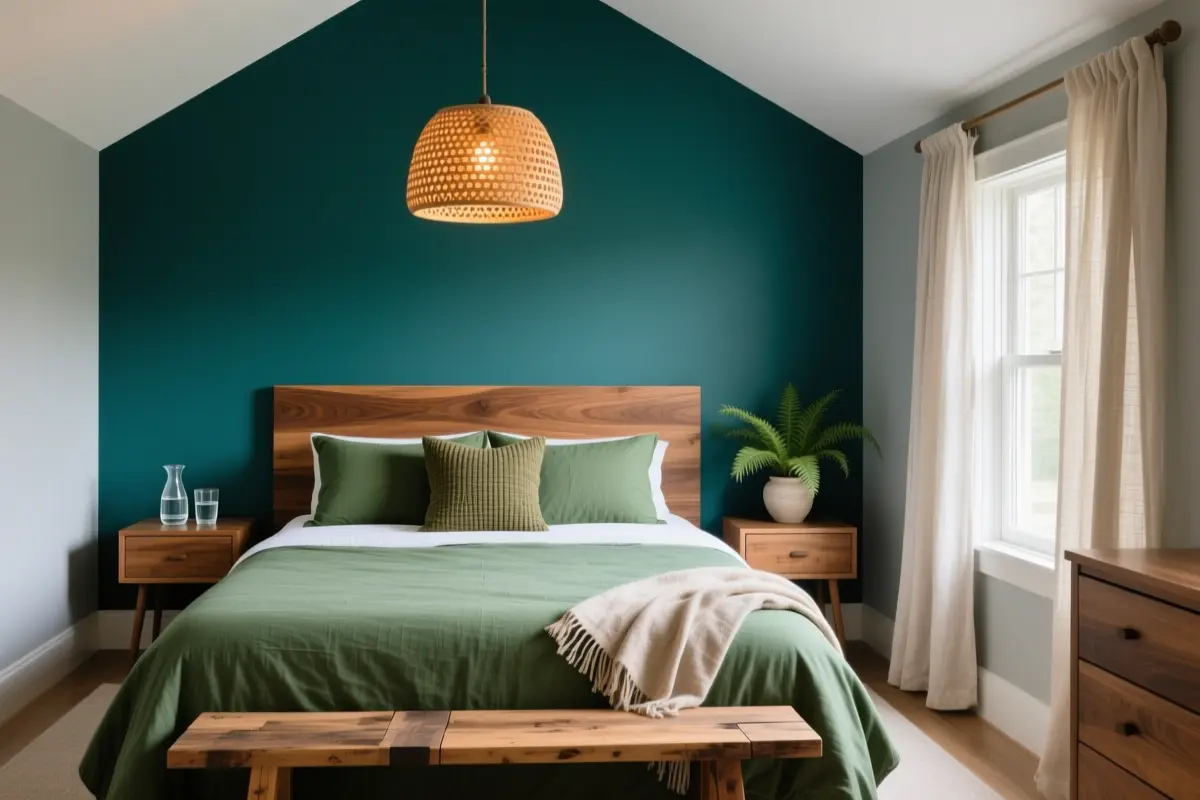
In a master bedroom with a vaulted ceiling, a deep teal accent wall sets the tone. Paint the wall a rich teal and keep the remaining walls a soft dove gray to avoid overwhelming the space.
Layer sage‑green duvet covers, olive‑hued pillows, and a lightweight linen throw for a soothing, monochromatic look.
Add a mid‑height wooden headboard; the warm grain counters the cool paint and anchors the bedding palette.
Nightstands in natural oak or walnut keep the floor feel grounded, while a rattan pendant lamp above the bed introduces texture and diffused amber light.
A narrow reclaimed‑wood bench at the foot of the bed offers seating and a place to drape the throw, reinforcing the warm‑wood balance.
Keep window treatments in sheer linen to let natural light filter in without harsh contrast. The combination of teal and sage feels serene, but without the intentional wood and woven details, the room can feel chilly.
Finish with a small potted fern on the dresser to bring a hint of fresh green and maintain the calming vibe.
Pick Your Favorite Nighttime Retreat
To get started, pick one room, test a paint sample on a small wall, swap a lamp for a 2700K bulb, and introduce one texture, linen, leather, or velvet, to anchor the shade. Even a single change can shift the mood, and mixing a few of the tips keeps the project affordable and renter‑friendly.
Trust the process, experiment with lighting, and let the room invite you to unwind each night. Save this guide for your next weekend project and share it with anyone looking to create a snug sanctuary.
Frequently Asked Questions
How to make a dark bedroom cozy?
To make a dark bedroom feel cozy rather than cold, layer highly textured fabrics like flax linen, waffle-weave cotton, and wool blankets alongside warm-toned lighting fixtures set at 2700K.
What color would look good in a dark bedroom?
Deep forest greens, warm espresso browns, inky navies, and charcoal grays work exceptionally well when paired with natural wood furniture and warm metal accents like brass or copper.
Will painting my bedroom a dark color make it look smaller?
No, dark colors in matte finishes actually blur the sharp corners of a room, which can make the walls appear to recede and make a small bedroom feel larger and more expansive.
What paint finish is best for dark walls?
A flat or matte finish is best for dark walls because it absorbs light and hides drywall imperfections, whereas eggshell or satin finishes reflect light and create distracting shiny spots on dark paint.
How do you prevent a dark bedroom from looking too gloomy?
Avoid using high-contrast bright white furniture, and instead use warm wood tones, cream textiles, and multiple low-level lighting sources like sconces and lamps rather than a single bright overhead light.