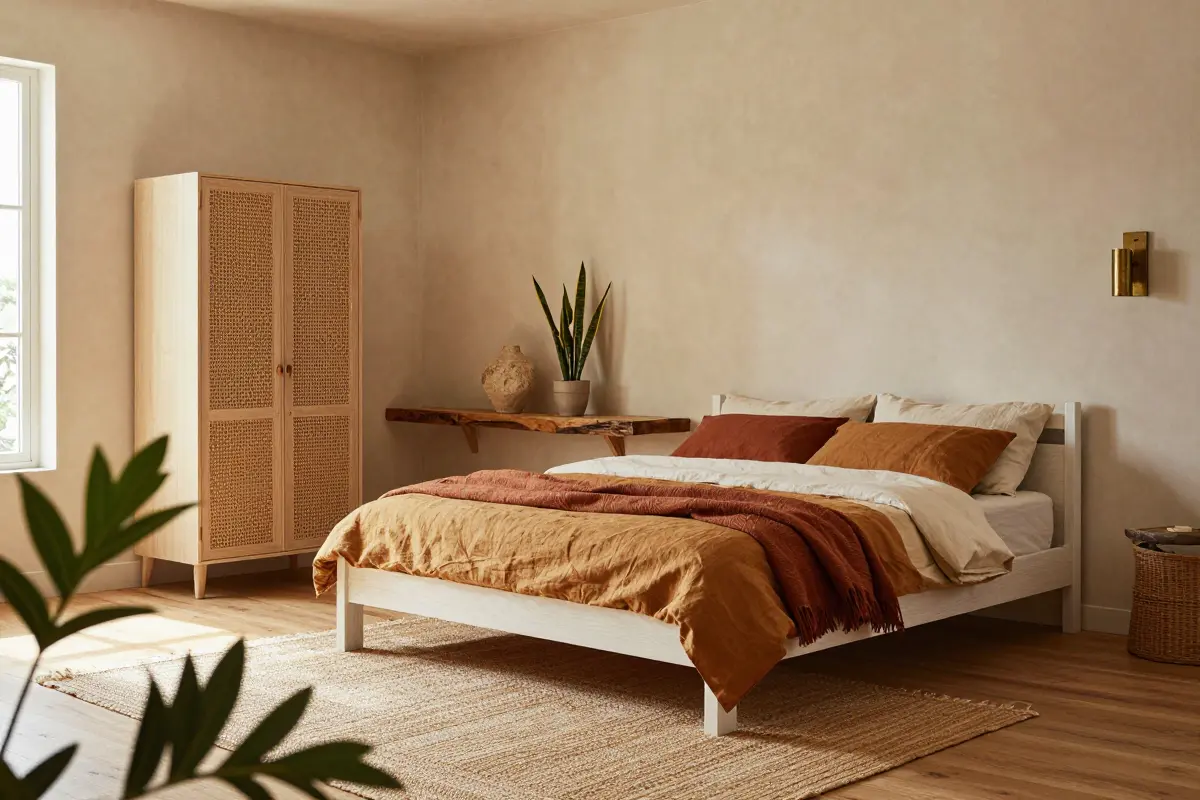
10 Earthy Bedroom Ideas That Look Natural (Not Cluttered)
10 Earthy Bedroom Ideas That Look Natural (Not Cluttered)
You stripped glossy paint from the bedroom walls and now face a cold, clinical surface. The bedding in the online photo looks perfect, but without texture, the room still feels disconnected from nature.
The ten ideas below show how to add earth tones and texture without clutter, though some may need more time or a larger budget.
Options include limewash and clay wall textures, ochre and rust flax linen, white‑oak platforms, layered rugs, stone vessels, live‑edge shelves, hardy plants, matte‑black hardware, rattan inserts, and warm lighting, covering a range of budgets and skill levels.
1. Limewash and Clay-Based Wall Textures
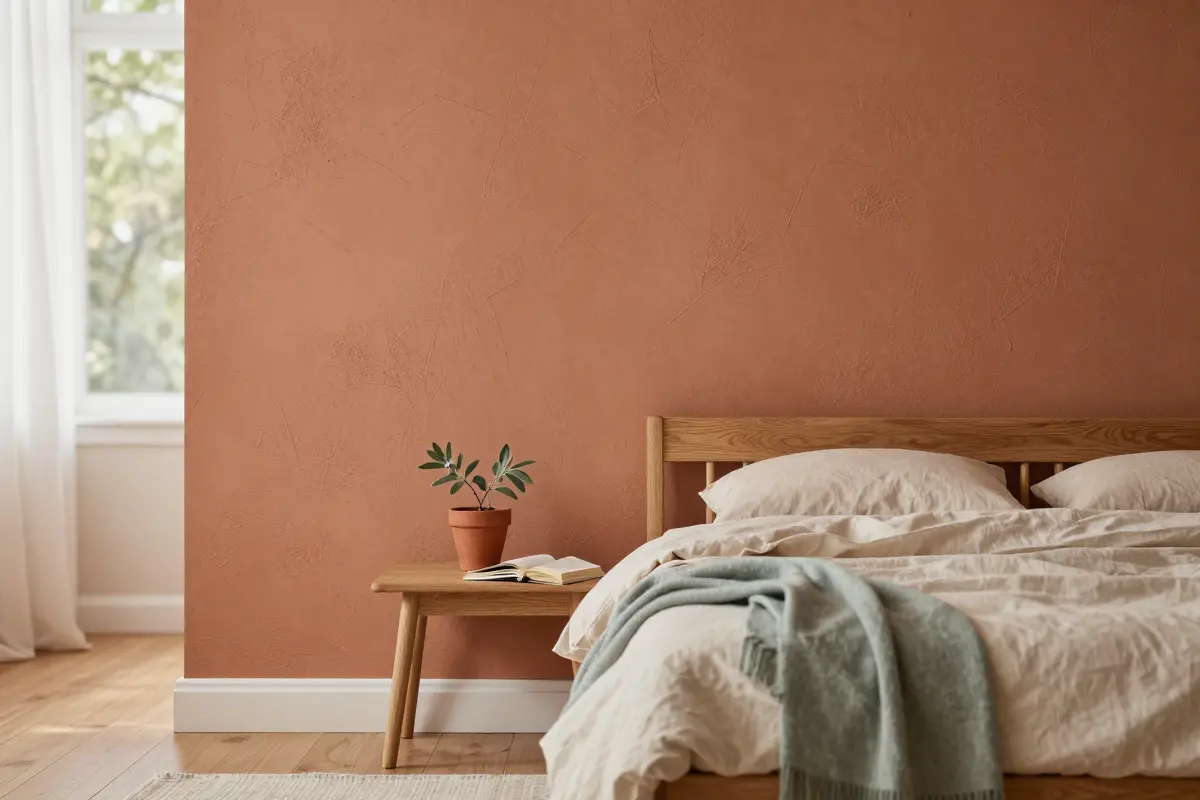
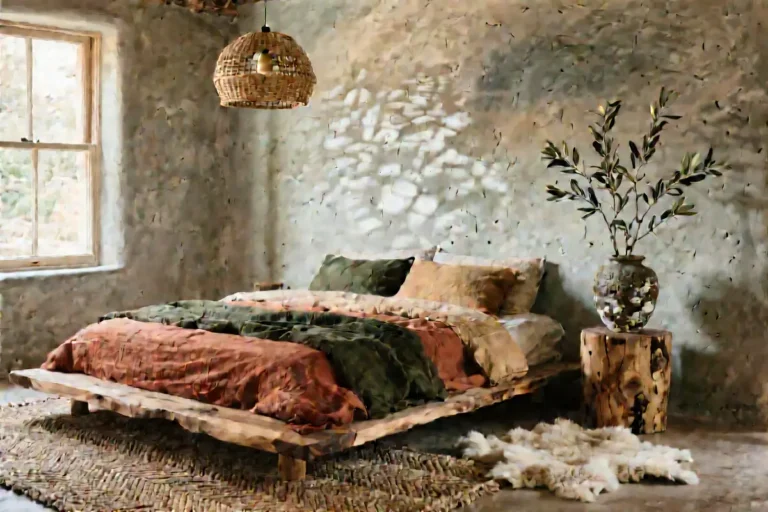
A block brush loaded with limewash creates a thin cross‑hatch pattern that shifts color from sunrise to sunset, adding depth that flat latex lacks in terracotta, ochre, or sage tones. The breathable finish also moderates bedroom humidity.
Because the finish is highly porous, it does not wipe clean and may require touch‑ups every few years; dust with a soft brush instead.
Renters can use peel‑and‑stick textured wallpaper that mimics the look without permanent changes, but applying limewash evenly on a large wall takes practice.
The finish shows lap marks if you stop mid-wall, so work in sections from the top corner down and keep a wet edge.
Apply a primer made for limewash first, then two thin coats with a block brush in criss-cross strokes, letting each coat dry fully, since limewash looks much lighter when wet.
- depth that flat latex can’t match
- breathable, matte finish
- shows lap marks if applied unevenly
- doesn’t wipe clean
Paint a sample board and move it around the room for a day before committing to a color
Wet limewash is caustic, so wear gloves and eye protection and cover the floor and trim before you start
2. Unfiltered Belgian Flax Linen in Ochre and Rust
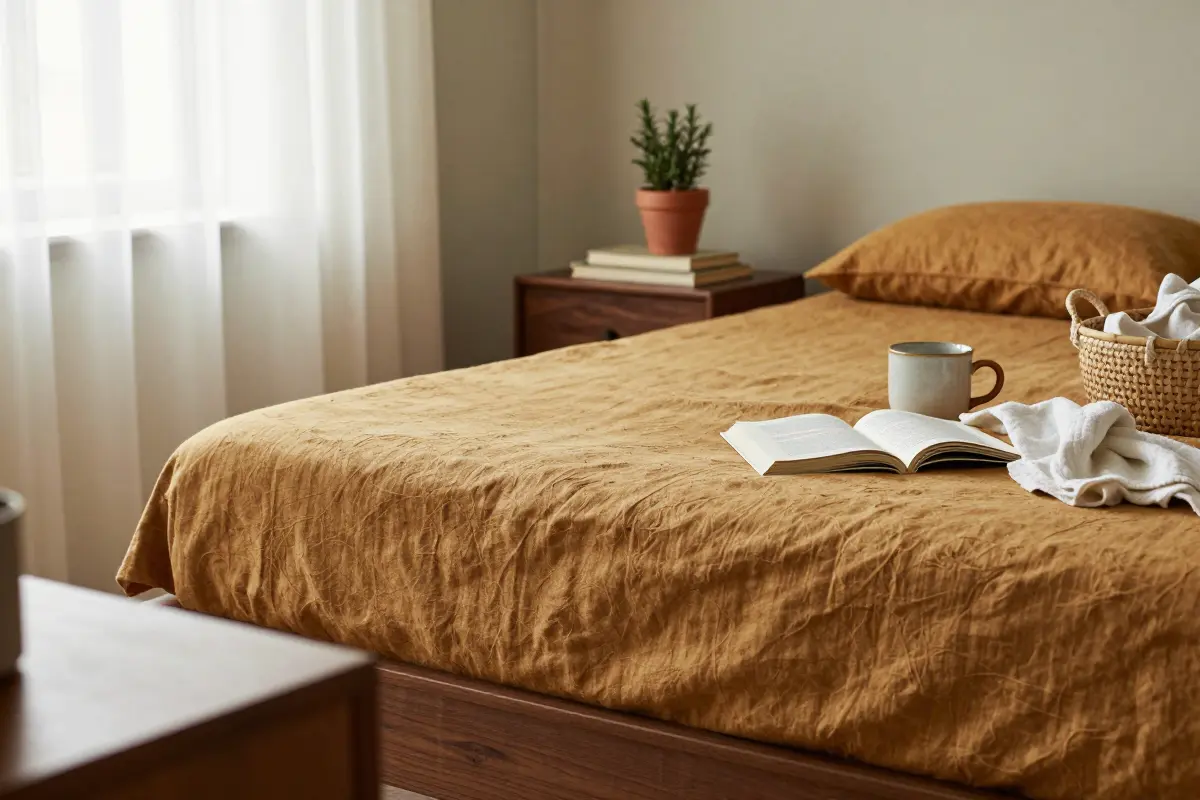
Ochre and rust unfiltered Belgian flax linen drapes the mattress in a weighty, natural feel. The 100% flax weave is slightly heavier and crisp at first, then softens with use, offering the breathability and durability European standards praise.
Compared with microfiber, the linen lets air circulate and resists wear, while microfiber stays smooth and resists wrinkles.
The downside is the initial price jump and the tendency to crease; ironing is discouraged, so let the folds settle for a lived‑in look. If you need a crisp, budget‑friendly option, choose a microfiber duvet cover in cinnamon or olive that stays flat.
For upkeep, wash in cold water, tumble dry low, and remove while damp to minimize new creases. Over time, the fabric holds its hue and resists pilling, outlasting cheap blends.
- breathability
- durability
- high cost
- wrinkles
Remove from dryer while damp and fold immediately to lock in a relaxed texture
3. Low-Profile Solid White Oak Bed Frames
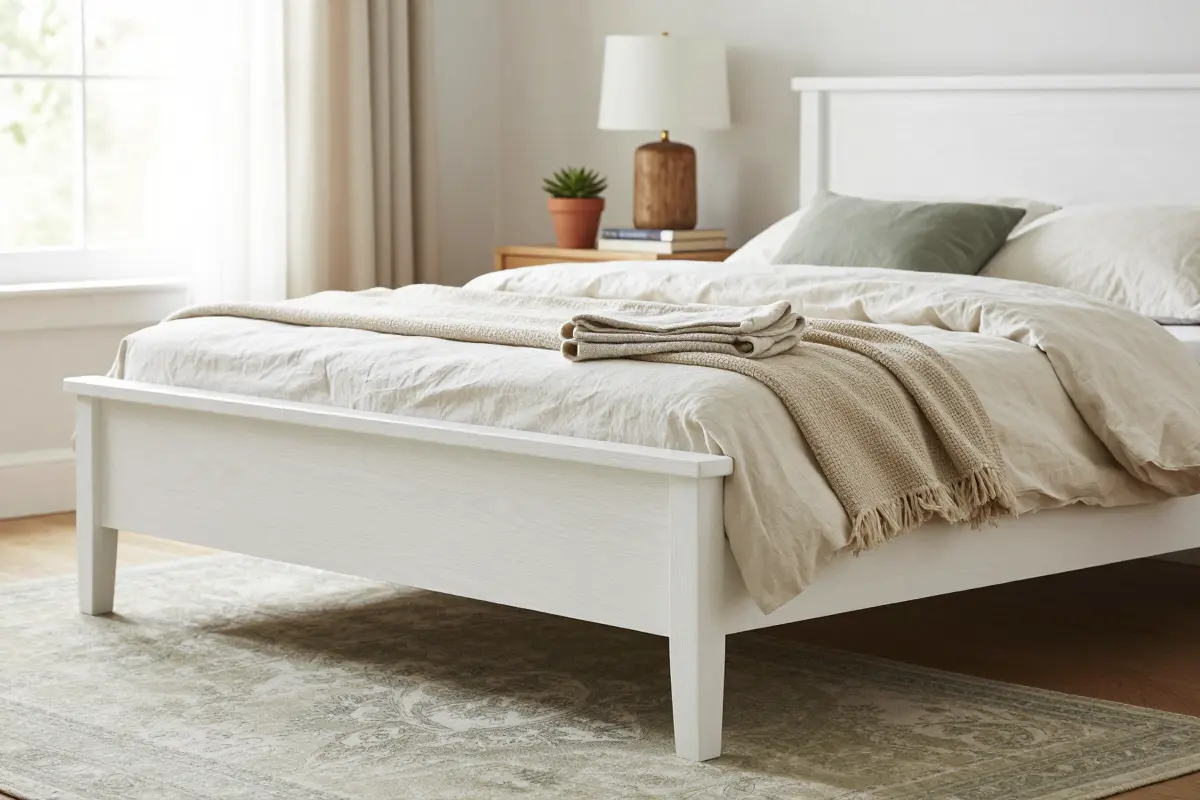
A solid white oak platform frame sits close to the floor, with a pale, straight grain that reads as calm and natural rather than ornate.
Keeping the frame low, around 10-14 inches, lets the headboard, wall color, and textiles carry the room instead of the furniture. Pair it with a 10-12 inch mattress so the top of the bed lands near 20 inches, which is comfortable to sit on and still looks grounded.
Solid oak is heavy, often 100-200 lb for a queen frame, so plan for two people and measure stairwells and doorways before ordering.
Wood also moves with humidity, so choose a frame with an oil or hardwax finish and slat spacing of no more than about 3 inches, since many mattress warranties require it.
Veneer or MDF frames can look similar in photos but chip at the edges and don’t age as well, which defeats the point of an earthy room.
- durable, ages well
- clean, low silhouette
- high upfront cost
- heavy to move
Request a wood sample from the maker before ordering, since white oak ranges from pale tan to light gray-brown depending on finish
Slats spaced wider than the mattress maker allows can void the warranty and leave the mattress sagging
4. Layered Jute and Low-Pile Wool Rugs
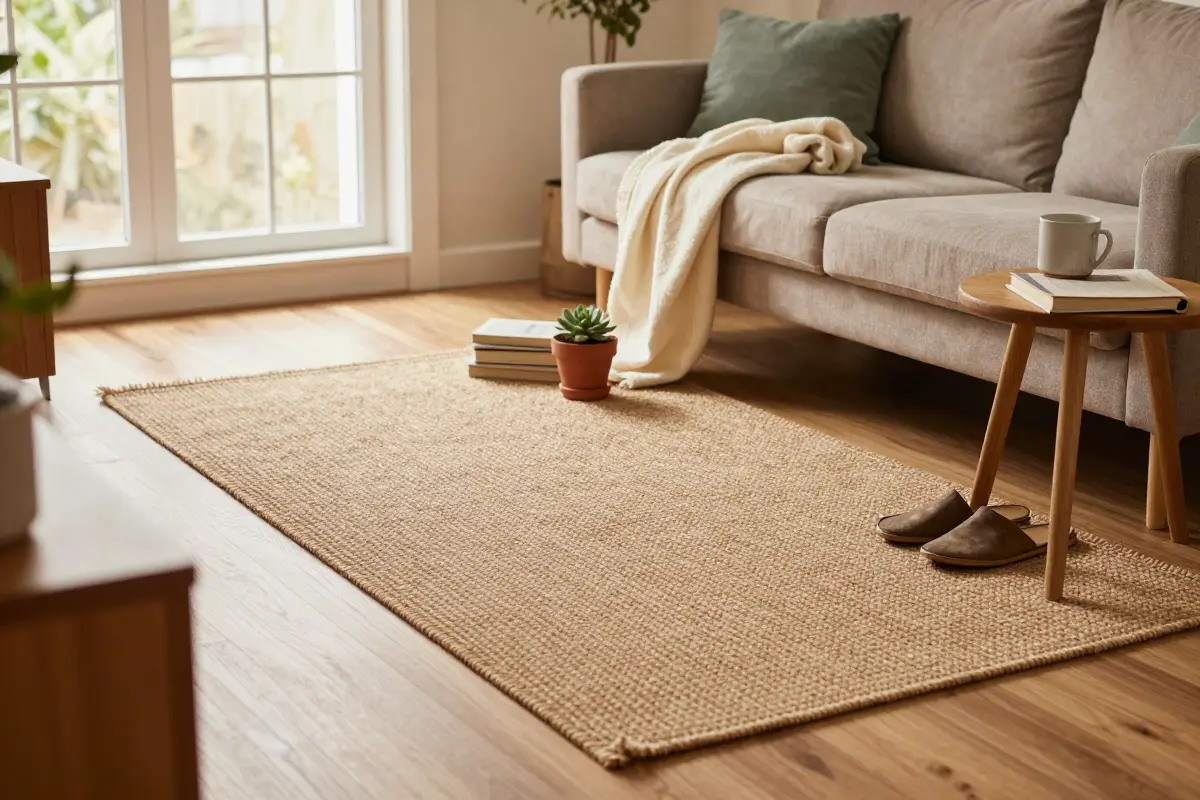
Bare feet on a jute rug feel scratchy, and the fibers shed for the first months. Place a 2‑by‑3‑foot low‑pile wool rug over the center of a 6‑by‑9‑foot jute runner to soften foot traffic while the jute still protects the floor. The wool adds warmth and hides early wear.
Use a non‑slip pad beneath both layers to keep them from shifting. If you dislike regular vacuuming or have allergies to natural fibers, a single synthetic low‑pile rug is a safer choice.
Vacuum the jute weekly, shake it outdoors monthly, and rotate both rugs every six months. Jute holds up in low‑traffic corners but compresses under heavy furniture.
- soft foot feel
- extends rug life
- continuous fiber shedding
- requires frequent vacuuming
Secure the wool rug with double‑sided carpet tape to prevent slipping
5. Terracotta and Raw Stone Accent Vessels
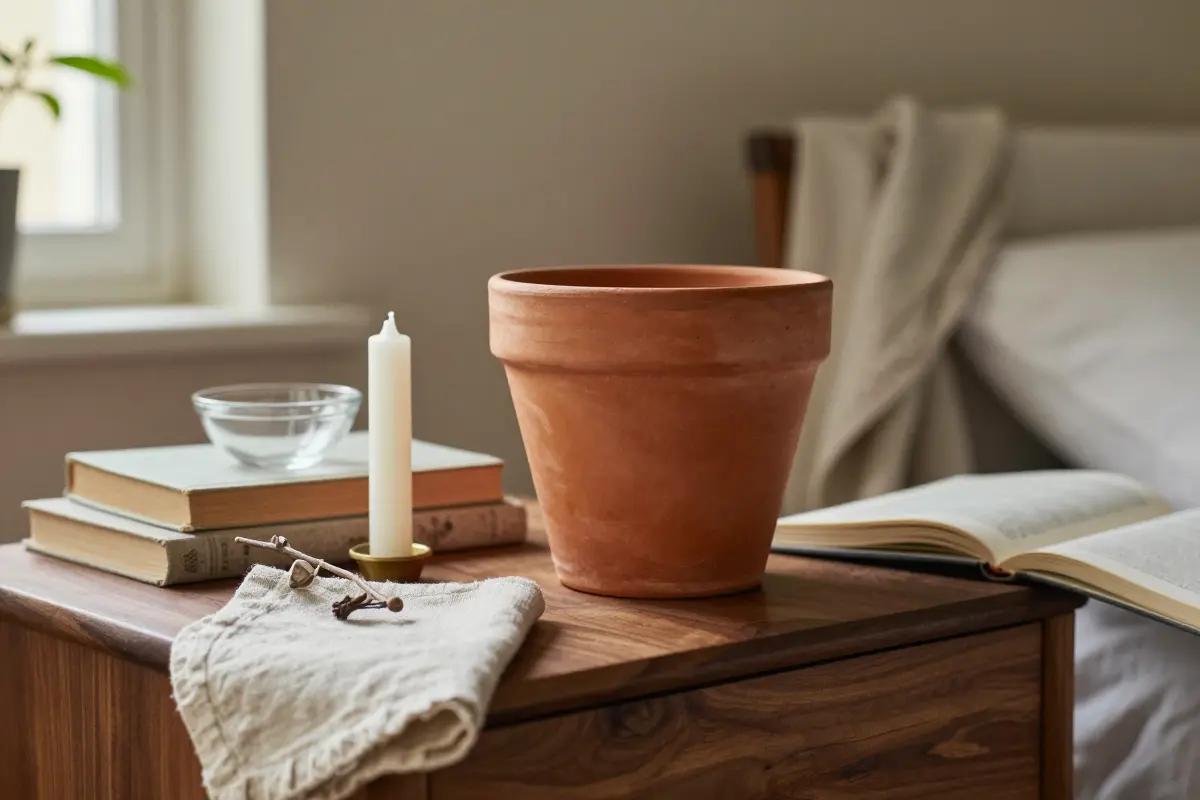
A matte terracotta pot sits beside a smooth walnut nightstand, its earthy orange hue echoing the room’s sand‑colored walls.
Thrift stores and local potters often have raw, unglazed vessels for $10 to $30, making the look affordable without sacrificing authenticity.
Choose one piece per nightstand, preferably with a wide base, so the silhouette stays simple and the surface stays clear.
Because unglazed stone soaks up water, avoid placing fresh plants inside; instead, use a dry decorative branch or a candle.
Wipe each vessel with a dry microfiber cloth weekly, and keep a silicone mat or cork coaster underneath to catch any seepage. A 4‑inch cork coaster fits most nightstand tops and can be swapped out when it darkens.
- natural texture
- solid weight
- porous, can stain wood
- may crack with temperature changes
Moisture from unglazed vessels can damage wood nightstands; use a protective barrier like a coaster or mat
6. Live-Edge Wood Floating Ledges
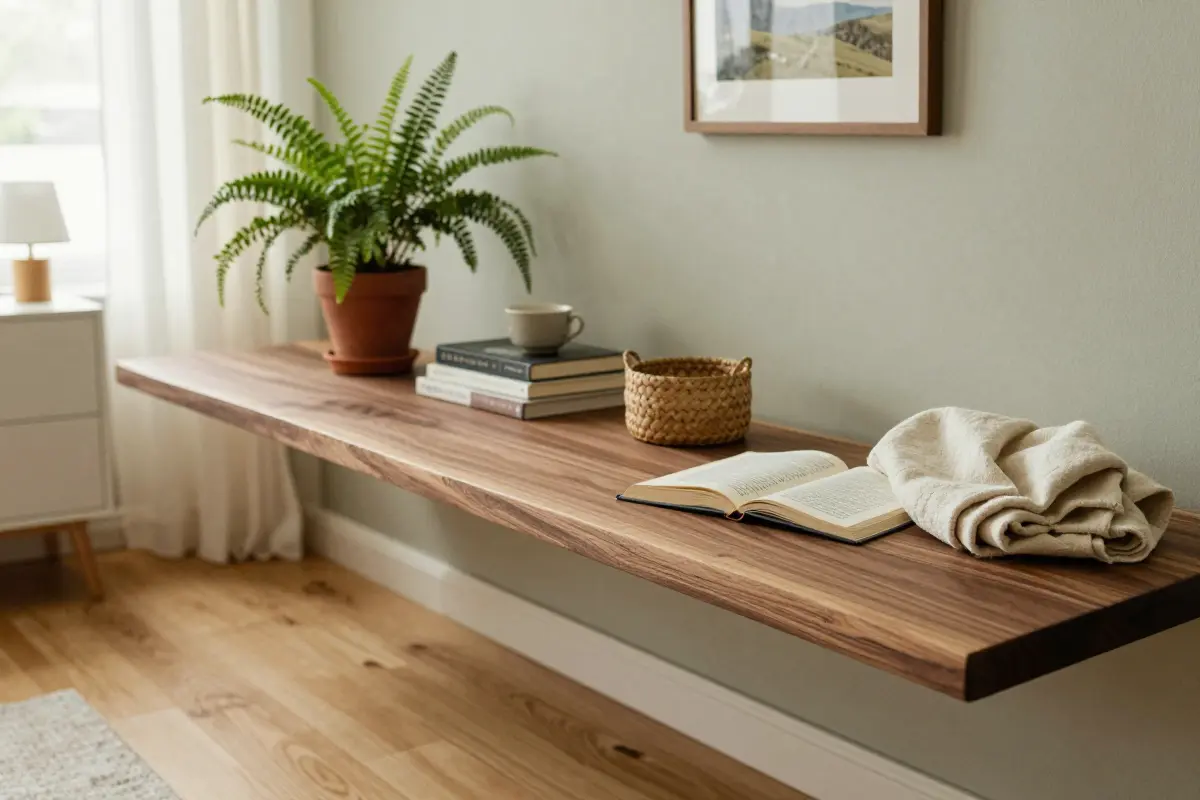
Drill a 1‑inch pilot hole into a wall stud and secure a heavy‑duty bracket before sliding the live‑edge shelf onto it.
A standard 8‑in deep, 1.5‑in thick slab holds up to 150 lb; thinner 1‑in shelves max out at 40-45 lb, while a solid black oak piece can bear 300 lb. Measure the intended length and keep the span under 4 ft to avoid flex in a typical 10‑ft bedroom.
Use a laser level to align multiple ledges and pre‑drill all holes to prevent wood splitting. Renters who can’t drill into studs can opt for a freestanding ladder shelf or adhesive picture‑rail brackets, which stay wall‑friendly but hold lighter loads. DIY is doable with a stud finder and basic tools, but a carpenter ensures perfect alignment for heavy pieces.
- Natural texture
- High load capacity
- Needs permanent stud anchors
- Large anchor holes hard to patch
Over‑loading the bracket can cause shelf sag and wall damage
- Locate studs with a finder
- Select brackets rated ≥45 lb
- Mark level line for shelf placement
7. Low-Maintenance Greenery (Snake Plants and ZZ Plants)
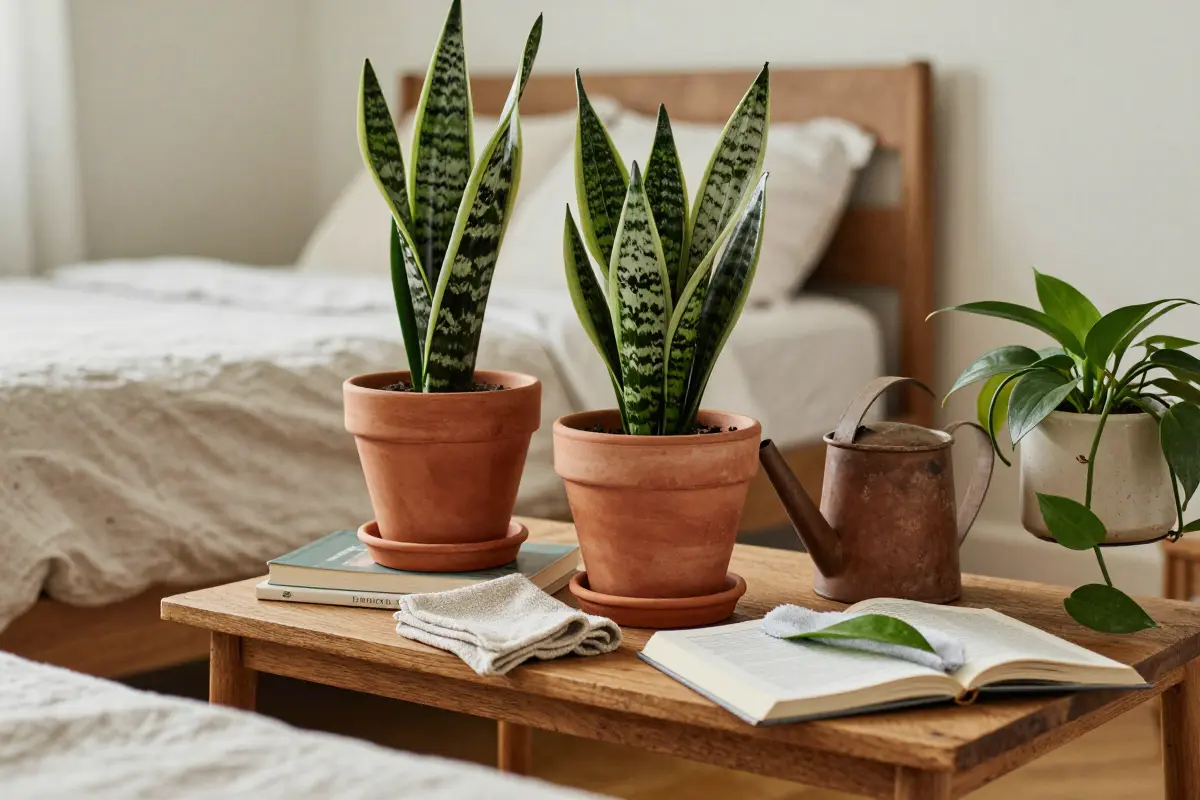
North‑facing bedroom walls get soft, indirect light, perfect for snake plants and ZZ plants. Both survive low light and need water only when the soil is completely dry, about a quarter‑cup every three weeks. Use a breathable terracotta pot with a drainage saucer to catch runoff.
Overwatering is the biggest pitfall; it causes root rot and can bring fungus gnats to dim corners. If live plants feel risky, choose realistic artificial succulents that need no watering.
Another low‑maintenance option is a pothos trailing from a high shelf, which tolerates similar light and needs only monthly watering. Wipe the leaves monthly with a damp cloth to keep dust from blocking light.
- easy care
- air‑purifying
- overwatering risk
- fungus gnats
check soil two inches down before watering
8. Matte Black and Aged Brass Hardware Accents
Matte black drawer pulls on a reclaimed pine nightstand instantly anchor the soft sage walls. Swapping glossy chrome knobs for matte black or oil‑rubbed bronze fixtures adds tactile contrast and a clear structural cue.
Pair the dark metals with warm walnut headboards or teak side tables to keep the room from feeling washed out.
A common downside is that matte black shows fingerprints, skin oils, and dust much more visibly than polished finishes, so a quick wipe with a microfiber cloth each week is needed.
If you prefer low‑maintenance, brushed nickel or brushed oil‑rubbed bronze offers a similar depth without the same fingerprint visibility.
The hardware itself is permanent, but the fixtures can be removed and re‑installed with simple screws, making it renter‑friendly.
- high contrast
- adds visual structure
- shows fingerprints
- needs frequent cleaning
Use a damp microfiber cloth with mild soap, then dry
9. Woven Cane or Rattan Wardrobe Inserts
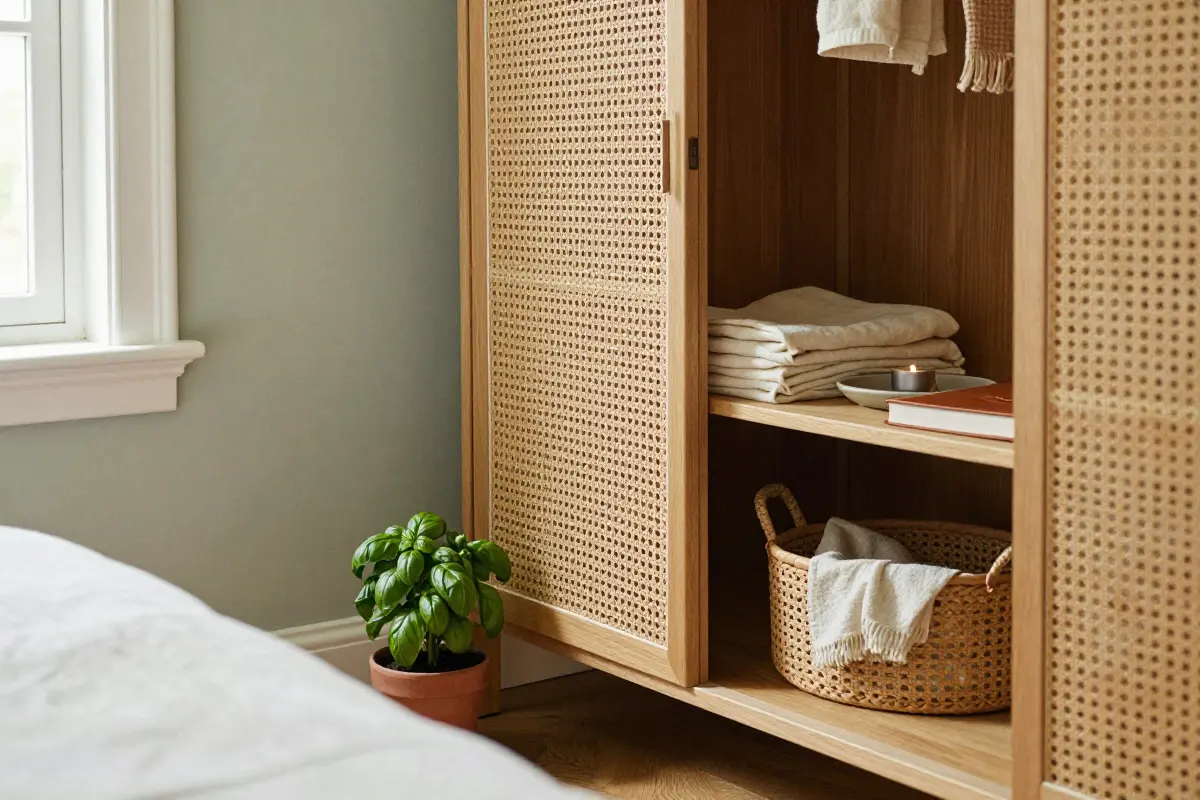
Woven cane panels set into wardrobe doors replace a flat slab of wood or mirror with a light, airy texture.
The open weave lets the wardrobe breathe, which suits linens and wool, and it adds warmth without adding visual weight. It works best on one wardrobe or dresser, not every cabinet in the room, so the texture stays an accent.
The simplest DIY route is pre-woven cane webbing. Cut the panel from the door center (or buy doors with an open frame), soak the webbing in warm water for about 20 minutes so it becomes flexible, then glue it into the groove with a spline or staple it in and cover the edges with trim. The cane tightens as it dries.
Natural cane can sag in very humid rooms, so synthetic cane webbing is the safer choice in a damp bedroom.
Because the weave is see-through, line the back with a layer of linen or cotton fabric if you don’t want folded clothes on display, and expect some dust to settle on the contents. Keep the wardrobe out of direct sun, which fades natural cane over time.
Renters can skip the cutting entirely and buy a ready-made cane-front cabinet, or tack a cane panel to the inside of the door with removable hardware. DIY inserts cost roughly $15-$40 per door in materials, while custom cane-front doors run far higher.
- lets the wardrobe breathe
- soft texture without bulk
- contents are visible without a lining
- natural cane sags in humidity
Staple the damp cane in the center first, then work outward, so the weave stays straight as it dries
10. Warm-Temperature Indirect Lighting (2700K)
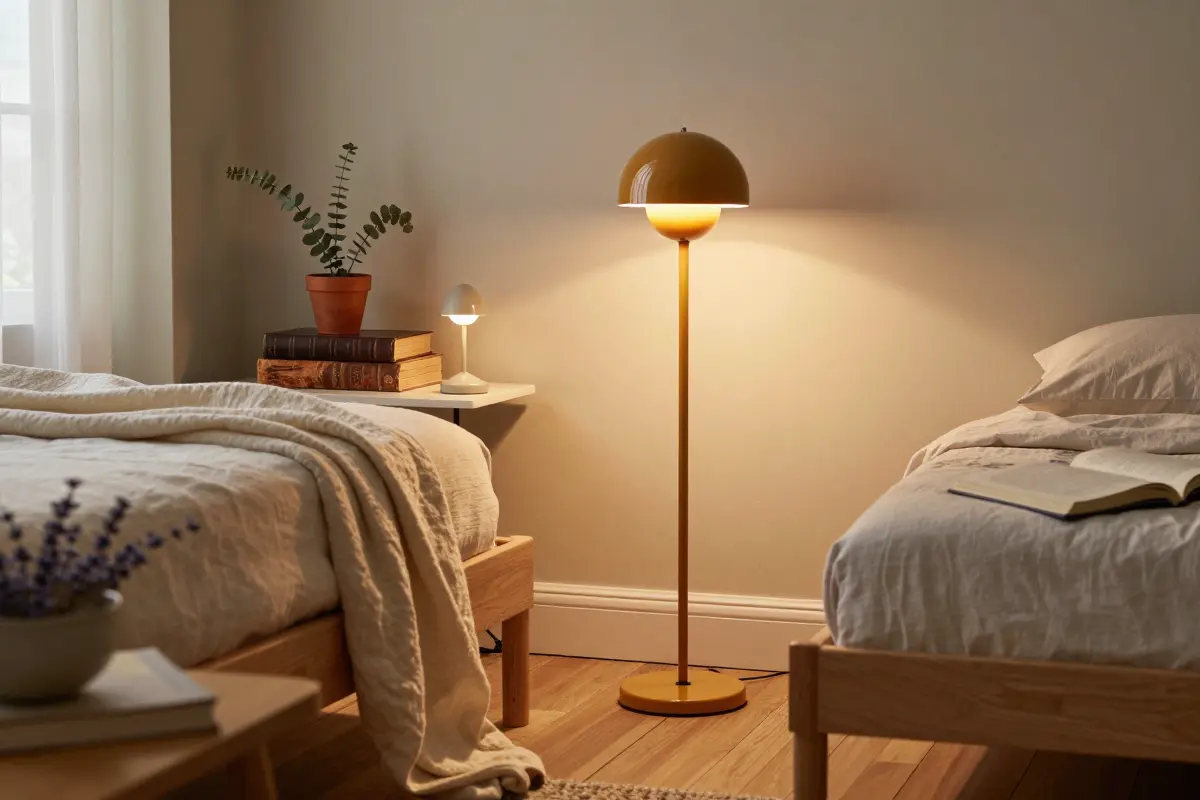
Cool, blue‑white bulbs strip an earthy bedroom of its cozy feel. Warm LED bulbs at 2700K mimic sunset glow, preserving the natural palette. Put a 5‑inch amber lamp on the floor beside the bed or mount a low fixture behind the headboard; the light creates soft shadows without glare.
The trade‑off is that this hue is great for winding down but lacks the brightness needed for makeup or reading, which require higher‑CRI light. Pair it with a small, dimmable desk lamp at 3000‑3500K for task work. Add a plug‑in dimmer to each accent lamp so you can lower the glow as bedtime approaches and save energy.
- Cozy ambience
- Supports melatonin
- Low task lighting
- May need extra fixtures
- Color temperature: 2700K
- Bulb type: warm LED
- Ideal placement: floor or behind headboard
Pick Your Favorite Earthy Upgrade
Start with the change that feels easiest, swap a chrome knob for a matte‑black one or add a terracotta pot on the nightstand. If you have a weekend to spare, try the limewash wall technique; the cross‑hatch brushwork adds depth in a single coat. For renters, layered rugs and low‑maintenance snake plants give the earthy vibe without permanent alterations.
Mix and match the ideas that fit your budget and time, and watch the room shift from sterile to grounded. When you finish, pin the look on your board so the next time you need a quick refresh you’ll have the steps right at hand.
Frequently Asked Questions
What are some ideas for earthy colors in a bedroom?
Earthy bedroom colors rely on warm, organic undertones rather than cool ones; choose muted terracotta, warm ochre, sage green, sandy beige, and rich chocolate brown to mimic natural elements.
How do you make an earthy bedroom look modern instead of dated?
To keep an earthy bedroom modern, pair soft organic textures like linen and clay with clean, straight-lined furniture and high-contrast accents like matte black hardware.
Are jute rugs too scratchy for a bedroom floor?
Yes, jute can be rough underfoot, which is why layering a softer, small wool or cotton rug directly over the jute in high-traffic landing zones next to the bed is highly recommended.
How do you style plants in an earthy bedroom without cluttering it?
Limit plants to two or three healthy, low-maintenance varieties like a Snake Plant in a floor corner and a Pothos on a high wall shelf, rather than overcrowding every flat surface.