9 Organic Earthy Bedroom Ideas That Feel Effortlessly Grounded
9 Organic Earthy Bedroom Ideas That Feel Effortlessly Grounded
You’ve probably noticed how a bright white wall can feel sterile the moment you toss the covers back after a long day. In this roundup, I share nine hands‑on ideas, from matte limewash walls and mud‑tone linen sheets to raw‑wood platform beds and color‑drenched trim, that turn any bedroom into a low‑key, earth‑filled sanctuary.
Whether you rent a compact apartment or own a sprawling master suite, the tips work with modest budgets and minimal tools, delivering a space that feels rooted and calm.
Each suggestion balances texture and tone, so you can see immediate visual grounding without a full remodel.
Pick the ones that match your DIY comfort level, and watch the room shift from generic to grounded.
1. Apply Matte Limewash or Roman Clay to the Walls
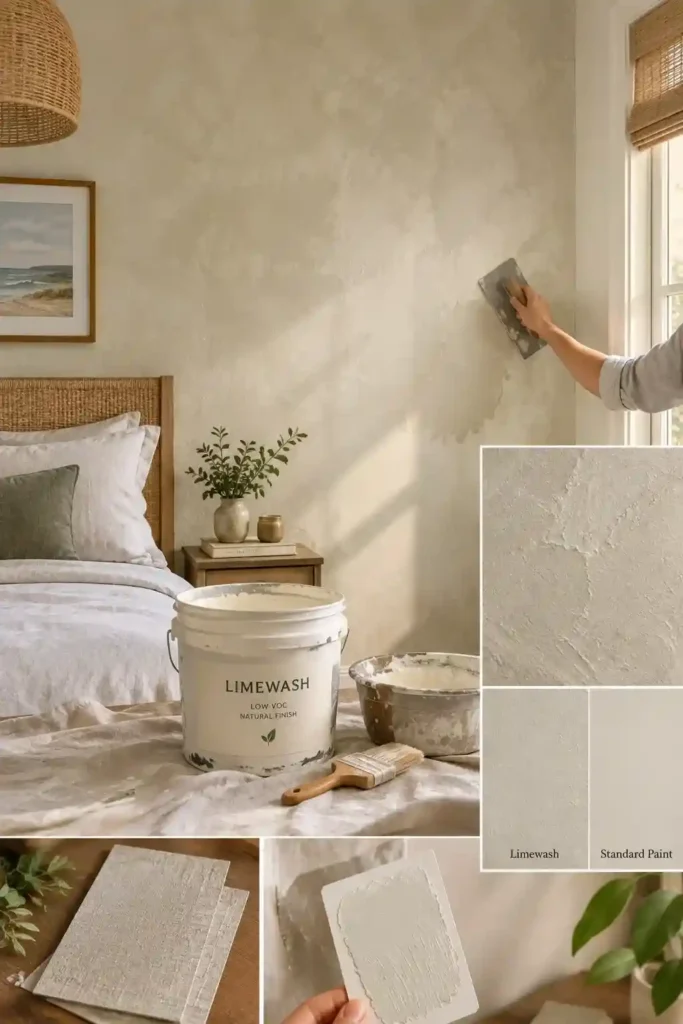
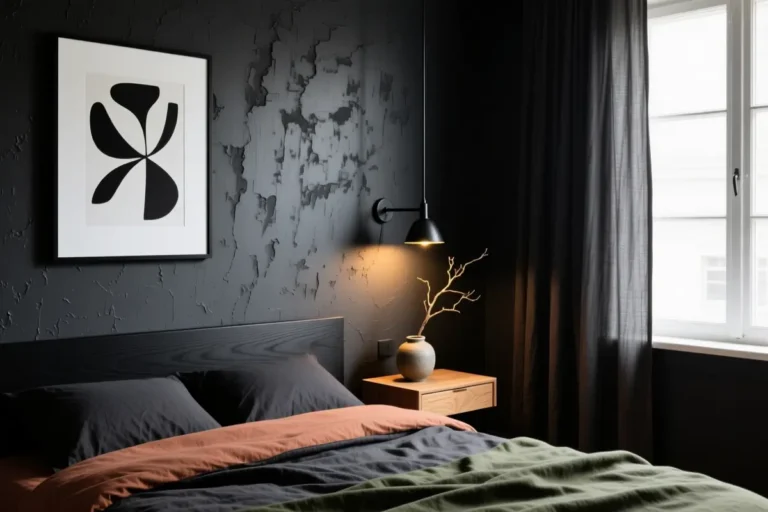
A hand‑troweled coat of matte limewash leaves a chalky, slightly uneven surface that instantly softens harsh light.
The porous texture diffuses daylight, reducing glare without the flat look of standard latex paint.
Because each swipe leaves a faint brush or trowel mark, the wall feels handcrafted and adds subtle depth to an earthy bedroom.
Low‑VOC, breathable brands such as Ecotone or Natural Paint Co. keep indoor air fresh while the limewash continues to “breathe” moisture.
The finish, however, resists spot‑repair; touching up a small blemish often reveals a visible seam, so a full‑wall re‑application is usually required.
If you’re renting or hesitant about the commitment, a textured peel‑and‑stick wallpaper mimics the same mineral feel and can be removed cleanly when you move out.
DIYers can manage a single‑coat application with a 6‑inch drywall knife, but larger rooms benefit from a professional who can maintain consistent thickness.
Expect the surface to develop a gentle patina over 3‑5 years, which may need a light re‑coat to keep the matte look uniform.
Purchase a 5‑gallon low‑VOC limewash bucket and test a 12‑inch patch on a hidden corner before committing to the whole room.
2. Layer Belgian Linen Bedding in Mud and Clay Tones
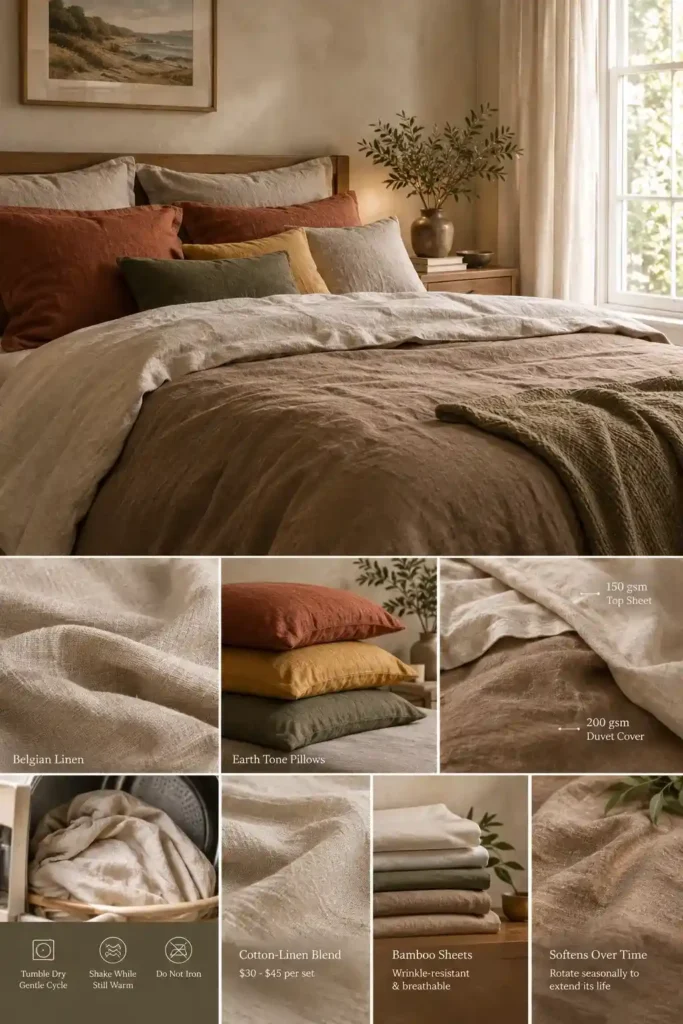
Belgian linen sheets feel cool against skin because the fibers breathe naturally. The fabric drapes with a soft, lived‑in look that deepens after each wash.
Pair the linen with mud‑tone pillows in rich terracotta, mustard seed, or deep olive to anchor the room in earth’s palette.
Mix a lightweight 150‑gsm top sheet with a heavier 200‑gsm duvet cover; the contrast adds texture without sacrificing the relaxed silhouette.
Avoid ironing the linen, even on a low setting, because the heat flattens the subtle creases that give the bedding its organic charm.
Instead, tumble dry on a gentle cycle and shake the sheets while still warm to smooth minor folds.
If the price of pure linen stretches the budget, a cotton‑linen blend offers a similar hand feel at roughly $30‑$45 per set.
The blend wrinkles less, but it still benefits from the same earth‑tone palette. Expect the fabric to soften over time, yet know that heavy use may thin the fibers after a few years, so rotate the set seasonally to extend its life.
For homes where linen feels too delicate, bamboo sheets provide a wrinkle‑resistant alternative with comparable breathability.
3. Opt for Low-Profile, Raw-Wood Platform Beds

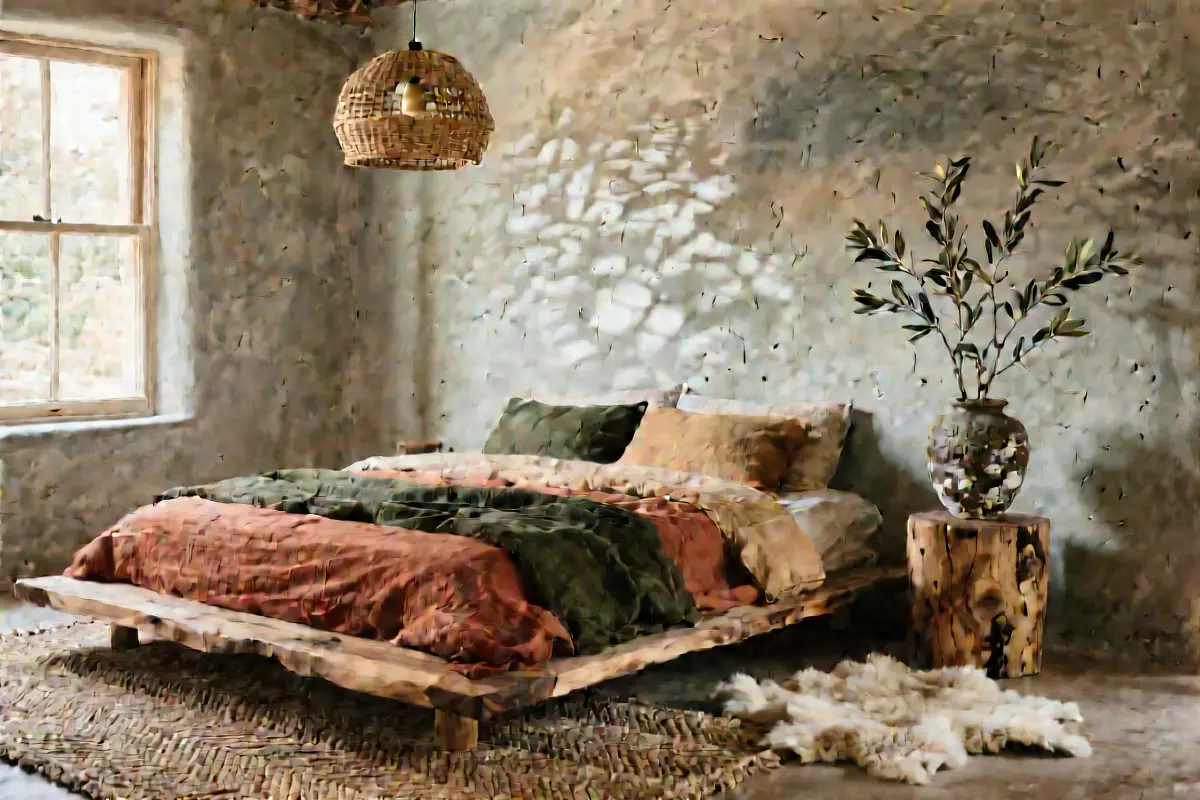
A four‑inch‑tall platform crafted from reclaimed pine sits flush against the wall, exposing the wood’s natural grain and keeping the mattress almost at floor level.
The low silhouette anchors the room, letting the eye travel straight across the floor and creating a sense of spacious calm.
Because the frame sits directly on solid wood slats, leave a two‑to‑three‑inch gap between slats to allow proper mattress ventilation and prevent mold buildup.
The design eliminates nearly all under‑bed storage, so seasonal blankets and extra pillows need a separate bin or a closet shelf. Getting in and out can strain knees or hips, especially for anyone with arthritis or recent injuries.
A budget‑friendly headboard can be built from three reclaimed planks, each 1 × 6 × 48 in, sanded, stained, and secured to the wall with simple L‑brackets. The DIY takes less than an hour and costs under $30 for materials.
This setup shines in studios or bedrooms up to about 12 × 12 ft, where floor space is at a premium and a minimalist vibe is desired.
If you rely on under‑bed drawers or have joint pain, a slightly raised platform with built‑in drawers or a low loft bed with a ladder offers a practical alternative.
Add a thin rug at the foot of the bed to protect the floor and soften the entry.
4. Anchor the Space with a Textured Jute or Sisal Rug

Compared with a soft cotton rug, a jute floor covering offers a rougher, more tactile surface that instantly grounds the room.
The coarse fibers add visual weight and keep the space feeling earthy without needing heavy furniture. Choose a herringbone or boucle weave; the pattern hides minor wear and adds subtle interest.
Place the rug where the bed meets the floor to create a defined zone. The texture can feel scratchy on bare feet, so it’s wise to layer a small, plush sheepskin or wool rug beside the nightstand for a comfortable stepping spot.
Spot‑cleaning is tricky; avoid spills, and when a mess occurs, blot with a dry towel before vacuuming with a gentle brush attachment.
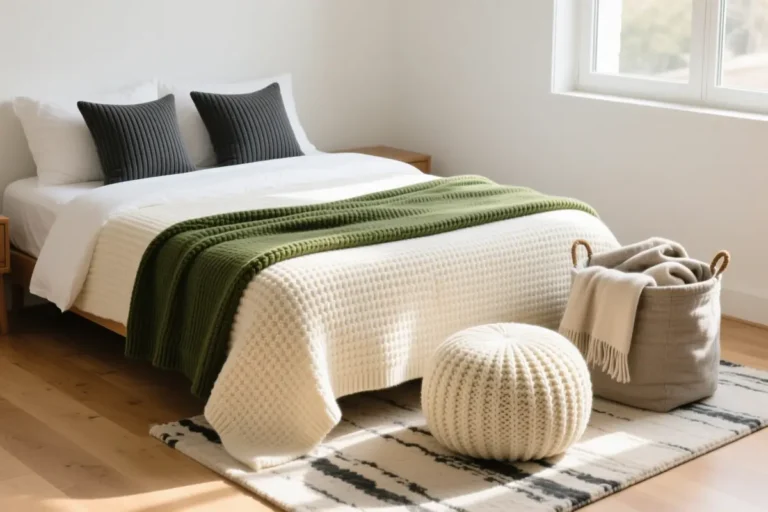
A low‑pile rug pad beneath the jute prevents slipping and extends its life. Rotate the rug every few months to even out traffic wear.
For a quick visual upgrade, tuck a 24‑inch round sheepskin at the foot of the bed; it softens the jute underfoot while preserving the natural, grounded look.
5. Introduce Hand-Thrown Stoneware and Terracotta Styling Details

A hand‑thrown terracotta pot with its raw, unglazed surface adds a warm, earthen tone to a bedside table.
The matte finish absorbs light, creating a subtle depth that glossy glass cannot match.
Pair the pot with a stone tray that holds a small stack of books or a night‑time tea mug, and a matte ceramic lamp with a linen shade for a cohesive, rustic vignette.
Because the pieces are functional, they replace plastic trays that often look out of place in an organic bedroom.
Local potters sell single items for under $30, and thrift stores frequently have vintage stoneware for a fraction of the price.
When you choose unglazed clay, remember it is porous; moisture from a nightstand glass will seep into the wood and leave a permanent ring.
Protect each piece with a thin cork or felt coaster before placing it on the bedside table.
For upkeep, wipe the ceramics with a dry microfiber cloth and avoid soaking; a light coat of beeswax once a season can help resist stains.
Place a 1‑inch cork coaster under each ceramic piece to catch any condensation before it meets the wood.
6. Hang Woven Cane or Rattan Light Fixtures for Warm, Diffused Light

Harsh, flickering light from standard ceiling fixtures can make a bedroom feel sterile.
Swapping them for a woven cane pendant or rattan sconce instantly softens the glow and adds organic texture.
The natural fibers cast diffused shadows that calm the mind and reinforce an earthy palette.
Pair the fixture with a 2700K warm LED bulb; the amber hue highlights the weave without turning the room blue.
The intricate crevices of cane and rattan naturally collect airborne dust and fibers, making them tedious to keep clean.
A quick fix is to attach a soft‑bristled brush to a handheld vacuum and glide it through the weave once a month. For tighter spots, a lint roller works without tugging the fibers.
Renter‑friendly options include plug‑in wall sconces that mount on a single bracket and require no wiring changes.
If you prefer a ceiling pendant, plan for a professional electrician to handle the hardwired connection safely.
A practical tip: position the light two feet above the headboard to spread light evenly across the sleeping area. This placement reduces glare and keeps the bedside area comfortably lit.
7. Switch to Solid, Unfinished Wood Bedside Pedestals
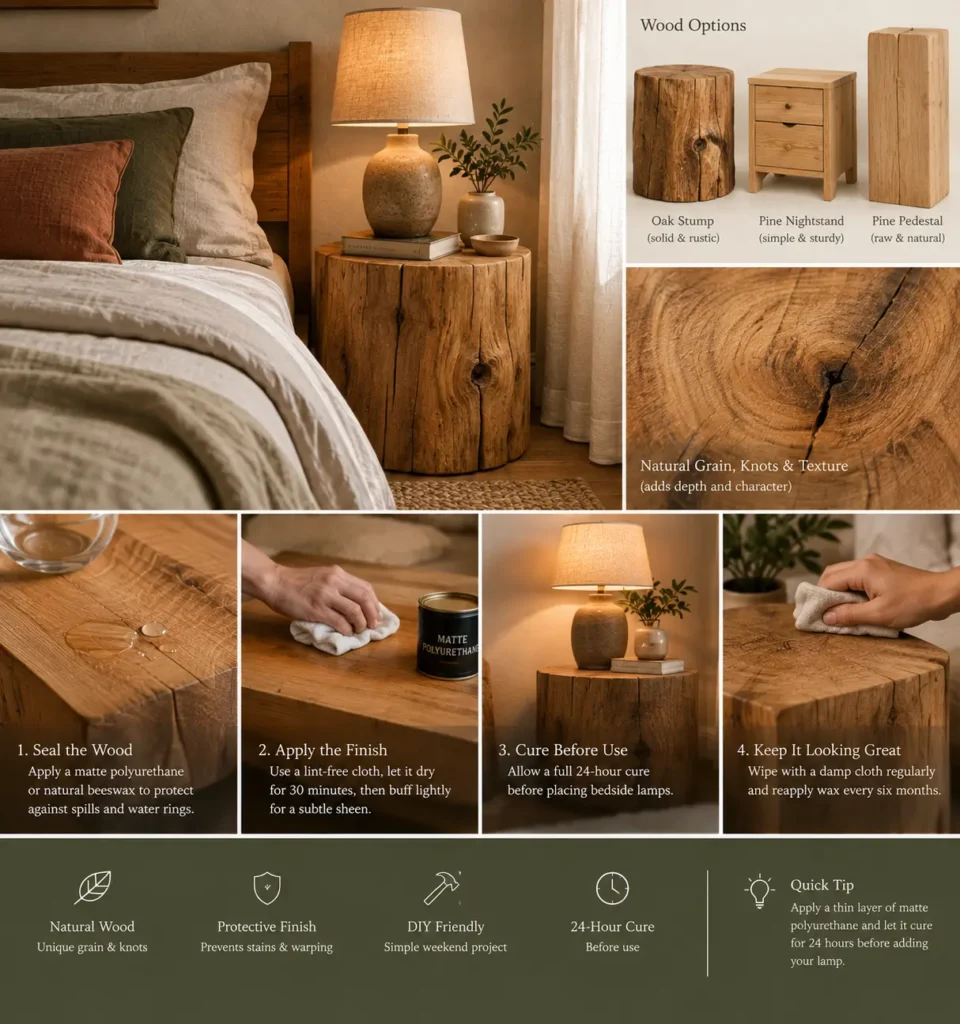
Unlike sleek veneer nightstands, raw wood pedestals bring a forest‑like texture to the bedside.
Chunky oak stumps, solid pine nightstands, or unfinished pine pedestals showcase natural grain, knots, and occasional cracks that veneer can’t mimic.
The irregular surface adds depth and makes the room feel grounded without extra décor.
Because the wood is untreated, it soaks up spills and can warp over time. A matte polyurethane coat or a coat of natural beeswax protects against water rings while keeping the rustic look intact.
Apply the finish with a lint‑free cloth, let it dry for 30 minutes, then buff lightly for a subtle sheen.
This barrier stops oily lotions from staining the surface.
DIYers can cut a pine board to size, sand it smooth, and finish it in a single weekend. A professional may be needed only for large oak stumps that require heavy‑duty wall anchors.
Regularly wipe the pedestals with a damp cloth and reapply wax every six months to maintain protection.
Add a thin layer of matte polyurethane and allow a full 24‑hour cure before placing bedside lamps.
8. Decorate with Foraged Wild-Branch Botanical Arrangements
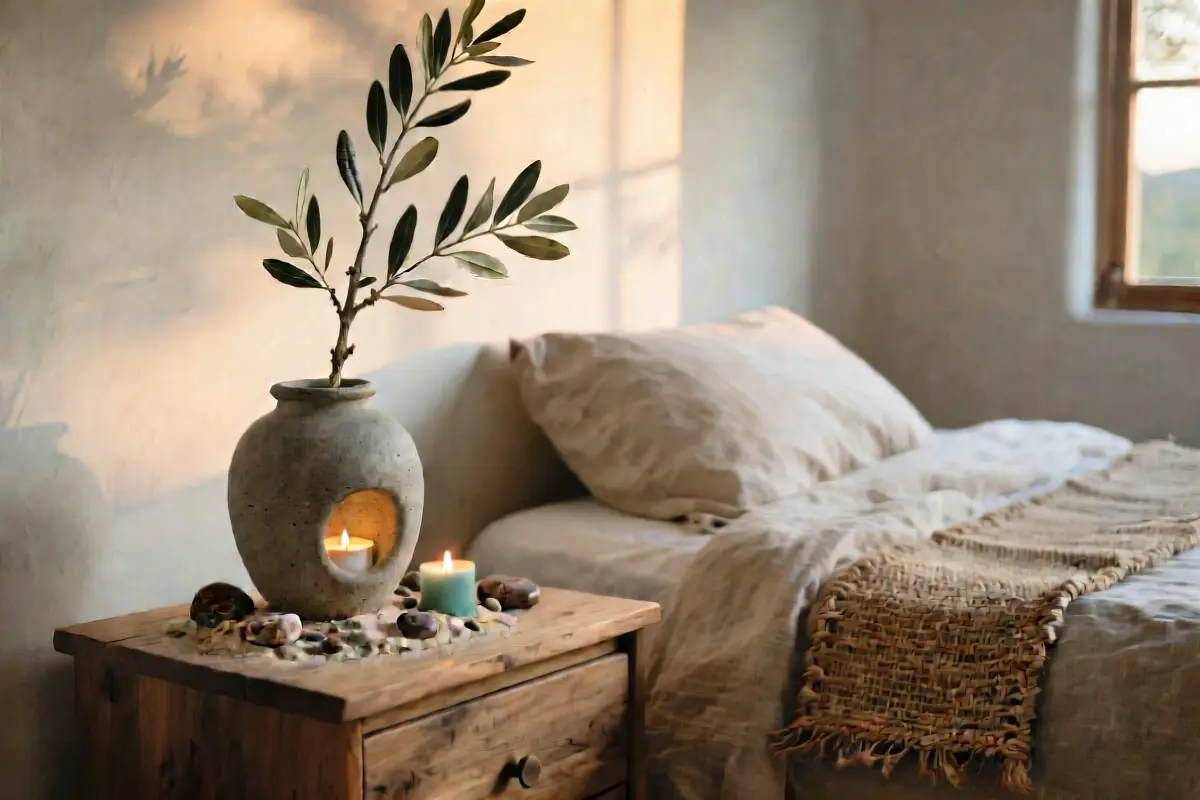
A tall, weather‑worn olive branch tucked into a matte stoneware vase creates a quiet, earth‑toned focal point on a nightstand.
Gather fresh or dried sticks like eucalyptus, olive, or stripped oak during a weekend walk. These species hold their shape and dry without shedding noisy leaves.
Place the branch upright, then fill the base with sand or river stones to keep it steady. A heavy stone vase prevents the arrangement from tipping if a curious pet nudges it.
Secure the stem by tucking a few pebbles around the base; this adds weight and stops the branch from wobbling.
The natural texture adds depth to neutral bedding and echoes outdoor calm.
If foraging isn’t practical, a bundle of store‑bought dried eucalyptus offers the same silhouette without the risk of hidden insects.
Remember that wild branches may carry tiny bugs or become brittle, so inspect them before display and replace any that start to crumble.
Finish the look by pairing the vase with a woven jute runner that ties the organic theme together. Adding a small LED tealight inside the vase gives a soft glow for bedtime reading.
9. Color-Drench the Baseboards and Trim in Muted Ochre or Sage
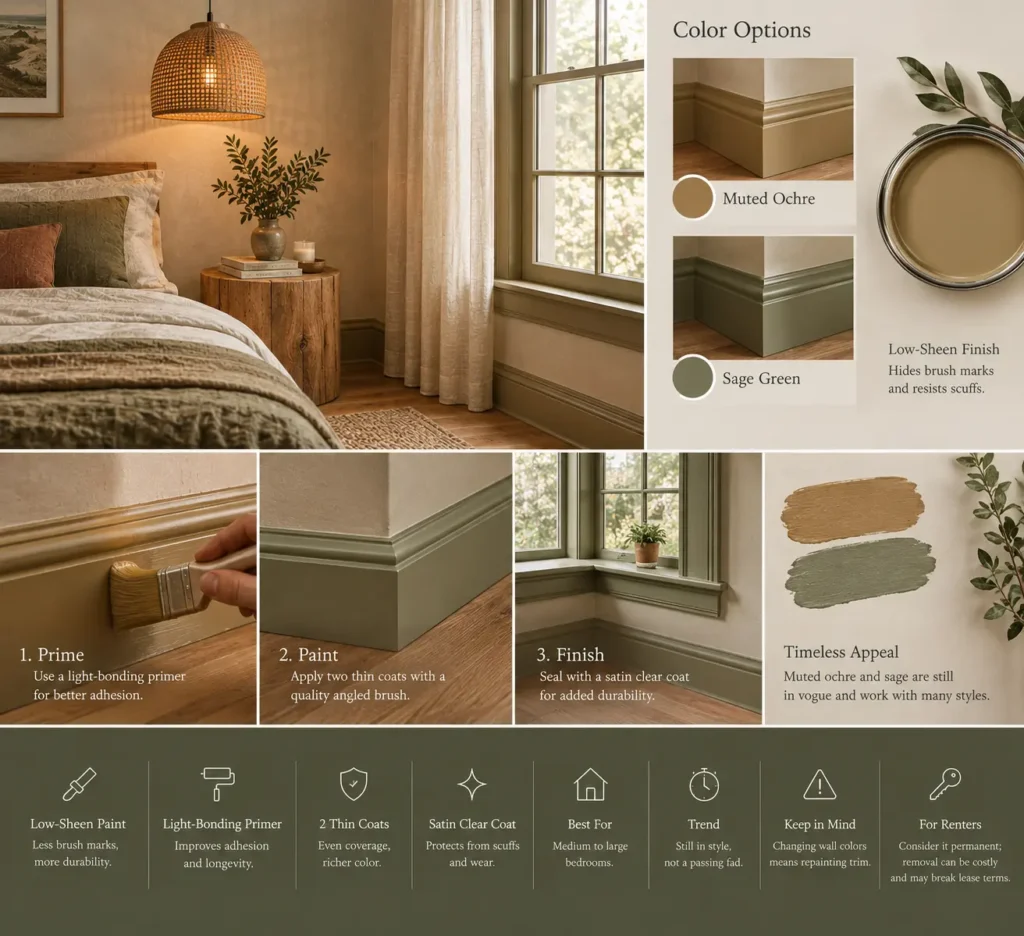
A fresh coat of muted ochre on the baseboards instantly ties the room together, turning the trim from a stark white line into a warm, grounding element.
The same technique works with sage‑toned window frames, letting the walls breathe while the woodwork absorbs and reflects soft daylight.
Choose a paint with a low‑sheen finish; it shows less brush marks and holds up to occasional scuffs.
Start with a light‑bonding primer, then apply two thin coats using a quality angled brush for even coverage.
The earthy hue wraps the space, eliminating the jarring break between wall and floor that typical builder white creates.
This approach shines in medium‑to‑large bedrooms where the color can spread without overwhelming the space.
Trend watchers note that muted ochre and sage are still in vogue, offering a timeless feel rather than a fleeting fad.
Renters should treat the idea as permanent; removing the color later means repainting all trim, which can be costly and may violate lease terms.
Keep in mind that future wall‑color changes will require repainting the trim as well, adding extra labor.
Seal the trim with a satin clear coat to protect the color from scuffs.
Your Next Grounded Upgrade
You’ve explored everything from breathable limewash walls to earthy trim, giving the bedroom a tactile, grounded vibe.
Start with the easiest win: swap a plain lampshade for a woven cane fixture or lay a jute rug under the bed, then layer in bigger changes like raw‑wood furniture or color‑drenched trim as confidence builds.
If a project feels beyond your skill set, consider a renter‑friendly peel‑and‑stick wall or a DIY reclaimed‑wood headboard to keep costs down.
Because each step is low‑impact, the room will settle into a calm, natural rhythm without overwhelming time or expense.
Save this pin, jot down your favorite ideas, and plan your first upgrade this weekend; you’ve got the know‑how to make the space feel effortlessly rooted.
Frequently Asked Questions
What are some good earthy tones to use in bedrooms?
Muted ochre, terracotta, sage green, warm taupe, and muddy brown work best because they mimic natural soil, stone, and foliage.
How do I make an earthy bedroom look modern instead of dated?
Balance rustic textures like jute or raw wood with clean, minimalist lines and uncluttered surfaces to keep the space contemporary.
Is jute a good rug material for bedrooms?
Jute adds great organic texture but can be scratchy underfoot, so it works best layered with a softer cotton or wool rug near the bed.
How can I get an organic look on a tight budget?
Focus on foraging branches, using thrifted stoneware vases, and swapping stark white light bulbs for warm-toned LED lighting.
How do you keep raw wood bedroom furniture clean?
Use a dry microfiber cloth to dust raw wood and avoid wet cleaning or harsh chemical sprays, which can stain or warp the unsealed grain.