
12 Practical Japandi Living Room Ideas for a Calm, Real-World Home
12 Practical Japandi Living Room Ideas for a Calm, Real-World Home
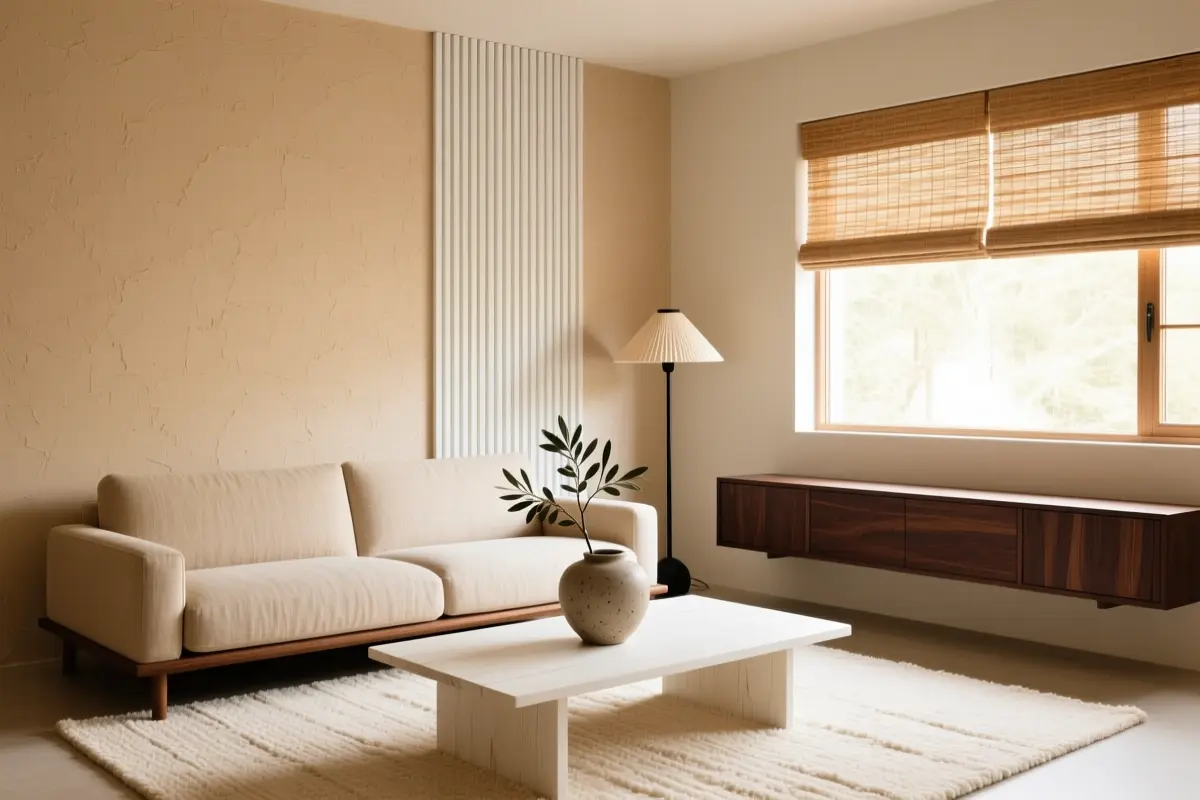
The first thing you notice in a Japandi‑styled lounge is the low, grounded sofa that lets you sit without sinking, instantly freeing up floor space.
After months of wrestling with bulky furniture and scattered toys, many families crave a living room that feels airy yet grounded.
In this list, you’ll find twelve down‑to‑earth ideas, from low‑profile seating and high‑contrast wood pairings to matte black lighting and tactile window treatments, each paired with practical tips that work in apartments, busy households, and tight budgets.
Pick the ones that match your space, and watch the room settle into a calm, modern vibe you can actually live in.
1. Low-Profile Seating with Firm Support
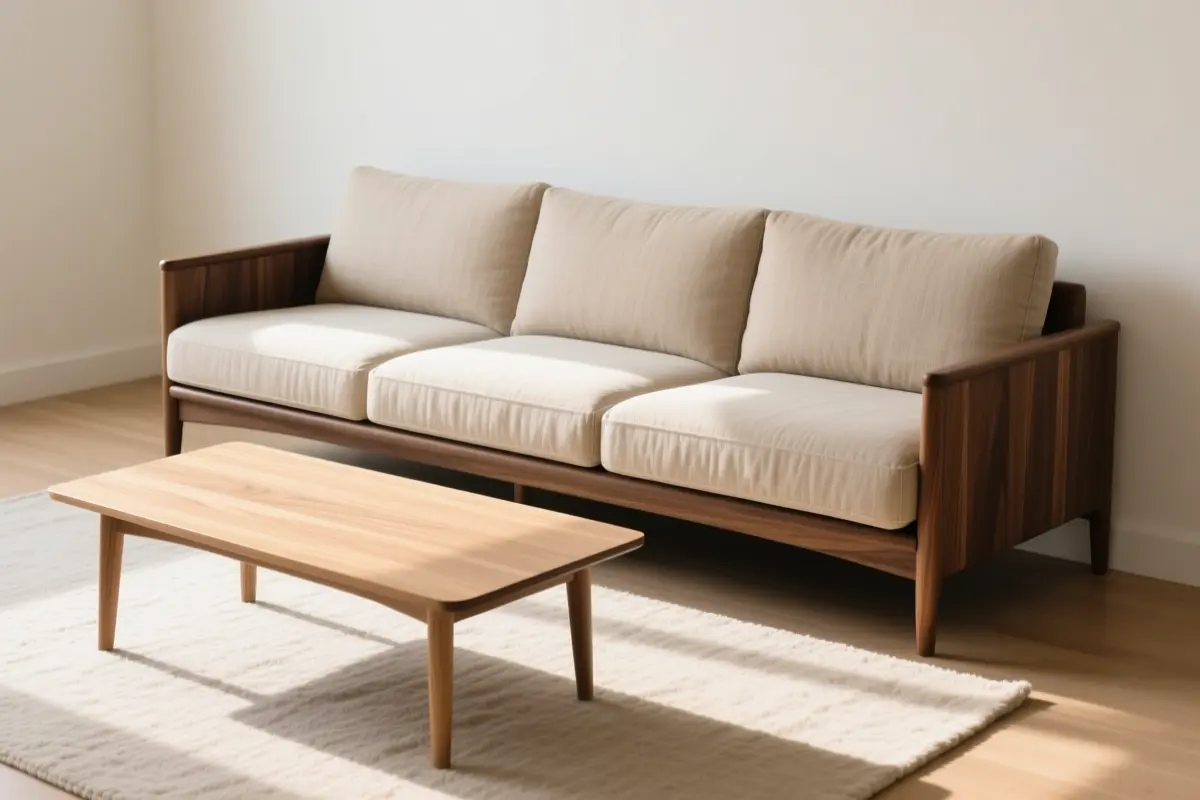
A low‑profile sofa in matte walnut with a sleek, rectangular silhouette sits flush against the floor, instantly widening the sight line.
The shallow seat height frees up vertical space, making a modest living room feel larger. Firm, high‑density foam cushions keep the sofa upright without the need for constant fluffing.
Linen‑blend performance fabric covers the cushions, offering breathability and resistance to wear. The combination of dense foam and sturdy weave holds shape through daily use.
A coffee table that clears the sofa by 4‑6 inches maintains a balanced proportion and prevents knees from hitting the legs.
The design suits couples or small families who favor a minimalist aesthetic in rooms up to 350 sq ft.
For households with seniors or guests with joint issues, a slightly higher armchair or a modular ottoman provides a gentler entry and exit.
Measure the coffee table height against the sofa seat before buying; the table top should sit just above the cushion edge for easy reach.
If the low profile feels too demanding, replace the sofa with a mid‑height lounge chair upholstered in the same linen‑blend for continuity.
2. High-Contrast Wood Tones (Oak and Dark Walnut)
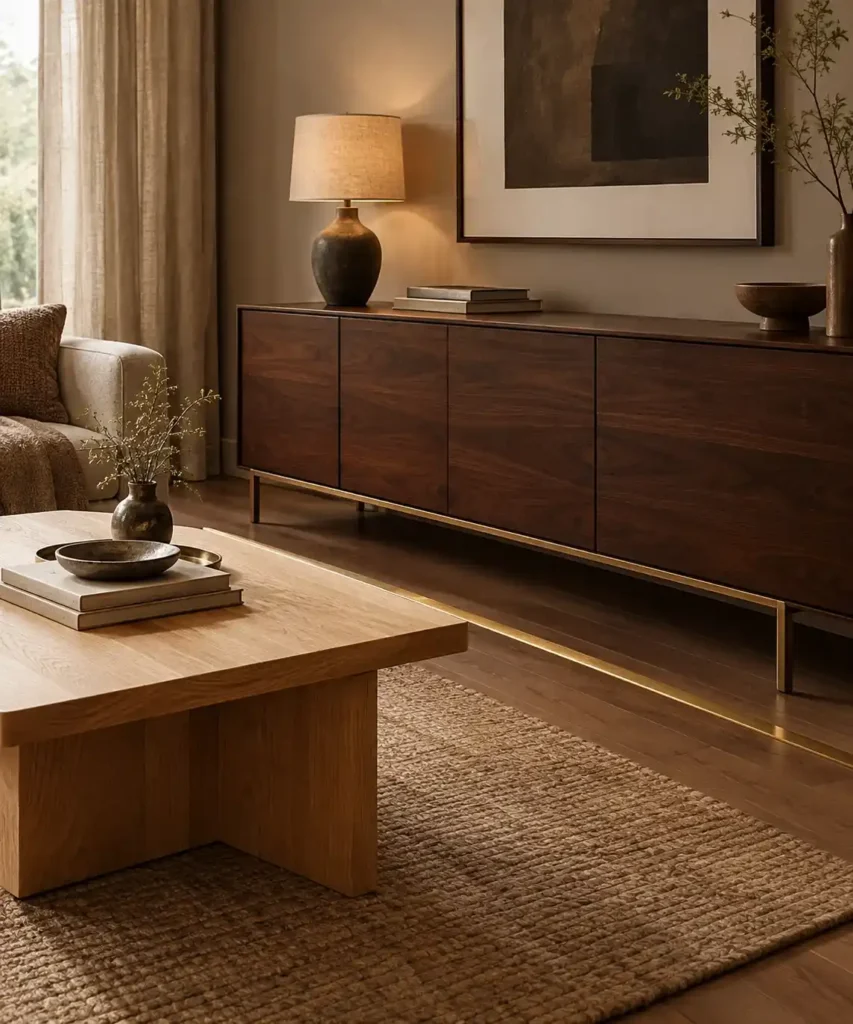
A white oak coffee table placed beside a dark walnut sideboard creates a deliberate contrast that feels intentional.
Pair the light grain of white oak or ash with the deep, almost black hue of charred cedar to echo the Japandi balance of Scandinavian lightness and Japanese depth.
The key is to match warm undertones, both woods should carry a subtle amber or honey tint so the pairing reads as a cohesive palette rather than a clash of extremes.
Avoid scattering three or more wood species in the same view; each additional tone pulls the eye and breaks the minimalist calm.
Quick tip: choose one metal accent, such as brushed brass legs or a slim hardware strip, to bridge the two finishes without adding visual noise.
Remember, mixing highly contrasting wood species demands strict adherence to matching undertones; otherwise the layout will look cluttered, chaotic, and unsystematic.
Finish the oak with a low‑sheen natural oil so its amber hue mirrors the walnut’s subtle brown, then lay a thin brass runner between the pieces to tie the tones together.
3. Textured Limewash Walls Over Flat Latex Paint
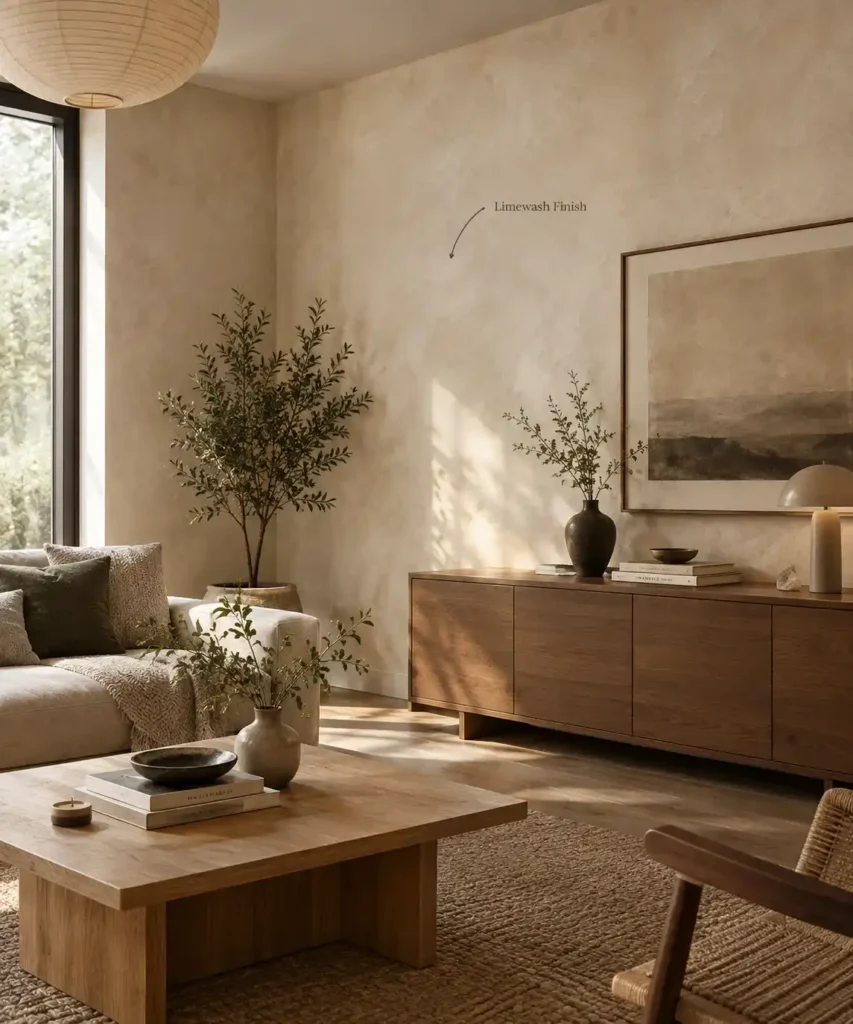
Limewash, a thin, breathable plaster made from hydrated lime, creates a soft, mottled finish that feels warm to the touch.
The texture adds tactile warmth, softening a minimalist Japandi living room without visual clutter.
Warm off‑white shades such as Benjamin Moore White Dove or Sherwin‑Williams Alabaster stay bright as daylight shifts.
The main drawback is that limewash cannot be spot‑patched; a single scuff often means recoating the whole wall.
4. Vertical Slatted Wood Accent Panels
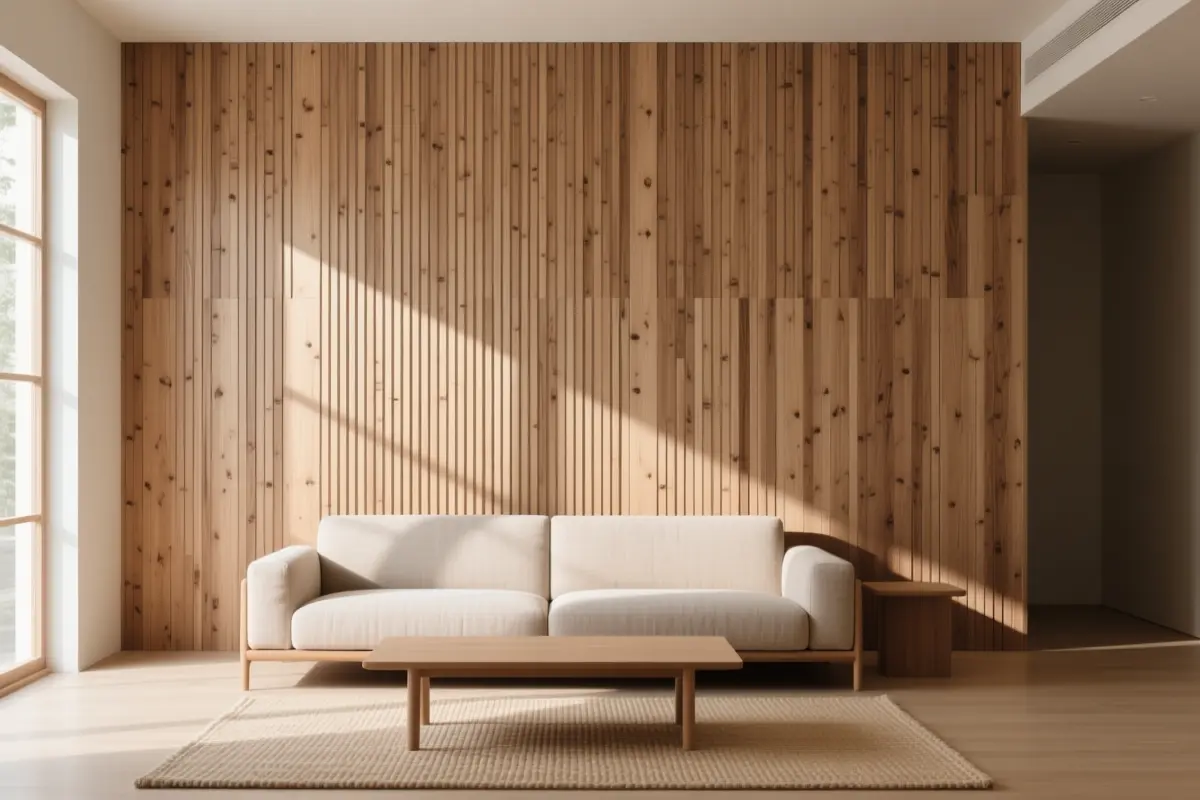
A floor‑to‑ceiling wall covered in narrow, evenly spaced vertical wood slats creates a sleek, linear rhythm that draws the eye upward.
The slats break up sound reflections, softening echo in open living rooms. Use real wood veneer strips, 1‑by‑3 in., instead of glossy PVC.
Locate studs with a stud finder, mark a level line, then attach the veneer with finishing nails and wood glue.
Place painter’s tape on the wall before nailing to keep spacing uniform. Dust and pet hair collect in the narrow channels, so a vacuum with a brush‑type attachment is needed each week.
If you rent, replace nails with removable mounting strips; the veneer can be lifted without damaging paint.
Most homeowners can finish the job in a weekend; a carpenter may be worth hiring only for large walls or if you lack a drill.
Apply a clear matte sealant after installation to protect the wood and make future cleaning easier.
5. Matte Black Lighting to Anchor the Room
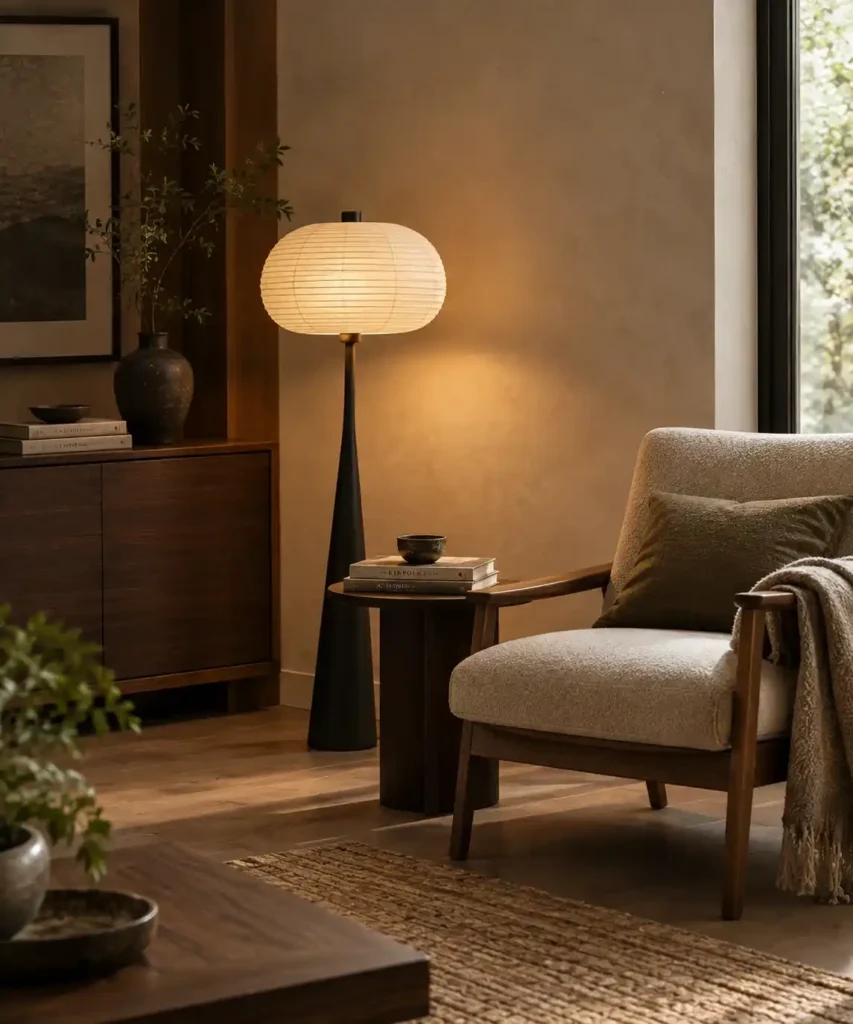
A slim matte black floor lamp with a paper shade adds a quiet anchor to a Japandi living room.
The thin metal frame stays out of sight while the dark finish pulls the eye toward the light, stopping a soft neutral palette from fading into the walls.
Shiny brass or chrome reflects too much light and competes with the natural wood tones that define the style.
Choose a lamp that stands under three feet tall and has a tapered base; it fits comfortably beside a low sofa without crowding the floor.
Because matte black shows fingerprints, oil smudges and fine white dust clearly, wipe the surface with a microfiber cloth weekly and keep a small bottle of gentle cleaner handy.
If the high‑visibility finish feels too demanding, a brushed bronze or dark walnut pendant with a linen shade offers a similar grounding effect without the same upkeep.
Pair the lamp with a simple side table and a stack of design books for an instant, functional focal point. Position the lamp on the right side of the reading nook so the light reaches the chair without glare.
6. Wall-Mounted Closed Storage Credenzas
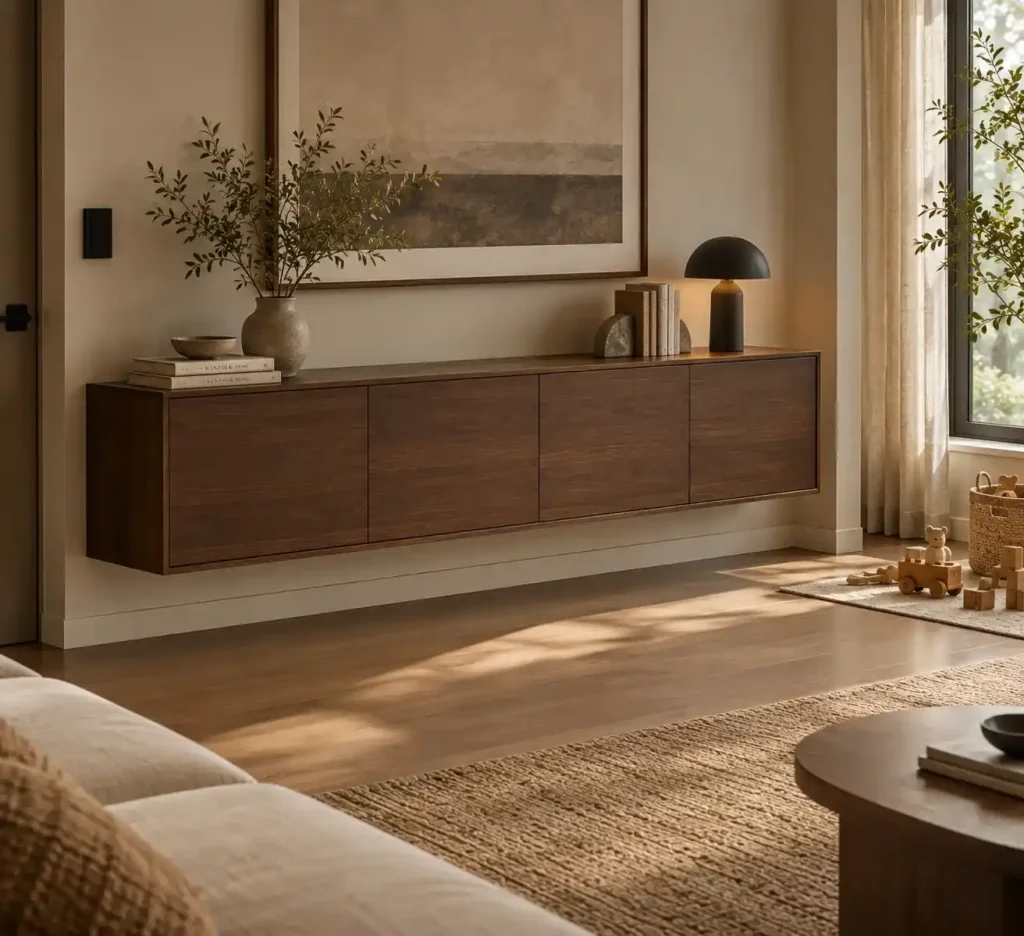
Kids’ toys, stray books, and charging cords pile up on the living‑room floor each evening, turning playtime into a tripping hazard.
A long, low floating credenza tucks those items out of sight while keeping the floor clear, which instantly makes a modest room feel larger.
The unit must be anchored into wall studs; a stud finder, 3/8‑inch lag bolts, and a level are the minimum tools.
Aim for a total load under 150 lb to stay within typical drywall limits.
This setup suits families with young children who need an unobstructed play zone and works best in living rooms under 250 sq ft.
If the permanent mounting feels too invasive, a sturdy freestanding low cabinet on metal legs offers similar clearance without wall work.
Renters can use heavy‑duty toggle bolts, but the weight cap stays the same and removal may leave larger holes.
DIYers can handle the installation confidently, yet a professional carpenter ensures the studs are correctly located and the load is evenly distributed.
Quick tip: pre‑drill pilot holes just slightly smaller than the lag bolts to avoid splitting the studs.
Add a soft rubber gasket under the credenza to protect the wall finish and reduce vibration when doors close.
7. Unglazed Ceramic and Stone Vessels
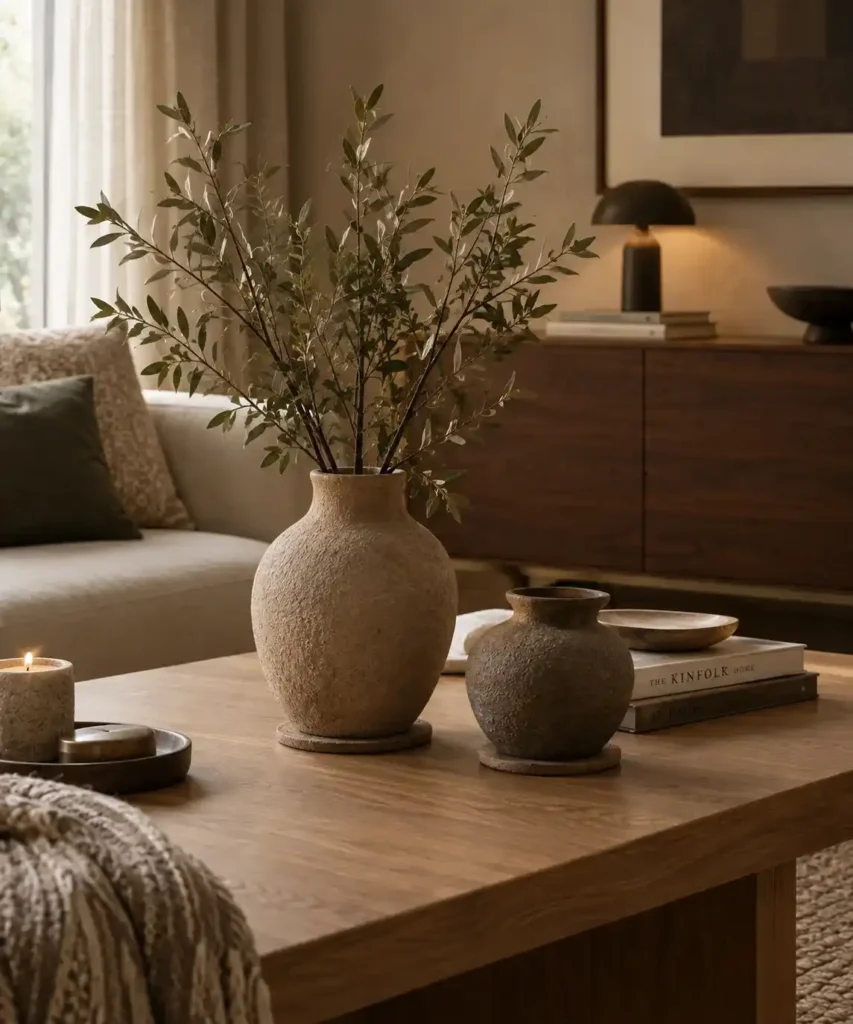
Dip an old glass vase in a blend of baking soda and matte paint to mimic the raw look of unglazed terracotta.
The gritty finish hides glossy imperfections and brings a wabi‑sabi vibe to the room. Choose vessels made from matte terracotta, coarse clay, or river stone instead of shiny store‑bought ceramics.
Their uneven surfaces absorb light, softening the space without demanding extra décor.
Because the material is porous, water will seep through if you place fresh flowers directly inside. Line each container with a thin plastic liner or a reusable silicone flower cup to protect wood floors. The liner also prevents staining on the vessel itself, extending its life.
For upkeep, wipe the exterior with a dry microfiber cloth. Avoid harsh cleaners; they can erode the natural texture.
If a spot becomes stubborn, a gentle dab of diluted vinegar followed by a quick dry will restore the matte sheen.
Place a small silicone coaster under each vessel to catch any moisture and keep the floor pristine.
8. Undyed Natural Fiber Rugs with Realistic Trade-offs
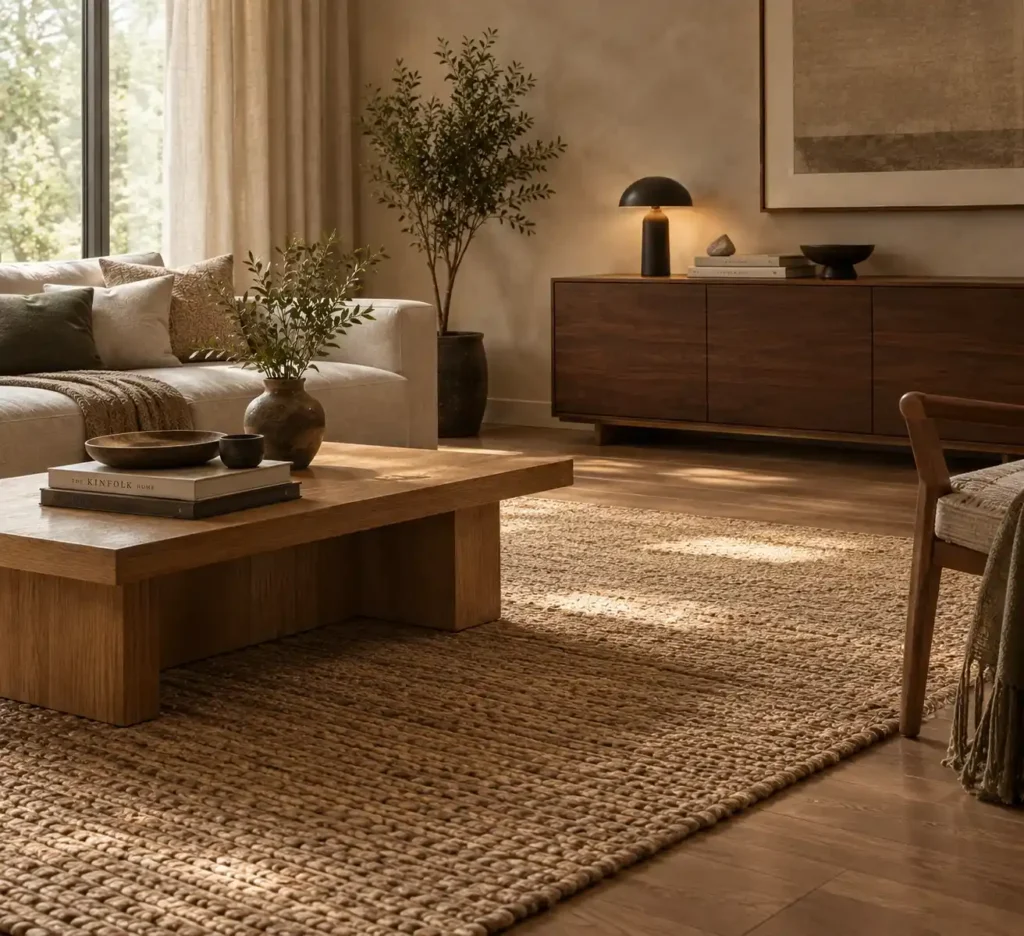
Chunky jute in its natural, undyed state spreads a warm, earthy texture across the floor.
The thick fibers anchor the sofa and coffee table, creating a defined seating zone that feels inviting on cool evenings.
Because the weave is loose, the rug can feel rough under bare feet and will shed tiny strands during the first few months of use.
Pale, undyed wool offers a softer tread but absorbs liquids quickly, leaving permanent marks if a spill isn’t blotted immediately.
For families with active pets or frequent foot traffic, a tight, flat‑weave wool rug provides a smoother surface and resists shedding while still keeping the neutral palette.
This option works best in a formal living room where décor stays static and foot traffic is moderate.
Maintenance involves weekly vacuuming with a soft brush attachment and prompt spot cleaning with a mild detergent; professional steam cleaning once a year helps restore the fibers.
To keep the rug from sliding and to catch stray fibers, lay a clear, low‑profile rug pad underneath.
9. Frameless Canvas and Washi Paper Wall Art
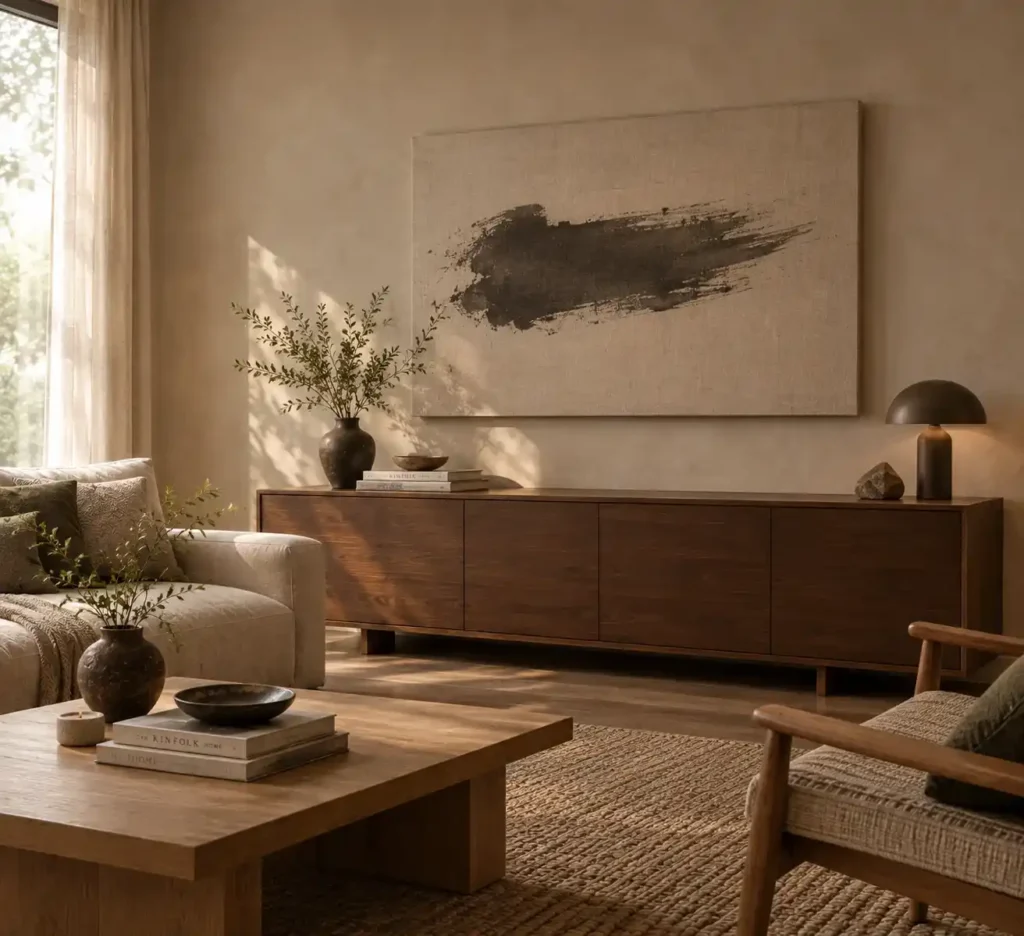
A 60‑inch linen‑wrapped canvas bearing a single, charcoal ink‑wash brushstroke across a pale background anchors the Japandi living room.
Choose one large piece instead of a clustered gallery; simple ink‑wash strokes or woven linen textures keep the space calm and avoid visual clutter.
Hang the artwork so the center sits around 57 inches from the floor; this creates a restful focal point without competing with furniture.
Because the piece is frameless, it lacks protective glass, so it can fade, collect dust, and suffer moisture damage in humid rooms.
Clean the surface with a soft, dry microfiber cloth and keep the wall away from kitchen steam or bathroom humidity.
A quick tip: attach a thin, UV‑filtering acrylic sheet with removable picture‑hanging clips; the sheet shields the art while staying easy to lift for occasional dusting.
Secure the acrylic panel with two small, removable clips so you can lift it for cleaning each season.
10. Sculptural, Low-Maintenance Indoor Plants
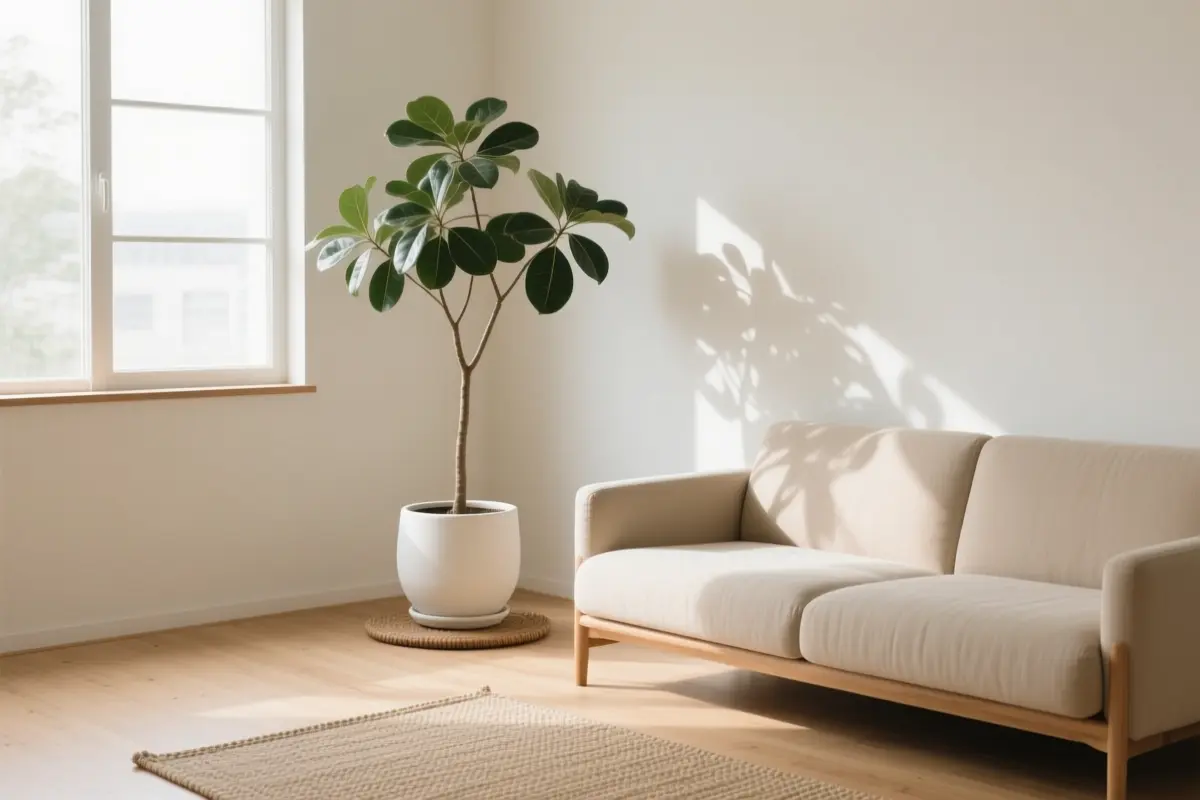
Place a single, tall ficus audrey in the corner of the living room to serve as a sculptural focal point. Its trunk and airy canopy echo the clean lines of Japandi design.
The plant thrives in bright, indirect light and prefers a stable spot near a north‑facing window. Moving it or exposing it to sudden shade often triggers leaf drop.
For homes with uneven light, a tall ZZ plant or a preserved olive branch in a tall glass vase offers a similar vertical statement without the same light sensitivity.
Keep the ficus healthy by dusting the leaves with a soft cloth once a month and pruning any wayward shoots. Repotting every two to three years prevents root crowding.
Choose a matte, neutral‑colored ceramic pot to keep the visual weight low and let the plant’s form speak for itself.
Rotate the pot 90° each month so the foliage grows evenly and maintains its architectural shape.
11. Shoji-Style Screens for Flexible Zoning
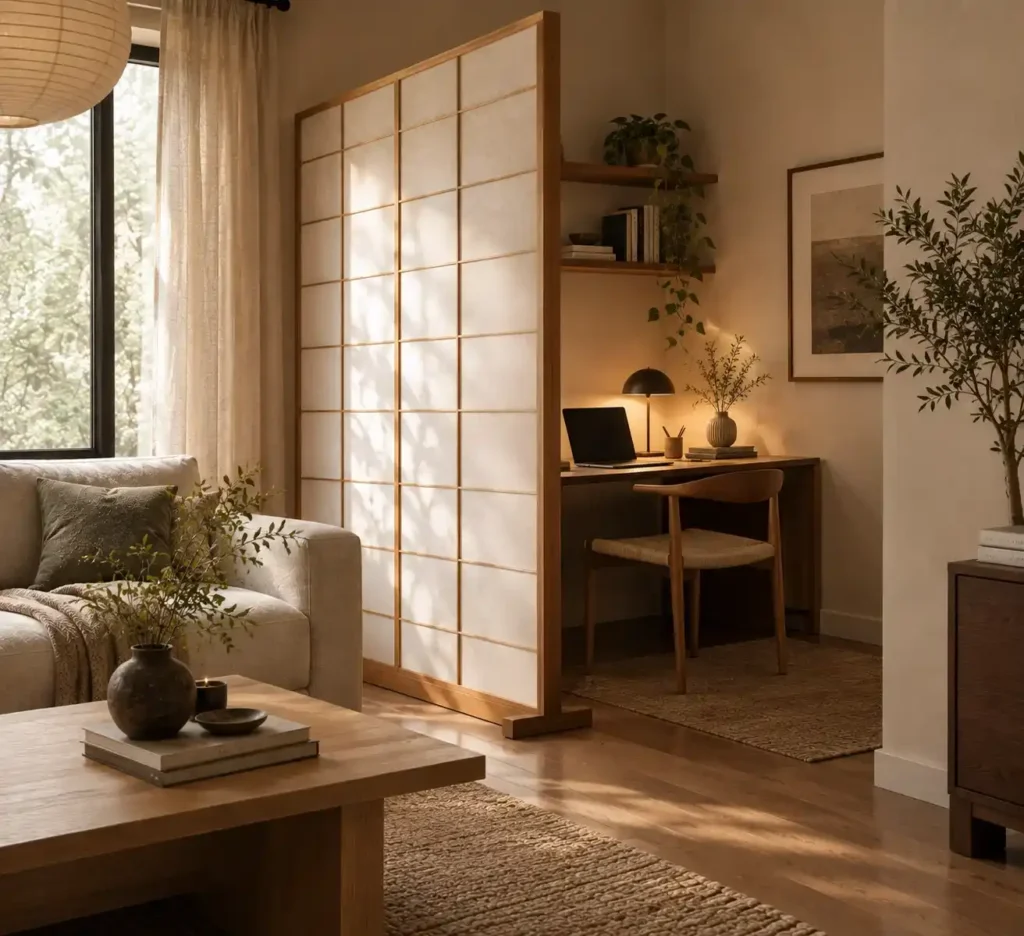
In a compact open‑plan living room that doubles as a home office, a shoji‑style screen can create a quiet work zone without sacrificing daylight.
The thin wood frame holds a paper panel that lets natural light filter through while visually separating the desk from the sofa.
This works well for remote workers who need a defined focus area but still want an airy feel.
Traditional paper‑faced shoji screens offer virtually no acoustic dampening and are highly delicate, tearing easily if bumped by pets, vacuum cleaners, or young children.
For families with toddlers, a modern slatted screen made from ½‑inch pine and fitted with a frosted acrylic insert provides the same visual break with added durability.
Choose a free‑standing model that leans against the wall; renters can avoid permanent brackets and still achieve the zoning effect.
The solution shines in rooms up to about 250 sq ft, where a single screen can partition a 6‑by‑8‑foot work corner without crowding the lounge.
Keep the screen upright by placing a weighted base on the floor and dust the paper panel weekly with a soft brush.
Attach a magnetic curtain tie to the top edge to prevent the screen from sliding during cleaning.
12. Tactile Woven Wood Window Treatments
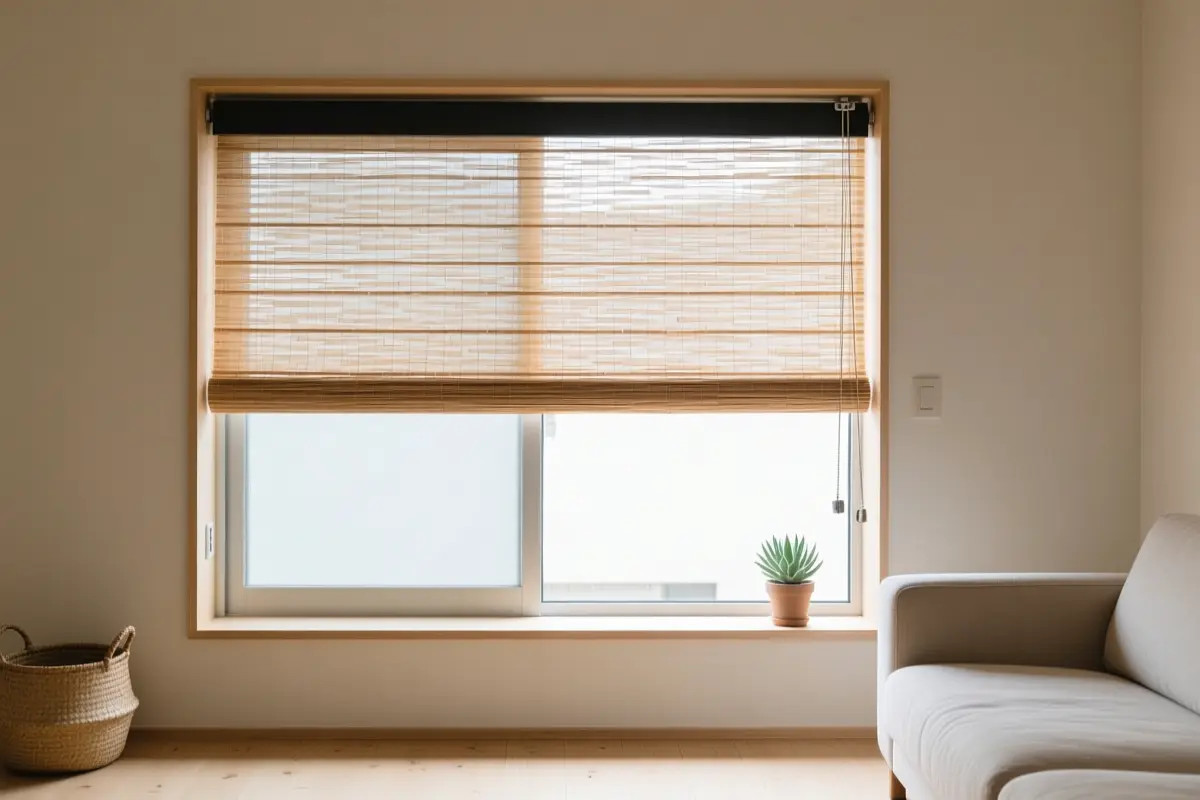
Woven bamboo roman shades bring natural texture to the window frame while softening harsh sunlight.
The slatted wood diffuses glare into a warm, even glow that feels calm in a Japandi living room.
For ground‑floor apartments, pair the shade with a thin privacy liner so evening indoor lighting doesn’t cast silhouettes onto the street.
Choose a liner that slides into the same pocket; it adds privacy without breaking the clean line of the treatment.
A quick tip: measure the window’s depth before ordering, then select a shade with a recessed mounting option to keep the profile sleek.
Renters can avoid permanent holes by installing the shade on a tension rod or using adhesive‑backed brackets that remove cleanly.
Unlined woven wood shades reveal interior light patterns at night, so the added liner is essential for privacy.
Finish the look by tucking a magnetic blackout liner behind the bamboo shade; it snaps into place and offers complete night‑time concealment while preserving the organic aesthetic.
Pick Your Favorite Japandi Touch
Low‑profile sofas keep the floor clear, while matte black fixtures anchor the palette, making each of the twelve ideas practical for everyday living.
Begin with the simplest change, swap a lamp for a sleek black model or add a woven wood shade to a window, then introduce the next element once you feel comfortable.
Key steps include measuring before you buy, securing wall‑mounted pieces to studs, and selecting durable fabrics that handle daily traffic.
- Measure before you buy
- Secure wall‑mounted pieces to studs
- Choose durable fabrics that stand up to everyday traffic
Keep in mind that completing the full Japandi look may require several purchases over time, which can increase costs.
Completing the full Japandi look may require several purchases over time, which can increase costs
When the room settles into a quiet, modern calm, the effort will be evident.
Save this list for your next weekend project and share it with anyone looking to tame their living room.
Frequently Asked Questions
What is the main difference between Scandinavian and Japandi style?
Japandi design infuses the warm, functional comfort of Scandinavian interiors with the rustic, nature-focused minimalism and darker, contrasting wood tones of traditional Japanese design.
How do you keep a Japandi living room from feeling too cold or sterile?
Avoid a sterile look by layering highly tactile natural materials such as raw clay, slatted wood, undyed wool rugs, textured limewash paint, and soft, warm-toned lighting rather than stark whites and metals.
Are Japandi living rooms practical for families with kids or pets?
Yes, Japandi can be family-friendly if you choose low-profile furniture with rounded corners, performance linen upholstery that resists stains, and closed wooden credenzas to hide toys and media clutter.
What colors make up a classic Japandi paint palette?
A classic Japandi palette consists of warm off-whites, soft creams, and sandy beiges, accented by earthy tones like olive green, terracotta, charcoal grey, and pops of matte black.
