10 Moody Loft Design Ideas That Balance Drama and Practical Light
Moody loft design works when dark, matte surfaces are balanced by warm, layered lighting and a few tactile materials. The ten ideas below cover charcoal plaster walls, low-profile dark wood furniture, blackened steel, low-kelvin lighting, heavy drapery, patinated leather, smoked glass, earthy accent colors, acoustic wood slats and oversized textured art.
The challenge is making an industrial-scale open floor feel intimate without painting everything black, so light placement and texture matter as much as color. Each idea notes what it takes to install, what it asks of you in upkeep, and when to call a professional.
Charcoal Roman Clay or Limewash Feature Walls
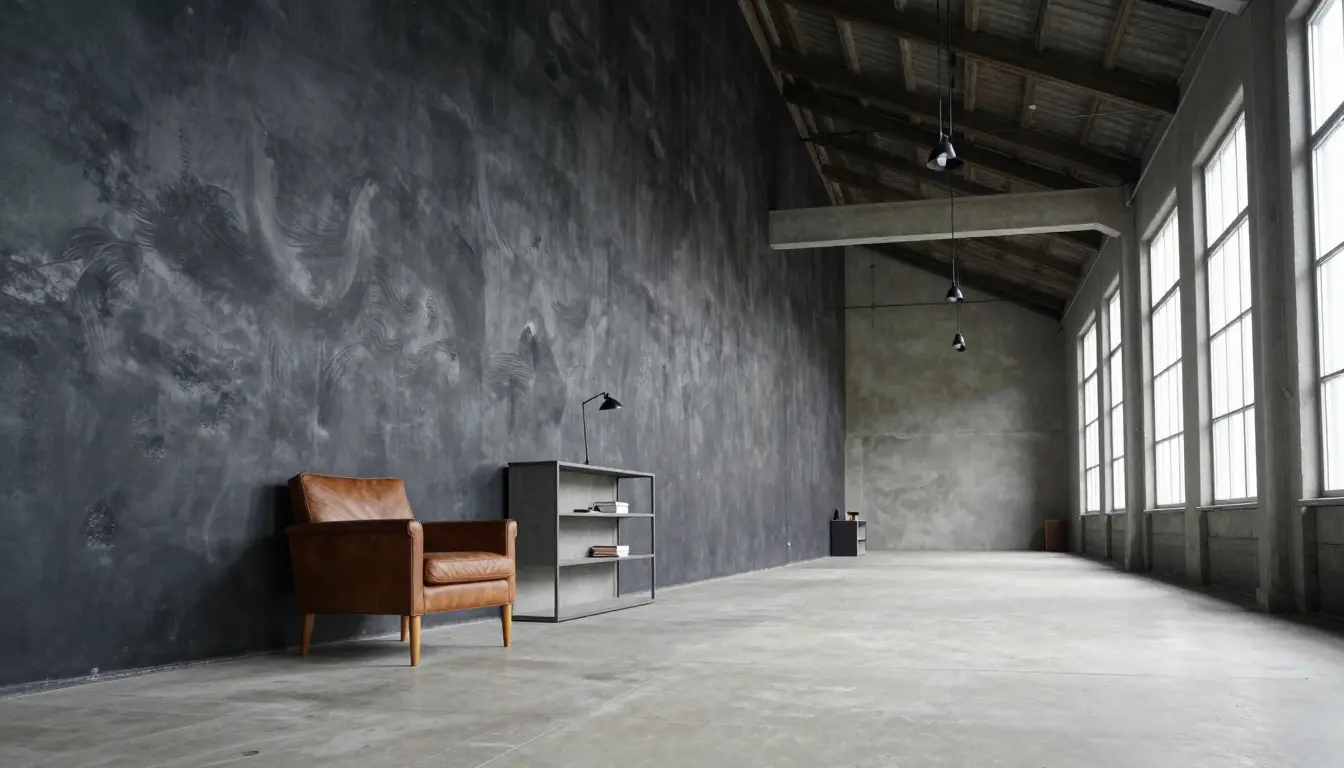
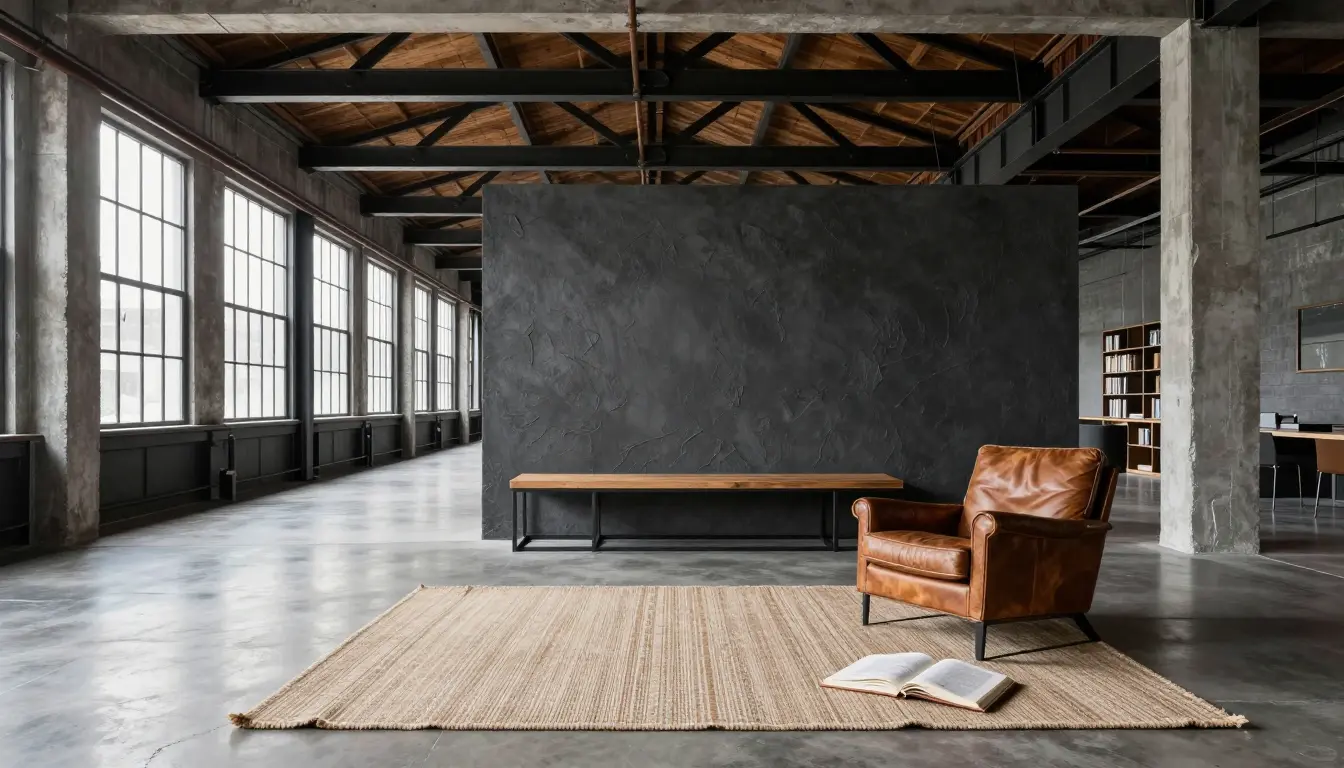
Roman clay plaster, a matte mineral-based finish, soaks up harsh bounce light and creates a subtle, shifting organic pattern across a loft’s expansive walls. For drywall, sand to a smooth sheen, apply a skim-coat primer, then roll the plaster in thin layers; aged masonry needs a bonding primer to prevent delamination.
Seal high-traffic zones with a clear, breathable topcoat to repel grease and hand oils, otherwise stains will set. Limewash is the lighter-weight alternative: it brushes on over primed walls, gives a softer, cloudier look than Roman clay, and is easier to touch up.
If the prep demands feel overwhelming, opt for a high-coverage, low-sheen acrylic paint that wipes clean and can be painted over at move-out. Mineral plasters are permanent; the paint alternative is renter-safe. Most homeowners hire a plaster specialist, as the meticulous substrate work isn’t a typical DIY project.
- Dramatic depth
- Organic texture
- Requires expert priming
- Hard to spot-repair
Painting standard flat latex over plaster hides the texture and is hard to reverse.
Oiled Walnut and Dark Oak Low-Profile Furniture
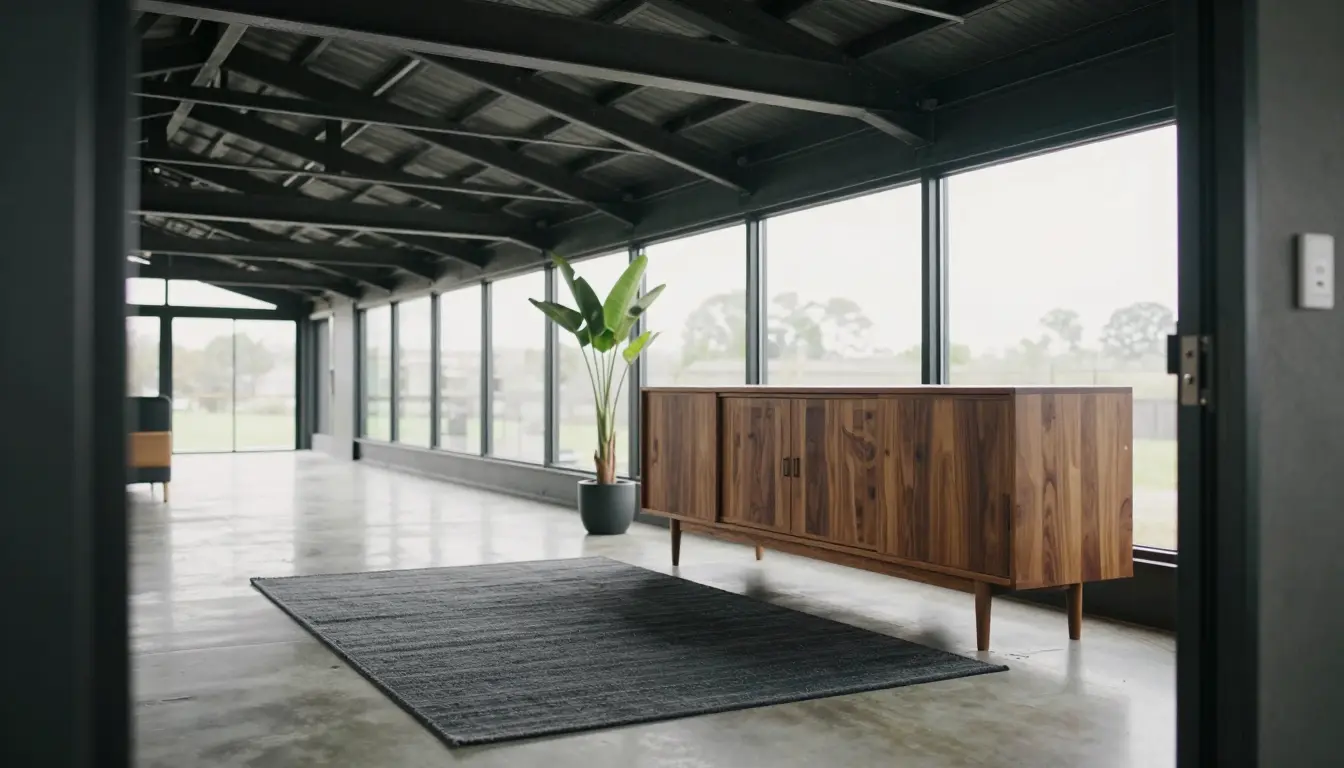
A low-slung credenza of oiled walnut stretches beneath a 14-ft ceiling, its dark grain catching the soft loft light.
The piece anchors a seating zone on a polished concrete slab, its warm tone breaking up the cold surface while keeping sightlines open.
Low-profile solid wood furniture preserves the loft’s vertical space, but it gives up the tall storage capacity of traditional cabinets.
To keep the finish looking fresh, wipe the wood with a dry microfiber cloth weekly and re-oil it once or twice a year as the sheen dulls; avoid abrasive cleaners that can strip the oil.
This approach works best in lofts larger than about 1,200 sq ft, where the floor plan allows a clear 3- to 4-foot circulation path around the low furniture.
- Preserves loft sightlines
- Adds warm wood texture
- Loses tall storage capacity
- Requires periodic oiling
Dust weekly with a dry microfiber cloth and re-oil once or twice a year to maintain the finish.
Blackened Steel Hardware and Exposed Structural Framing
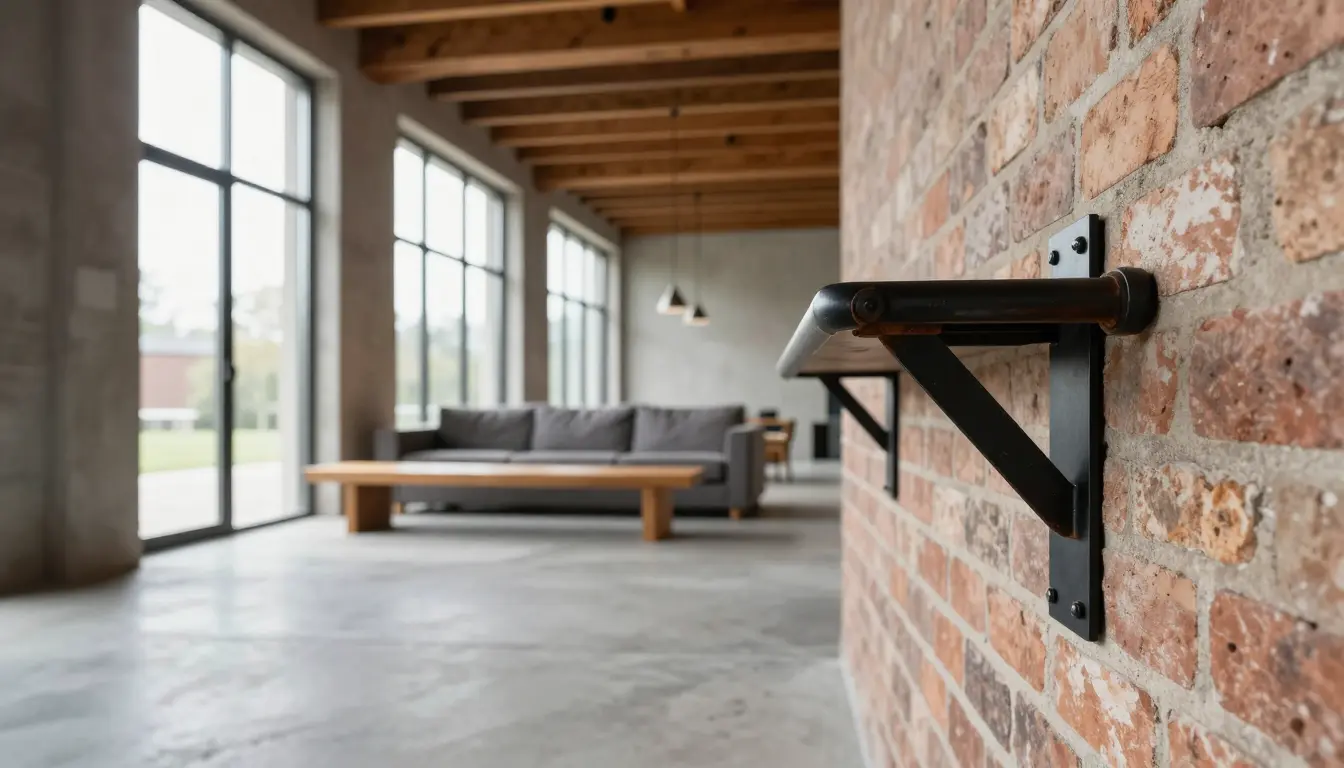
Matte blackened steel hardware anchors the moody loft aesthetic. Choose a satin or matte black finish rather than gloss, which reflects glare and shows every fingerprint.
Custom brackets need a rust-inhibiting primer under the black finish; bare steel picks up oil from hands and starts to corrode over time. For renters, magnetic conduit clips and a ready-made satin-black pipe shelving unit give the same industrial edge without drilling.
Welded brackets and built-in conduit runs should be left to a metal fabricator and a licensed electrician. DIY is realistic for clip-on systems and freestanding pipe shelving.
If the industrial look feels too stark, swap steel for dark wood moldings for a softer mood.
- Industrial edge
- Low glare
- Requires specialist finish
- Potential corrosion
- Magnetic clips: about $20 to $35
- Custom fabricated bracket: about $150 to $300 each, depending on size and finish
Layered Low-Kelvin Task and Accent Lighting
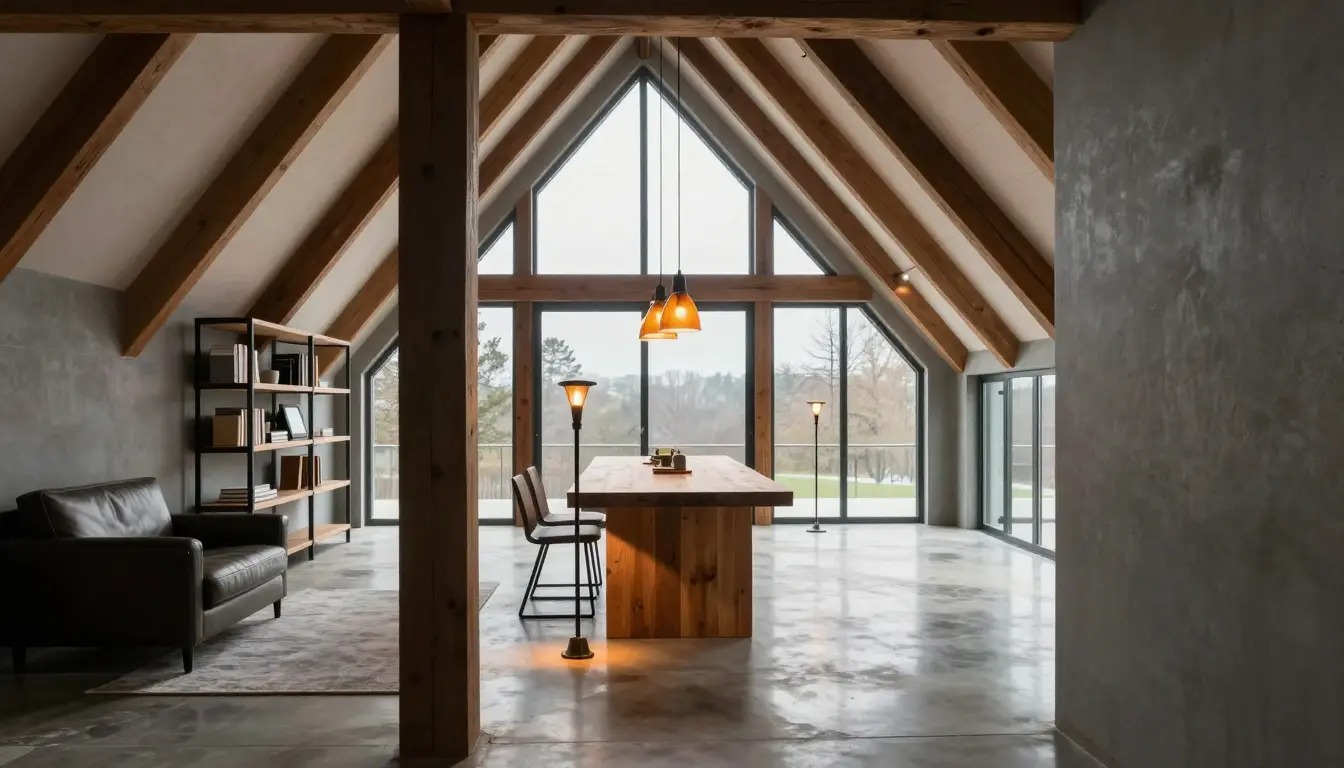
Dark loft corners often end up with harsh overhead glare that makes reading or cooking feel like a chore. Solve it by zoning each area with warm-white lamps (2200K to 2700K) placed at eye level or just below, such as slim torchiere floor lamps, under-cabinet strips and pendant clusters.
Aim for roughly 30 to 50 lumens per square foot on work surfaces to keep shadows short without killing the moody vibe. A common slip is mixing in cool-white LEDs; next to warm lamps they look flat and bluish and dull dark paint.
The trade-off is clear: ultra-warm, low-level light creates atmosphere but needs dedicated task lamps to stay functional. The approach scales to any loft size; add one lighting zone for each activity, such as reading, cooking and desk work.
- Moody ambiance
- Precise task lighting
- Needs extra fixtures
- Higher lamp count
- Color temperature: 2200K to 2700K
- Placement: eye level or below
- Task lighting: roughly 30 to 50 lumens per sq ft
Floor-to-Ceiling Wool and Heavyweight Velvet Drapery
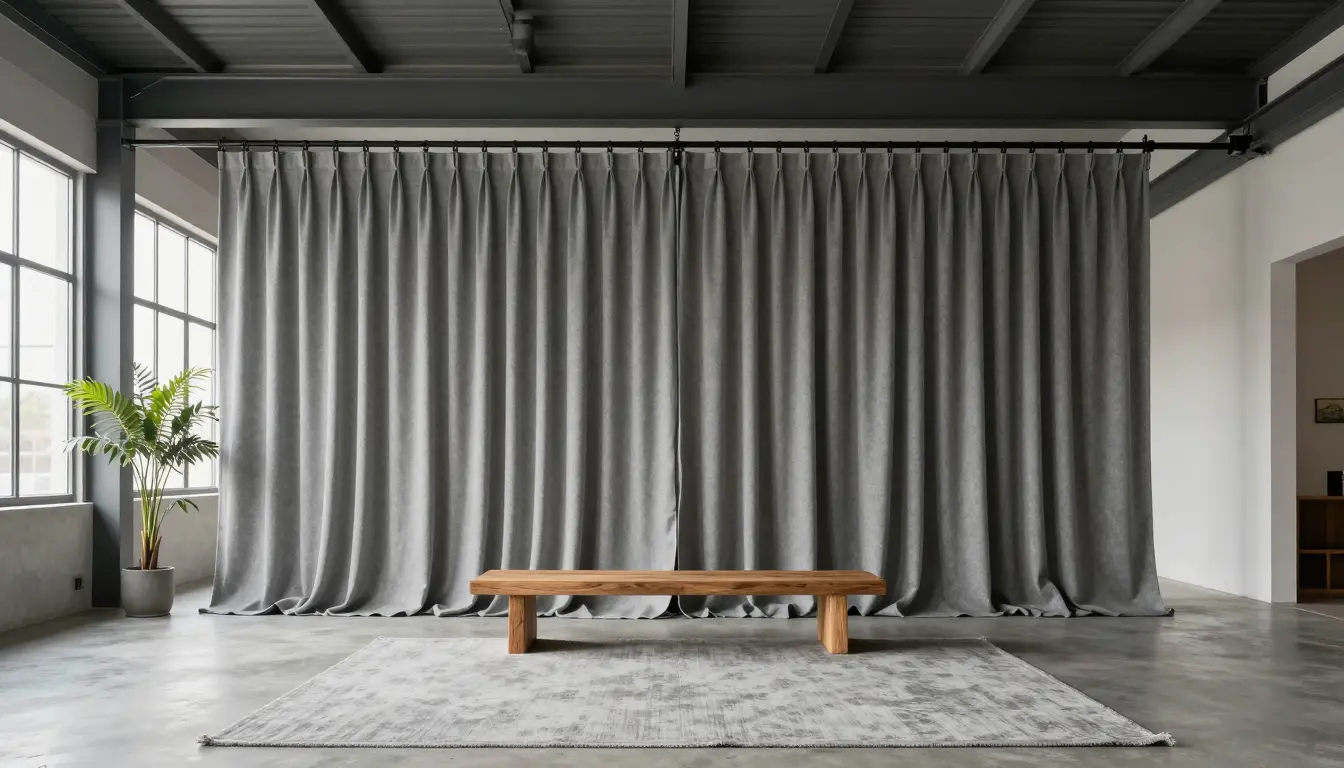
Hanging floor-to-ceiling drapery on a heavy-duty ceiling track creates instant drama. Slate gray wool or forest-green velvet panels that stretch 12 to 14 feet soften industrial echo while framing the loft’s height.
The fabric’s mass is the main constraint. The track must be rated for the full weight of the panels (lined velvet can add several pounds per foot of track) and anchored into joists or solid blocking, never drywall alone. A professional installer should confirm joist spacing before mounting.
If the ceiling can’t take the load, or you rent, a lighter acoustic panel system gives a similar sound benefit without the structural demand. Wool tolerates occasional vacuuming with a brush attachment. Velvet attracts dust and often needs professional cleaning, so check the care label before you buy and skip home steaming unless the label allows it.
DIY installation is risky unless you have a stud finder, heavy-duty brackets and experience with ceiling loads.
- Dramatic visual impact
- Acoustic dampening
- Heavy anchors needed
- Velvet needs careful cleaning
Improper ceiling anchoring can cause panel failure and damage.
Cognac and Saddle Leather Seating with Worn Patina
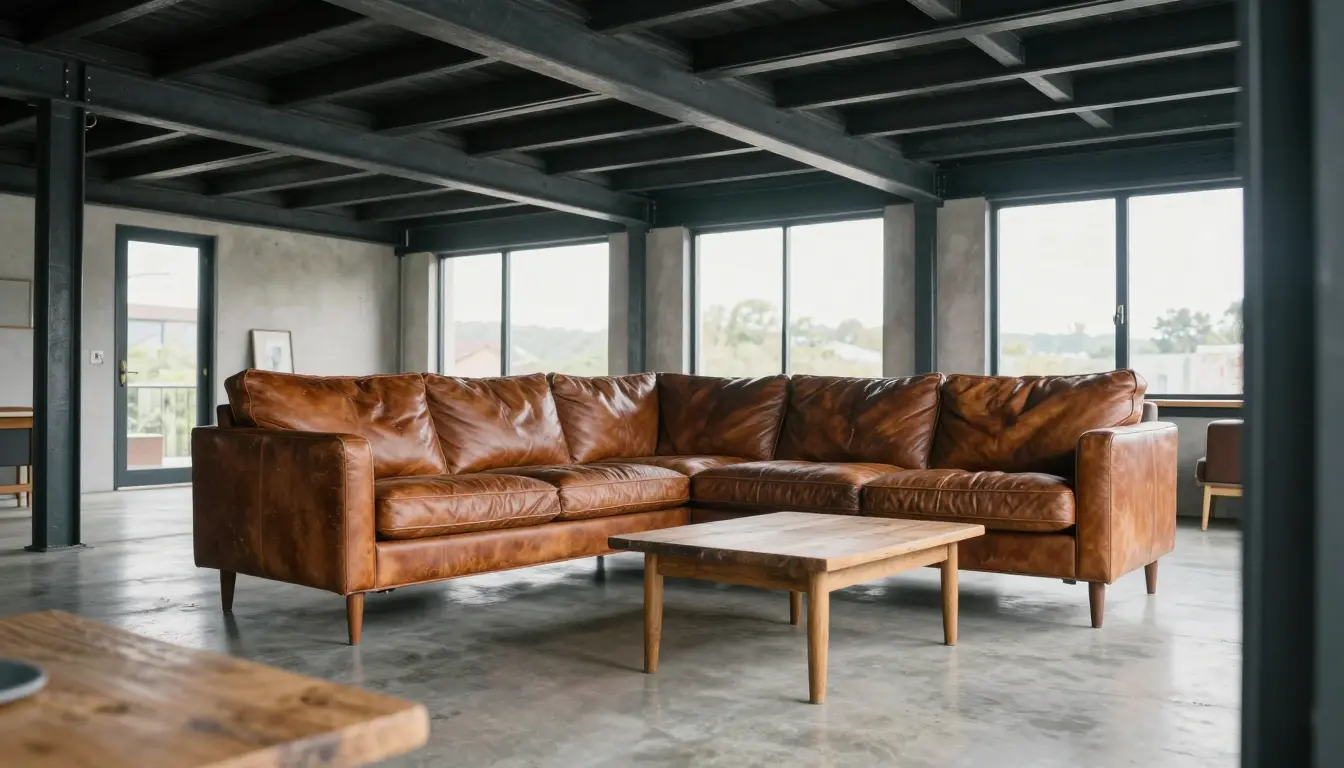
Cognac-stained top-grain leather feels richer next to a slate-gray loft wall, breaking the monochrome without overwhelming the space. Leather with a distressed patina wipes clean of pet hair and minor spills far more easily than dark chenille or bouclé, which trap hair and show every mark in high-traffic living areas. Claws can scratch it, but scratches tend to blend into the patina.
Authentic top-grain leather offers lasting warmth, but it comes with a higher upfront price and needs conditioning about twice a year, more often near sunny windows, to prevent cracking.
If the cost or maintenance feels steep, a high-performance faux leather in a similar hue provides a budget-friendly, low-care alternative that still resists stains.
Place the sofa against an exposed concrete wall and anchor it with a rough-finished iron coffee table; the metal’s industrial edge keeps the room from feeling overly soft.
- Wipes clean easily
- Adds warm contrast
- High upfront cost
- Needs regular conditioning
Pair a leather sofa with a black pipe-leg iron coffee table for industrial balance.
Smoked Glass Partitions and Fluted Wire Panels
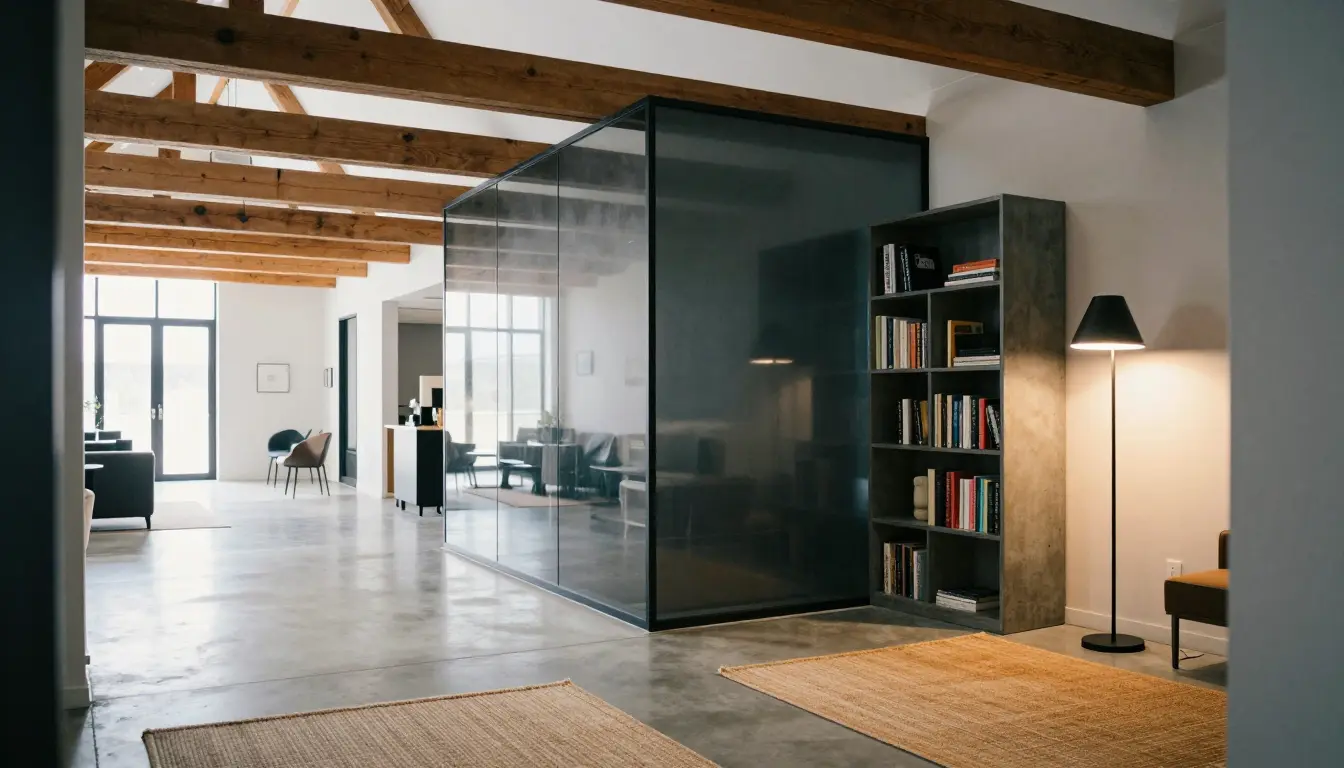
A smoked glass partition lets light pass where a drywall wall would block it, keeping the loft airy yet defined. Dark-tinted glass creates visual zones for a bedroom nook or home office without sacrificing the floor-to-ceiling view.
Fluted or wire-mesh panels are a lighter, more textured alternative: they obscure the view for privacy while still passing light, and they usually cost less than full-height tempered glass.
The trade-off is that fingerprints and dust show up more starkly, so a microfiber cloth and glass cleaner become regular tools. If the upkeep feels too high, a floor-to-ceiling curtain rail offers a softer, washable alternative.
Installing tempered smoked glass typically requires a professional glazier; DIY mounting kits exist but demand precise measurements and safety brackets. A common mistake is using abrasive cleaners, which can scratch the surface and ruin the finish.
- Preserves natural light
- Adds dramatic visual depth
- Highlights fingerprints
- Higher cleaning frequency
Use tempered glass with proper mounting hardware, and handle panels with gloves during installation.
Deep Earthy Accent Hues: Oxblood, Olive, and Burnt Amber
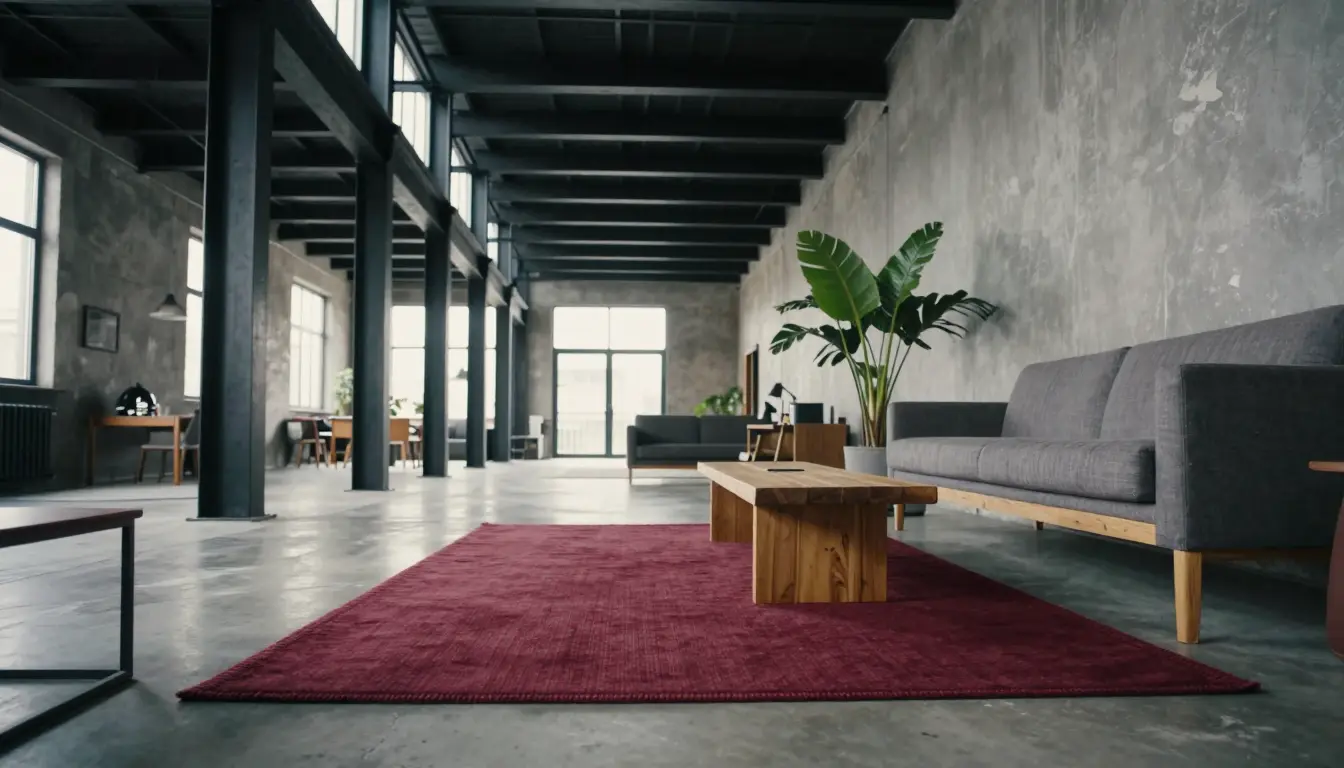
Lay a low-pile rug in oxblood or burnt amber across the central walkway to anchor the floor without overwhelming the loft’s high ceilings. Follow an adapted 60-30-10 rule: 60% neutral concrete or reclaimed wood, 30% muted olive walls or furniture, and 10 to 15% saturated accents like the rug, a set of terracotta ceramic planters and a few woven throw pillows.
Keep accents under 15% to preserve the moody feel; a common mistake is layering multiple bold textiles, which quickly turns the space chaotic. Pair the rug with a single olive-green sofa and a burnt-amber throw, then add one or two planters for a subtle pop of life that breaks up the gray.
- Adds visual warmth
- Enhances depth
- Over-saturation can break the mood
- Requires careful proportion
Try the squint test: if the accent colors grab your eye before the walls and furniture do, remove one textile.
Dark Acoustic Wood Slat Panels on Tall Ceilings or Niches
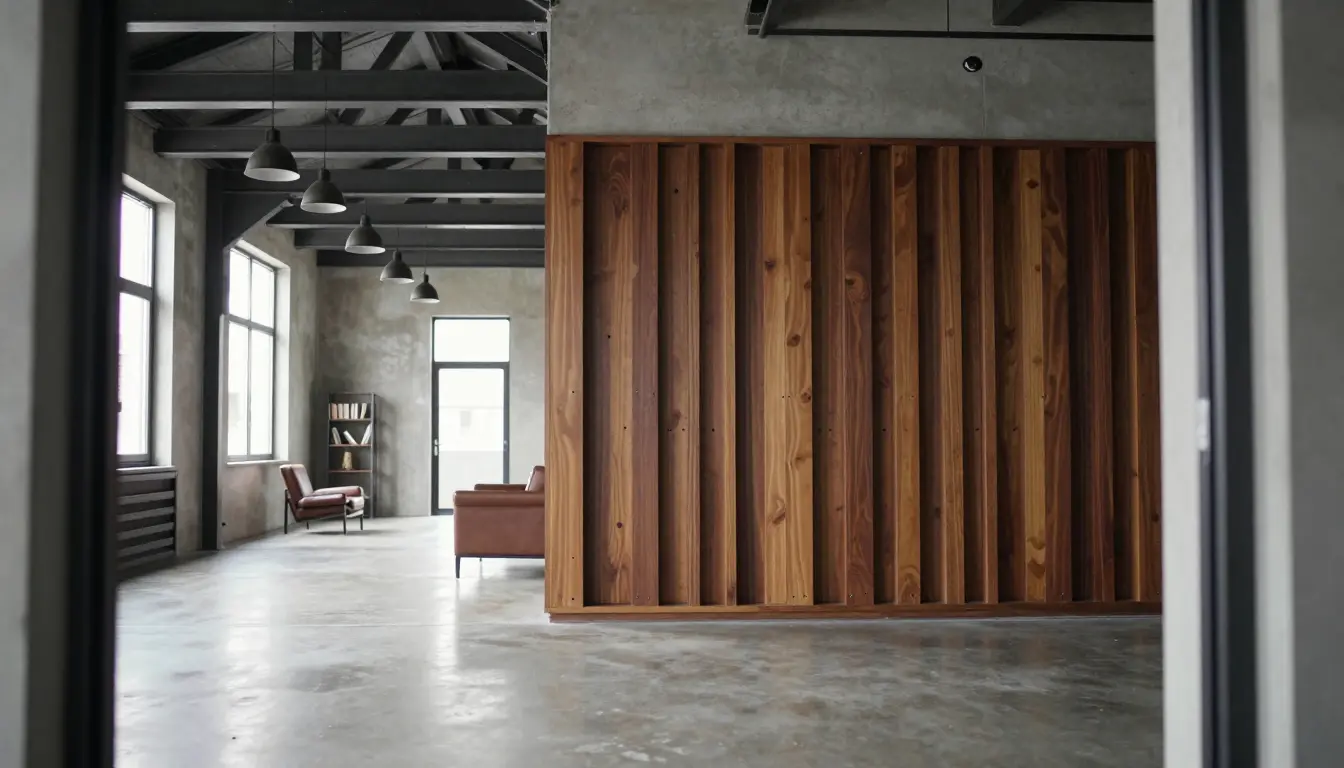
Echoes bounce off exposed loft beams, making conversation feel like shouting in a canyon. Dark walnut slat panels with felt backing absorb mid-range frequencies and calm the reverberation.
For a full-wall treatment, locate studs with a stud finder, cut panels to the 4-ft height of the niche, then fasten with #8 black drywall screws into the studs, spaced 16 in. apart. Trim excess with a circular saw and a fine-tooth blade.
A renter-safe shortcut is to mount a 3-ft vertical slat strip behind a desk using removable adhesive strips rated for the panel’s weight; it offers a similar acoustic gain without drilling into the wall. If the loft is under 12 ft high, a single accent strip works best; taller spaces need multiple sections.
If wood slats aren’t your look, a heavy fabric wall hanging absorbs sound in a similar way.
- Muffles echo
- Adds dramatic texture
- Costly at full coverage
- Labor-intensive install
- Locate the studs
- Cut panels to niche height
- Attach with black drywall screws
Oversized Monochromatic Canvas and Textured Plaster Art
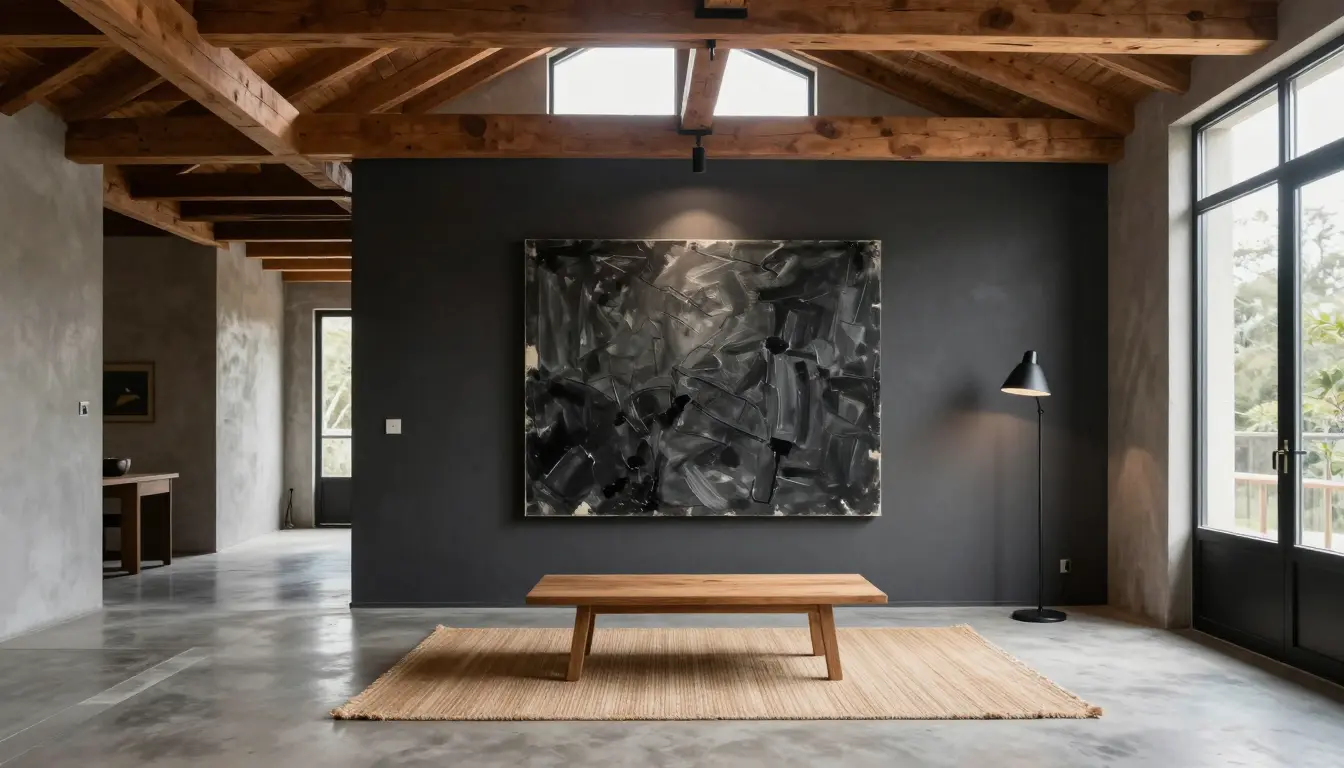
Dark, matte walls stretch across the loft, broken only by a single 48×72-inch charcoal canvas with thick impasto strokes. A piece that size commands attention and lets a directional spotlight bounce off the ridges, creating depth without a glass frame.
Aim for a minimum of 40×60 inches; smaller prints disappear in the void and make the room feel emptier. Keep the palette monochrome to let the texture do the drama.
A canvas this size needs a two-person lift, wall anchors or a French cleat rated for its weight, and possibly a professional installer. For tighter budgets or limited ceiling height, swap the canvas for a large textured plaster panel that can be painted in place.
This works best in open-plan living areas with ceilings over 10 feet.
- Dramatic focal point
- Texture reflects light
- Heavy to transport
- Specialty mounting
Use a pivoting swivel bracket to adjust the spotlight angle after hanging.
More Loft and Moody Room Ideas
- 12 Sophisticated Loft Ideas for a Modern Home
- 11 Luxe Loft Apartment Ideas That Feel High-End
- Dark Moody Living Rooms: 15 Designer Ideas
Frequently Asked Questions
Will painting a loft apartment dark make the space feel smaller?
Not usually. Dark paint blurs the corners of a room rather than shrinking it, making expansive loft boundaries recede visually while creating a cohesive, cozy atmosphere.
What light bulb color temperature works best in a moody industrial space?
Warm white bulbs between 2200K and 2700K are ideal because they bring out the undertones in dark finishes and raw brick without producing harsh clinical glare.
How do you light a dark loft so it feels cozy, not gloomy?
Layer warm light at several heights: floor and table lamps at eye level, under-cabinet or shelf strips for task zones, and dimmable pendants overhead. Keep every bulb between 2200K and 2700K so colors read consistently.
Can renters get a moody loft look?
Yes. Swap permanent finishes for removable ones: low-sheen washable paint instead of Roman clay, magnetic conduit clips instead of welded brackets, freestanding pipe shelving, a large rug, and plug-in warm lamps.