10 Moody Modern Organic Bedroom Ideas That Actually Work in Real Homes
10 Moody Modern Organic Bedroom Ideas That Actually Work in Real Homes
The moment you step into a bedroom where the walls swallow the light, and the floor feels like a shadow, you know the vibe is off. You love the depth of dark paint, but the room feels cramped and cold.
In this list, you’ll find eight ways to pair that moody backdrop with organic textures: charcoal walls with raw‑edge oak, olive‑green accents, Roman clay finishes, linen bedding, smoked‑glass lighting, natural‑fiber rugs, woven cane nightstands, heavyweight flax drapes, foraged branches, and hidden storage solutions.
Whether you’re in a small apartment or a spacious master suite, the projects are doable on a budget and keep the look modern, not rustic. Expect a bedroom that feels grounded, tactile, and still invites rest.
1. Pair Charcoal Walls with a Raw-Edge Oak Headboard
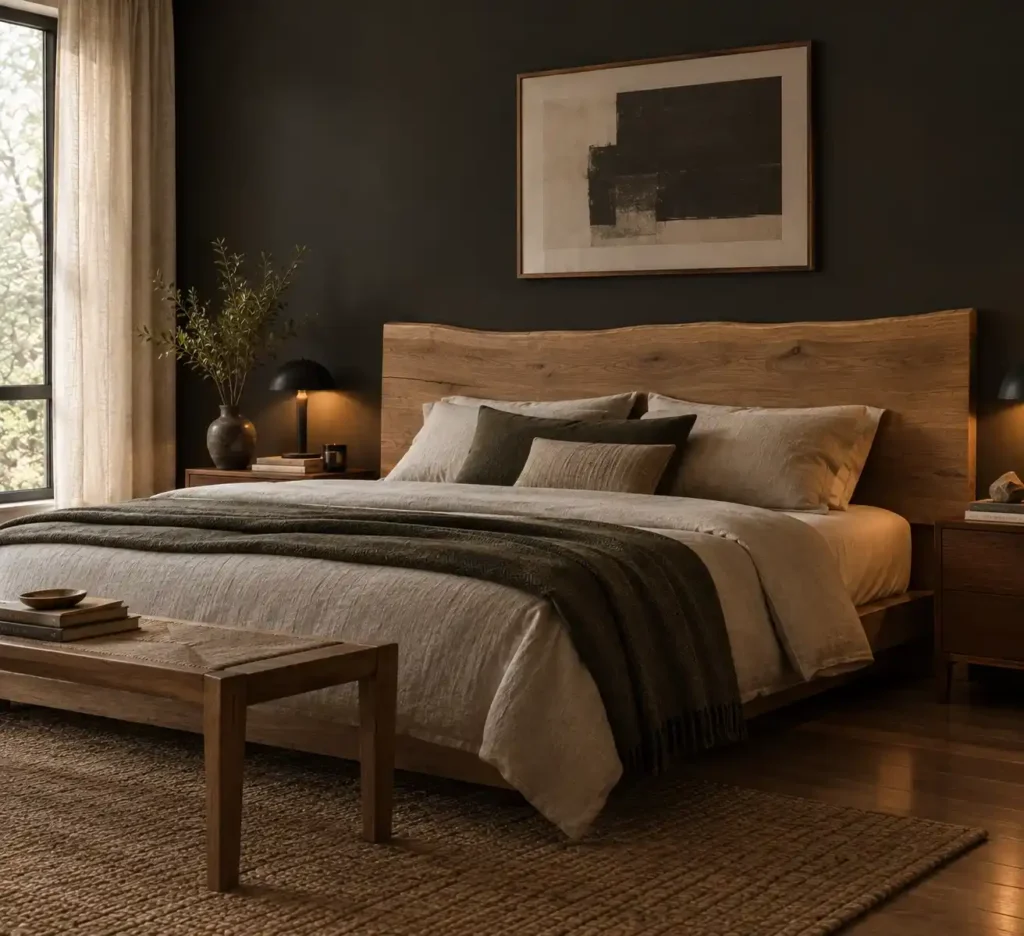
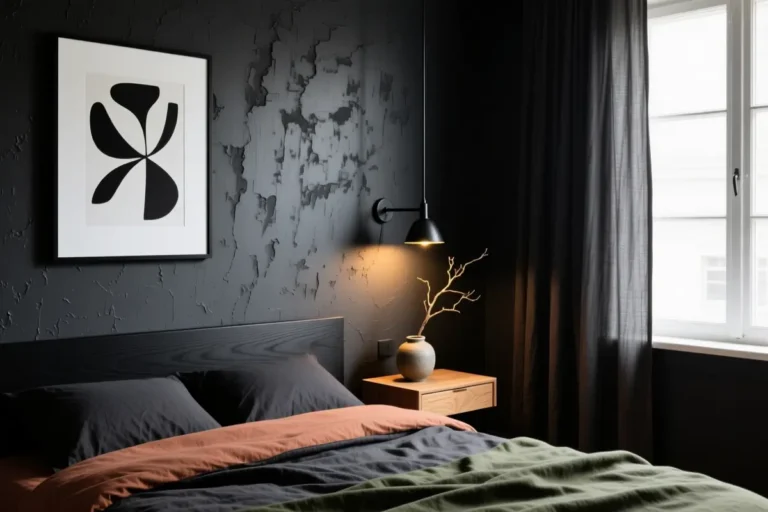
A charcoal wall painted in Sherwin‑Williams Iron Ore creates a deep, almost black backdrop that absorbs light and adds drama.
Against that, a raw‑edge oak headboard offers a warm, tactile contrast without feeling like a log‑cabin piece.
Choose oak with a light to medium brown grain; the subtle hue prevents the wood from looking too rustic.
Keep the frame’s lines straight and low‑profile; think a simple rectangular slab with a thin metal support, so the silhouette stays modern.
The heavy, uneven slab requires a sturdy wall anchor and at least two studs; a level and stud finder make the job safer.
For renters, a free‑standing headboard on casters provides the same visual balance without drilling.
In a bedroom larger than 120 sq ft, the dark wall and wood headboard keep the space grounded; tighter rooms may feel squeezed.
If raw oak feels too raw, a reclaimed barn‑wood panel mounted on a slim metal frame offers similar texture with less weight.
Quick tip: add a removable metal bracket behind the headboard to avoid permanent wall damage.
2. Layer Earthy Olive Green and Matte Black
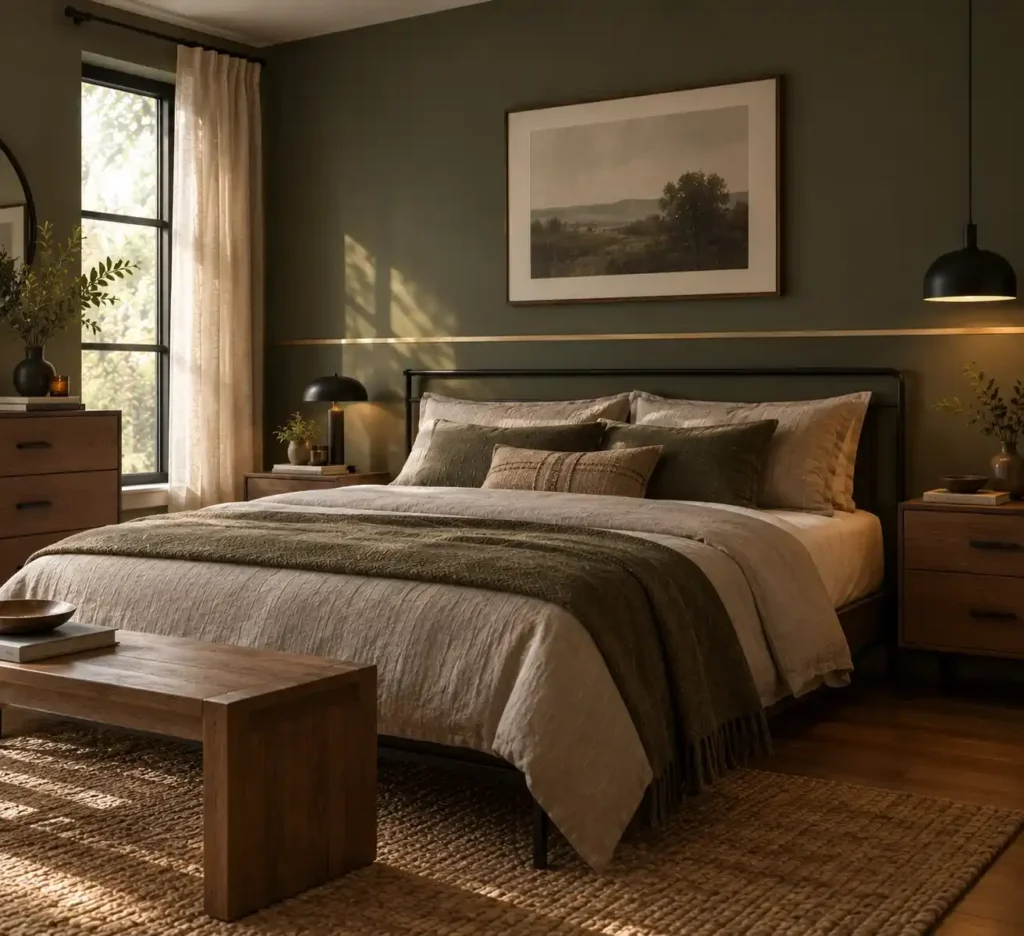
In a north‑facing bedroom, Benjamin Moore’s Pewter Green spreads a muted olive across the walls.
The color deepens in warm afternoon sun, revealing subtle gray‑green undertones that add visual interest. In the same space, low daylight can push the hue toward a cold, muddy brown, so balance is essential.
Matte black hardware anchors the organic tone. A black metal bed frame, drawer pulls, and a simple pendant lamp keep the room grounded without competing with the paint. The finish absorbs light, preventing the olive from feeling flat.
This palette works well for couples who enjoy a calm, understated retreat. The combination feels sophisticated yet inviting, and it pairs easily with natural wood bedding or woven textiles.
For renters, the paint can be a commitment, but a light‑colored, peel‑and‑stick wall panel over the accent wall offers a reversible solution.
Add a thin brass trim above the headboard to break up the dark hardware and keep the space from feeling too heavy.
3. Apply Roman Clay or Lime Wash for Tactile Depth
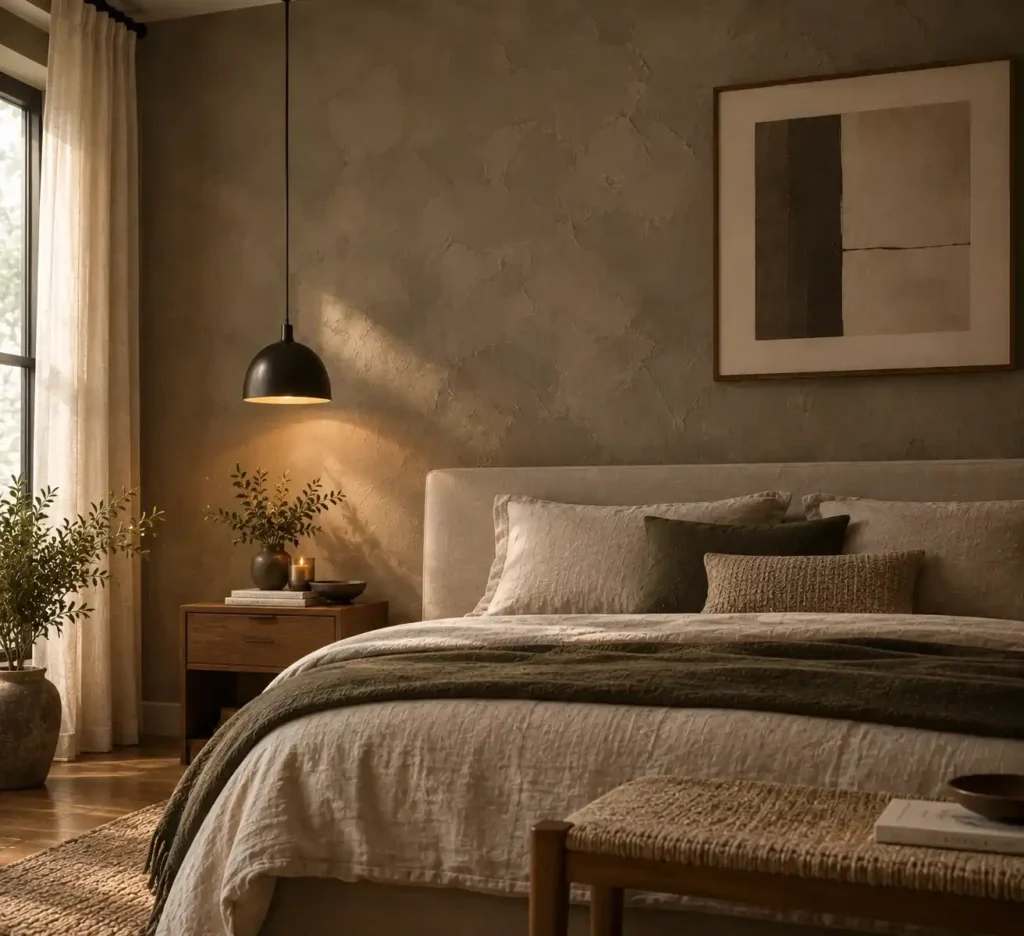
A plastic trowel pushes Roman clay across the wall in thin, overlapping strokes, leaving a velvety stone texture.
Clean the surface, fill cracks, and sand any glossy spots before applying a coat of primer designed for lime‑based finishes.
Use a 5‑quart bucket of pre‑mixed clay, a hawk for loading, and a flexible putty knife for edges.
Work in 2‑sq‑ft sections; the material stays workable for about 15 minutes. Allow 24‑hour drying before a light mist of water to set the surface, then wait another 48 hours before adding a breathable sealant. Flat paint cannot mimic this depth because it lacks the raised, irregular profile that catches light.
The finish looks stunning, but the labor is intense and patching later is tricky; a single touch‑up often shows a seam.
If you need a renter‑friendly option, consider a textured wallpaper that imitates stone without permanent wall alteration.
For homes where DIY feels daunting, a professional with plaster experience can finish the job faster and more smoothly.
Quick tip: keep a damp sponge handy to smooth minor ridges before the clay hardens. Seal the finished surface with a water‑based clear coat to protect the texture for at least three years.
4. Use Rumpled Linen Bedding in Warm Ochre and Terracotta

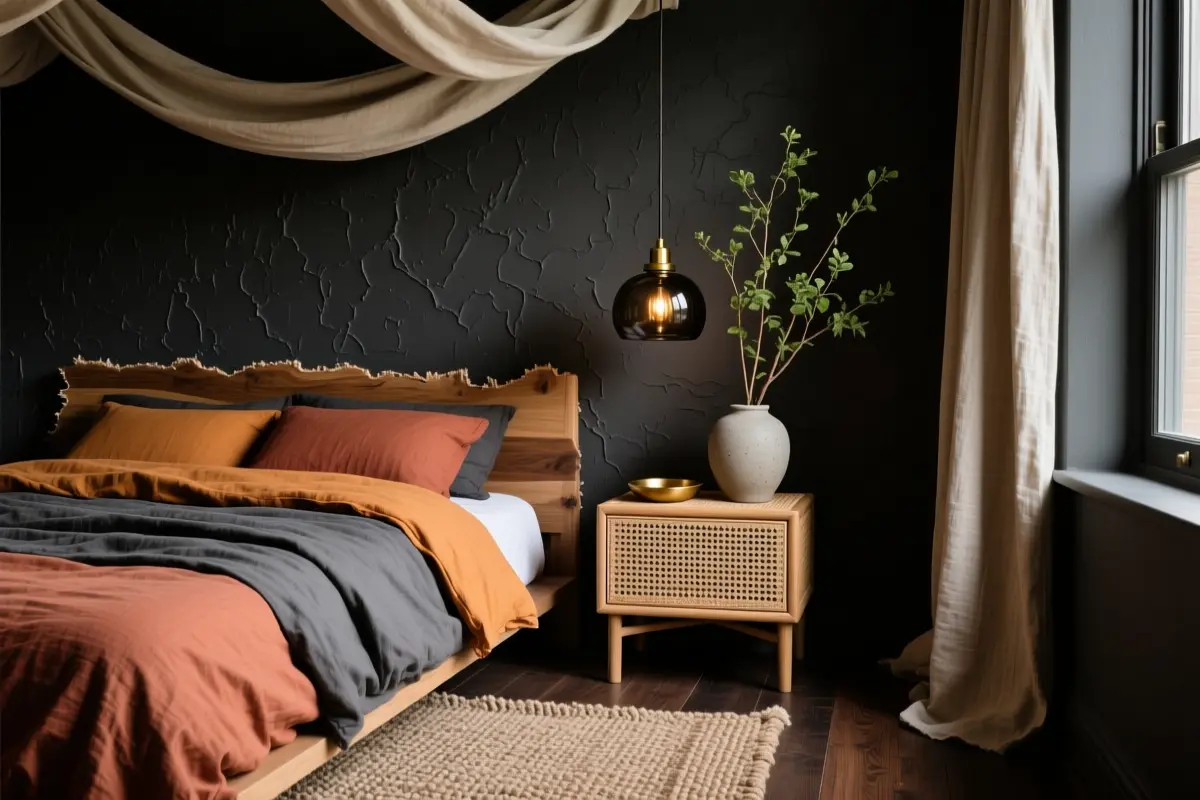
A linen duvet cover in terracotta adds a soft, earthy glow to a room with charcoal walls.
The natural fibers breathe, so the bedding stays comfortable through seasons. Pair the terracotta top with charcoal sheet sets; the contrast keeps the dark paint from feeling heavy.
Add a few structured pillow shams in rust or ochre to hold the rumpled look in check. Linen wrinkles the moment it’s made, so without those firm pillows the bed can look sloppy.
Wash the pieces in cold water on a gentle cycle and skip the heavy spin to preserve the fibers.
Air‑dry or tumble on low with two dryer balls; the balls keep the fabric from stiffening.
A quick tip: fold the sheets loosely before storing to maintain the relaxed texture without extra creases. Over time, the fibers become softer, but they can thin if washed too hot.
Placing the bed against the far wall lets the terracotta hue pull the eye across the room. With proper care, the linen stays soft for years, and the warm hues create a layered, cozy feel.
5. Install Smoked Glass and Brass Pendant Lights

When you need bedside light for reading, a harsh glare can shatter the moody atmosphere.
Smoked‑glass pendants on brass brackets soften the beam while keeping the room’s dark palette intact.
Choose a 40‑60 W equivalent LED bulb at 2700 K; the warm hue stays inviting without washing out the shadows.
The smoked globe diffuses light, so the glow spreads gently across the nightstand.
The chic look comes with a downside: smoked glass shows fingerprints and dust faster than clear or frosted options, and the filtered design limits overall brightness.
A quick tip is to dust the globes with a microfiber cloth weekly to maintain clarity.
For renters, opt for a surface‑mount pendant that screws onto an existing ceiling fixture instead of hard‑wiring a new box.
The installation is straightforward, but if you’re not comfortable handling live wires, hire an electrician.
Finish the setup with a small dimmer switch so you can lower the output for late‑night reading without compromising the moody vibe.
6. Anchor the Space with a Thick Jute or Sisal Rug

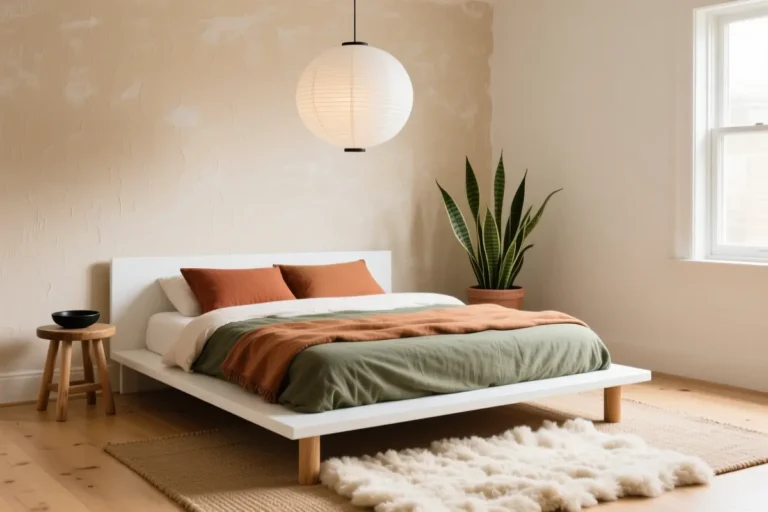
A hand‑woven jute rug, 12 × 9 feet, offers a thick loop pile that anchors a moody bedroom.
The natural fiber adds texture contrast to dark hardwood floors, breaking up the sleek surface with an organic feel.
Because the fibers are dense, the rug stays in place without a pad on low‑traffic nights. 100% jute rugs are rough under bare feet and shed fibers constantly, so frequent vacuuming underneath is necessary.
In high‑traffic zones, they wear quickly, making them less ideal for walk‑through spaces. A wool‑jute blend softens the underfoot experience and reduces shedding while keeping the earthy look.
Choose a blend with at least 30 % wool for added durability in a bedroom where you walk barefoot.
Lay the rug centered under the bed to define the sleeping area and pull the nightstands toward the edges for balanced framing. Add a low‑pile rug pad beneath to protect the floor and lessen movement.
7. Opt for Woven Cane or Rattan Bedside Tables
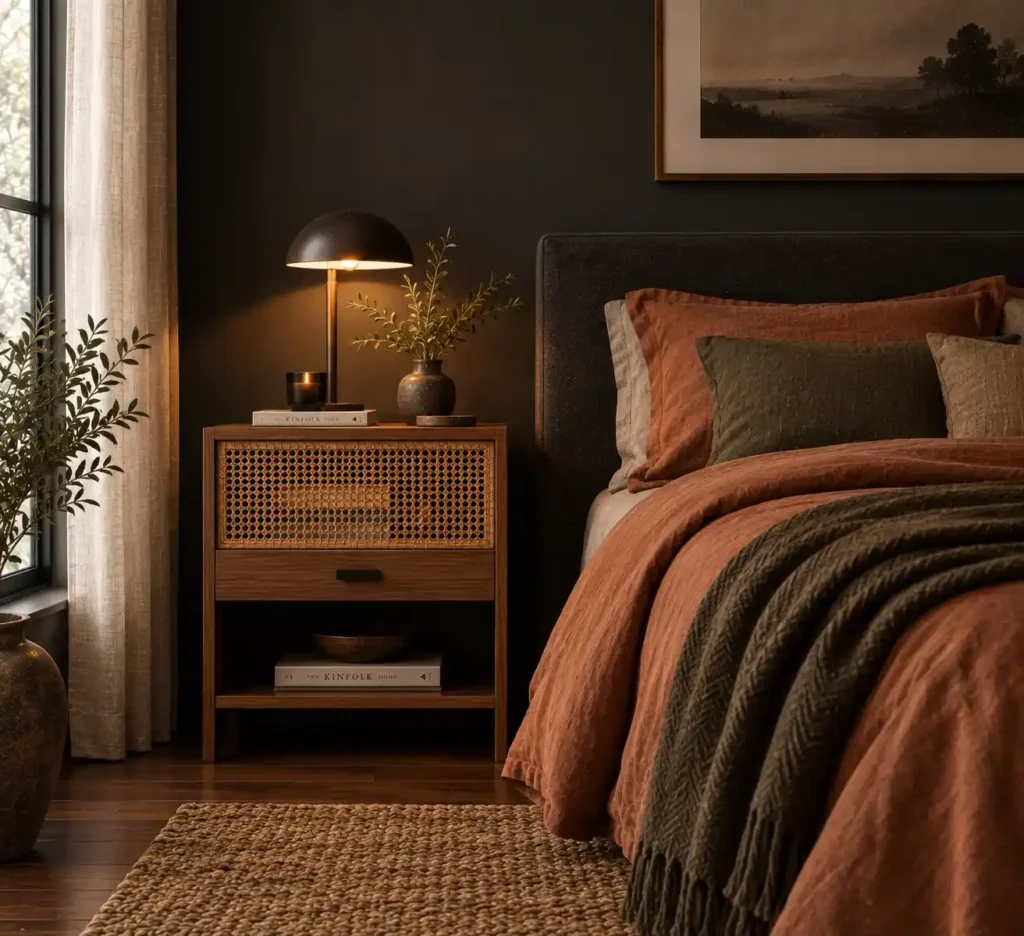
Open woven cane panels feel lighter than the solid wood drawers they replace, letting dark bedroom walls breathe.
The airy webbing cuts the visual weight of a moody, charcoal headboard while still offering a surface for a lamp and a book.
Because the material is semi‑transparent, any bright socks or makeup kits left inside become visible, so it does not conceal clutter.
Pair the cane side with a single drawer of reclaimed pine for essential items; the drawer hides what you need, and the open weave adds texture.
To keep costs low, buy inexpensive cane panels from a craft store and attach them to an existing nightstand using L‑brackets and wood glue.
A quick tip: line the drawer with a thin fabric liner to protect the wood and add a pop of color without breaking the organic vibe.
The result is a bedside set that balances dark modern tones with natural softness, while still reminding you to keep the top tidy.
8. Frame the Windows with Heavy, Textured Flax Linen Drapes
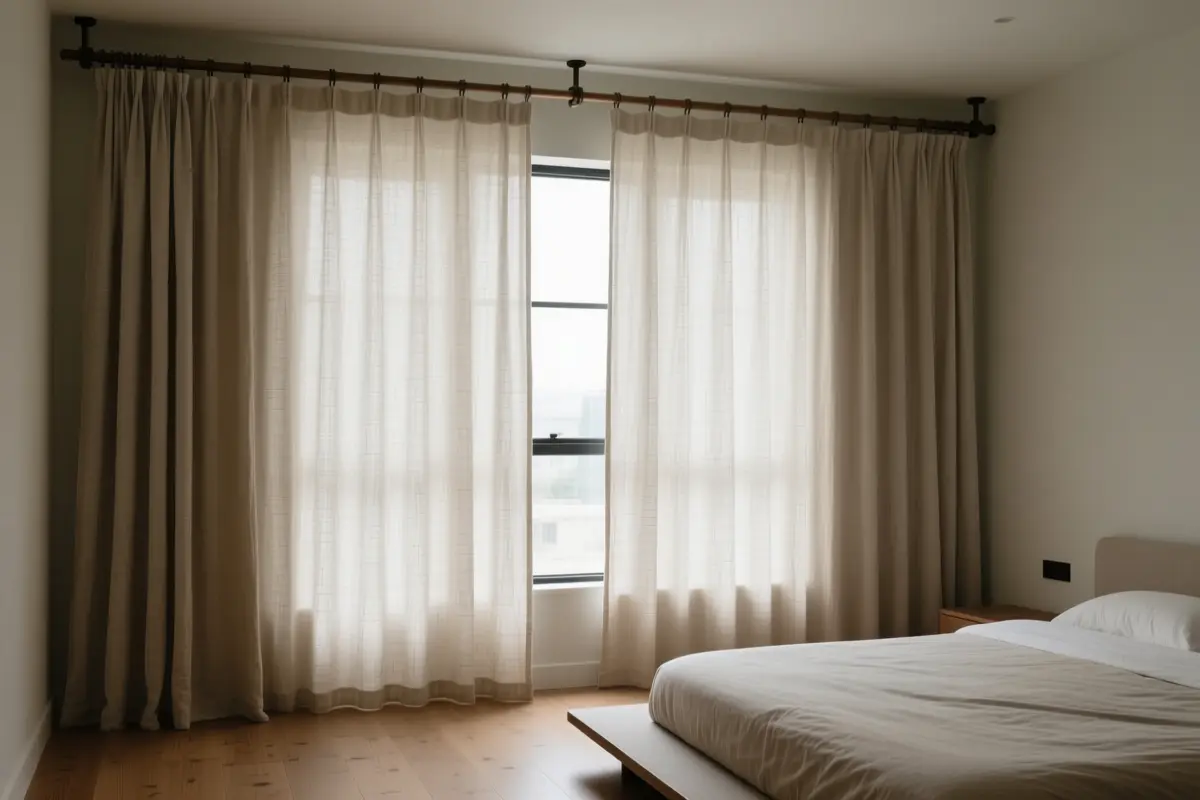
A floor‑to‑ceiling panel of oatmeal‑colored flax linen drapes frames the window, softening the view while cutting glare.
The heavy weight of the linen absorbs daylight, creating the low‑key ambience that defines a moody bedroom.
Mount the rod at the ceiling line; the upward line tricks the eye, making even a 9‑foot room feel taller and more open.
Choose charcoal for a deeper contrast, but be ready for the fabric’s heft. Install a heavy‑duty curtain rod with reinforced brackets; standard rods will sag under the load.
For renters, a tension‑rod system with removable brackets offers the same visual impact without permanent holes.
Because flax linen gathers dust quickly, vacuum the panels weekly with a handheld brush attachment and spot‑clean stains with a mild detergent.
If you prefer less upkeep, consider a removable fabric liner that can be laundered separately. Adding a thin magnetic strip along the bottom edge pulls stray fibers away, keeping the drapes looking crisp longer.
9. Style with Foraged, Oversized Branches in Matte Stoneware
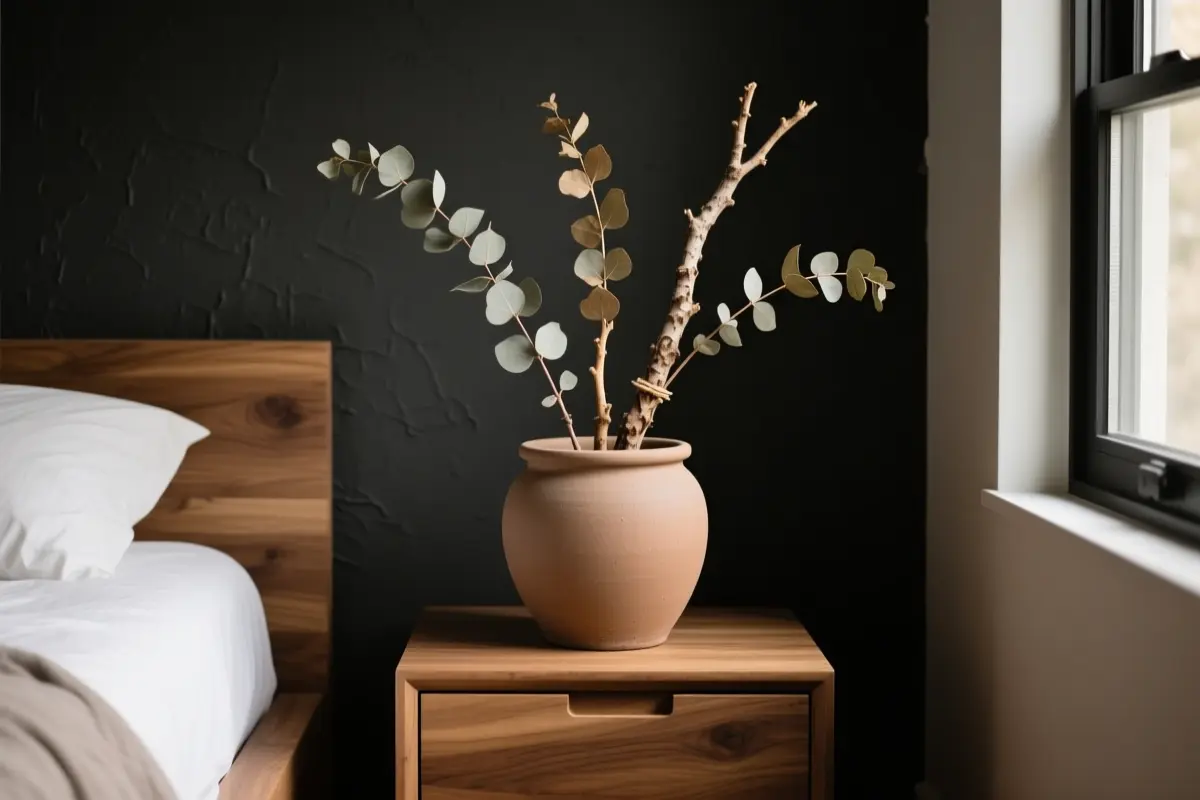
Plastic faux plants add cheap shine but never feel alive. Gather a few sturdy eucalyptus or oak branches during a weekend walk, then tie them in small bunches and hang them upside down in a dry, airy closet for a week.
Once the foliage is crisp, trim any excess leaves and place the stems in a matte stoneware pot that weighs at least three pounds.
The heavy clay anchors the branches, letting the natural texture stand out against a moody wall. Keep the arrangement modest, no more than three stems per pot, to avoid a cluttered look.
A quick tip: spray the dried branches with a clear, matte sealant; it slows leaf drop and deters tiny insects that might hitch a ride from the yard.
Expect the dried foliage to shed a few needles each month and to need replacement after three to four weeks.
If you prefer zero upkeep, swap the foraged sticks for store‑bought dried sprigs that come pre‑sealed and fit the same stoneware. This approach brings authentic organic shape to the room without breaking the budget.
10. Integrate Concealed Storage to Keep Surfaces Clear

A stack of half‑read novels, a tangled charger, and a stray candle on the nightstand instantly shatter the calm of a moody, organic bedroom.
The dark walls and natural textures rely on open space to feel serene, so any surface clutter creates visual noise.
Choosing furniture with built‑in storage removes that noise without sacrificing style.
A lift‑top platform bed hides linens and seasonal blankets behind a smooth wooden lid, while a low bench upholstered in boucle or linen offers a hidden compartment for shoes or extra pillows.
Both pieces keep the floor and nightstand clear, preserving the organic flow.
The trade‑off is cost; lift‑top frames start around $800 and can weigh over 200 lb, making them pricey and difficult to relocate.
These items work best in medium‑sized bedrooms between 120 and 180 sq ft, where the bed can serve as the room’s anchor without crowding the walkways.
A quick tip: limit nightstand tops to a lamp, a small plant, and a single book or journal; store everything else in the bed’s drawer or bench compartment.
To keep the hidden space tidy, line the bench interior with a removable fabric pouch that can be washed.
Your Next Moody Bedroom Move
These eight ideas prove you don’t need a full remodel to give a bedroom that moody‑modern edge. From charcoal walls softened by a raw‑edge oak headboard to linen drapes that tame the light, each suggestion is a quick swap you can tackle this weekend.
Pick one focal point, like a smoked‑glass pendant or a thick jute rug, and let the other pieces follow the same organic palette.
Keep surfaces clear with concealed storage, and remember the room should feel inviting, not oppressive.
Save this list, bookmark the tip that speaks to you, and share it with anyone looking to give their sleep space a grounded, stylish lift.
Frequently Asked Questions
How do you make a moody bedroom feel organic instead of just dark?
To make a moody bedroom feel organic, layer highly tactile natural materials like raw wood, flax linen, jute, and clay pottery against dark walls to break up the flat color and inject warmth.
What paint colors work best for a moody modern organic bedroom?
Deep, muddy earth tones work best, including charcoal grey with brown undertones, muted forest greens like olive, and warm, dark espresso brown.
Will dark walls make a small bedroom look too cramped?
No, dark walls do not inherently make a small room feel cramped if you paint the ceiling the same color or use low-profile furniture to preserve vertical visual space.
How do you keep a dark, moody bedroom from looking dusty?
To minimize the appearance of dust on dark surfaces, opt for matte or eggshell paint finishes rather than high-gloss, choose closed storage cabinets, and use a damp microfiber cloth for regular cleaning.