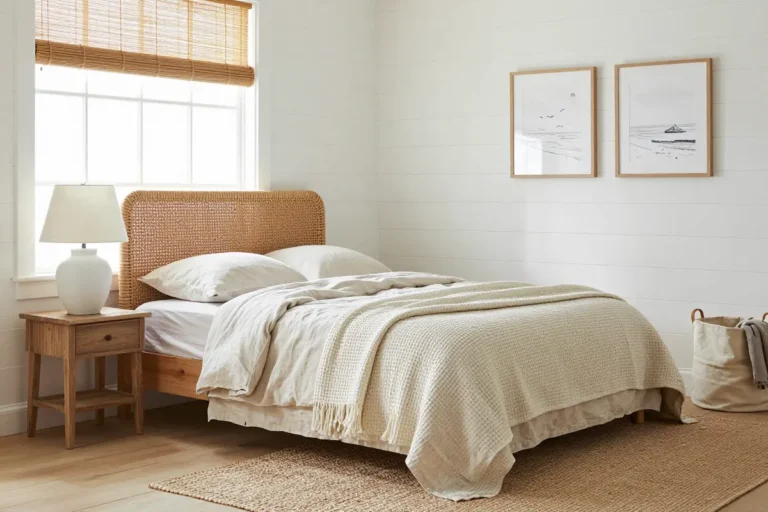
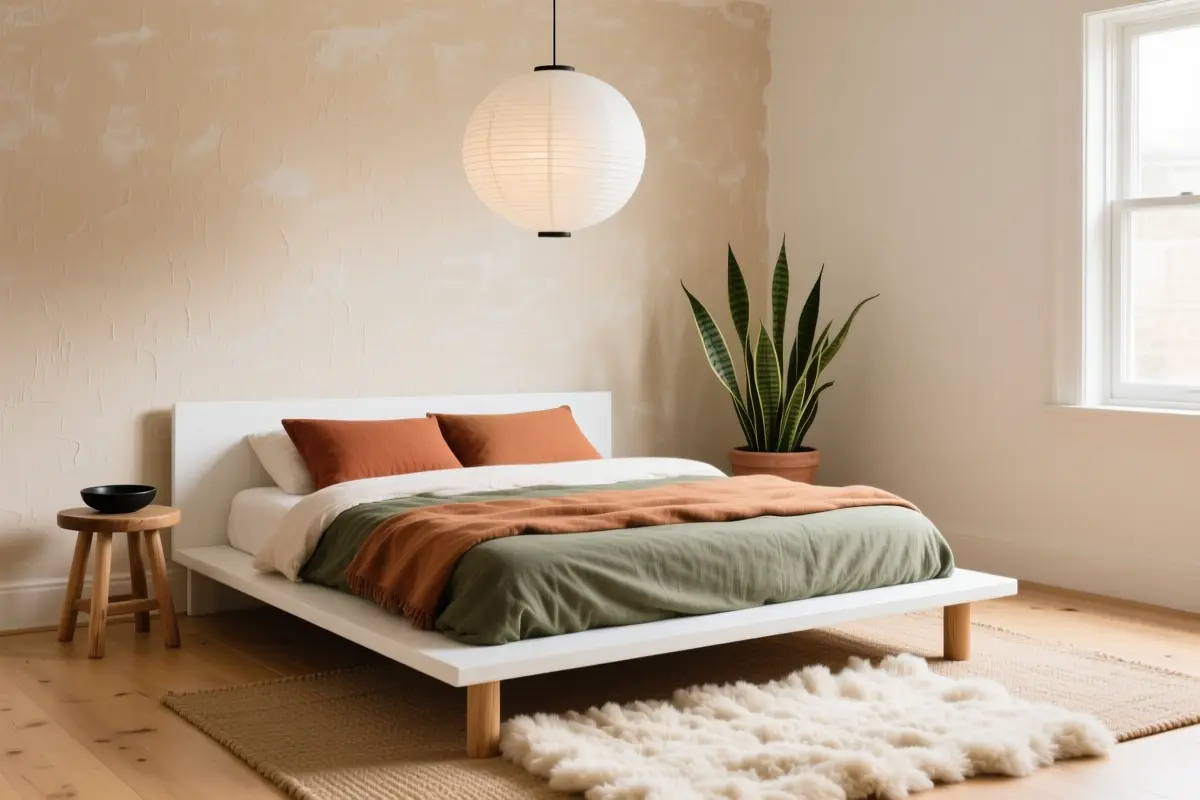
10 Practical Earthy Modern Organic Bedroom Ideas That Work in Real Life
10 Practical Earthy Modern Organic Bedroom Ideas That Work in Real Life
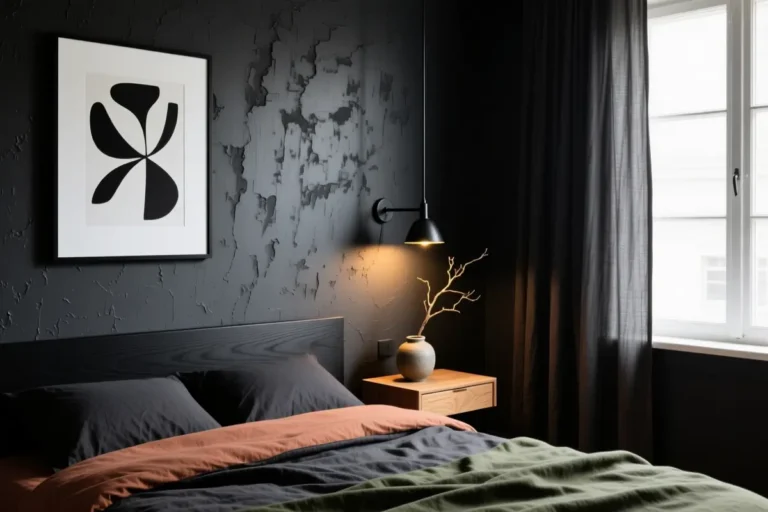
The moment you pull back the curtains and see the stark, paint‑smeared wall behind the bed, you know the bedroom needs a softer, more grounded vibe.
Too many modern rooms feel like a showroom, slick, cold, and impossible to make cozy without a major overhaul. What if you could inject natural texture and warm tones with a handful of affordable tweaks?
In this list, you’ll find ten down‑to‑earth ideas, from a limewash accent wall and low‑profile oak platform to layered linen bedding, floating shelves with clay pots, and a DIY birch‑branch hanging rod.
Each tip balances style with real‑life function, so renters, small‑space dwellers, and anyone craving an organic feel can start seeing results today.
1. Soften Walls with Textured Limewash Paint
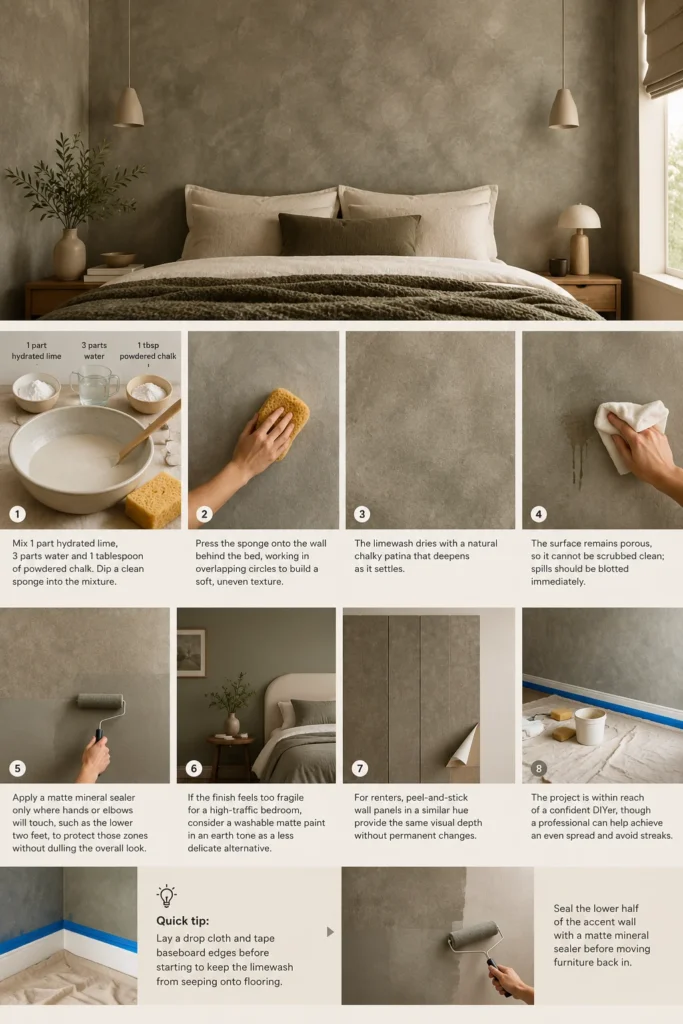
Dip a clean sponge into a mix of one part hydrated lime, three parts water, and a tablespoon of powdered chalk.
Press the sponge onto the wall behind the bed, working in overlapping circles to build a soft, uneven texture. The limewash dries with a natural chalky patina that deepens as it settles.
Because the surface remains porous, it cannot be scrubbed clean; spills should be blotted immediately.
Apply a matte mineral sealer only where hands or elbows will touch, such as the lower two feet, to protect those zones without dulling the overall look.
If the finish feels too fragile for a high‑traffic bedroom, consider a washable matte paint in an earth tone as a less delicate alternative.
For renters, peel‑and‑stick wall panels in a similar hue provide the same visual depth without permanent changes.
The project is within reach of a confident DIYer, though a professional can help achieve an even spread and avoid streaks.
Quick tip: lay a drop cloth and tape baseboard edges before starting to keep the limewash from seeping onto flooring.
Seal the lower half of the accent wall with a matte mineral sealer before moving furniture back in.
2. Choose a Low-Profile Wooden Bed Frame with Concealed Storage

A sleek, low platform bed in warm walnut spans the length of the room, its thin profile sitting close to the floor.
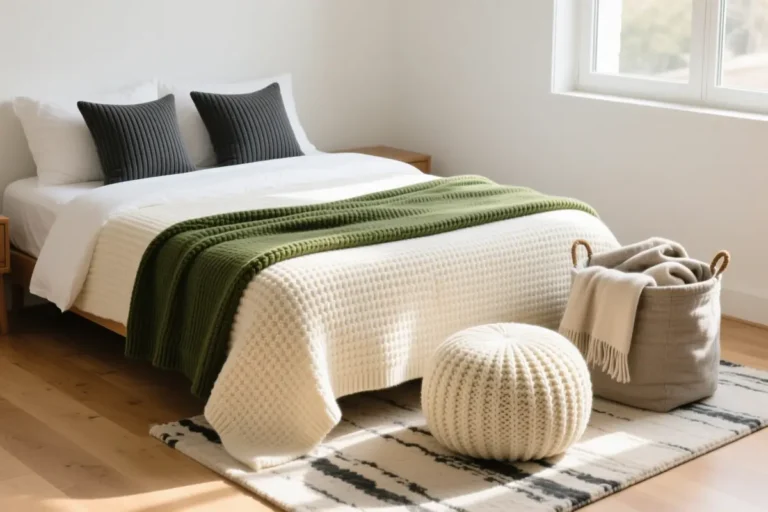
The solid wood anchors the space, creating a calm, grounded look that pairs well with linen linens and woven rugs.
Because the frame sits only a few inches off the ground, the room feels airy, and the eye stays at eye level rather than being pulled upward.
The trade‑off is that the shallow clearance eliminates the tall storage bins many people rely on for extra blankets or shoes.
A practical fix is to add shallow wooden drawers that sit on discreet casters. Each drawer can be about 6‑inch deep, enough for seasonal scarves, extra pillowcases, or a small stack of books, while the casters let you pull the unit out for cleaning.
Quick tip: use ball‑bearing drawer slides to keep the pull smooth and avoid snagging on carpet.
This setup shines in master or guest bedrooms that are at least 12 × 12 feet, where the low silhouette can be balanced by larger wall art or a tall headboard.
It suits couples who favor a minimalist aesthetic and want hidden storage without compromising the clean line of the platform. Install the drawers with a drill, wood glue, and a level to keep the surface even.
3. Layer Raw Flax Linen Bedding in Muddy Tones

Raw flax linen duvet covers in muted rust feel substantial the moment you spread them over the bed.
Pair them with ochre‑tinted sheets and sage‑green pillow shams for a layered, earthy look. The fabric breathes, keeping the sleeper cool in summer and cozy in winter.
Natural wrinkles appear as the linen settles; they add texture but can look untidy if the bed is left unmade for days. Mix a thin cotton insert between the mattress and the linen top sheet; the cotton holds shape while the linen stays visible.
Wash the linen on a gentle cycle with cold water, then tumble dry low with a couple of clean tennis balls to speed up softening.
Expect at least three washes before the initial scratchiness fades. Spot‑treat stains quickly; harsh bleach will weaken the fibers over time.
If the constant wrinkling feels like too much, a bamboo‑lyocell blend in the same color palette offers a smoother surface with similar eco credentials.
Add a 2‑inch cotton mattress topper to keep the sleeping surface even during hot nights.
4. Frame the Bed with Floating Oak Shelves and Clay Pottery

Bulky bedside tables block the narrow path in a small bedroom, making the floor feel cramped. Replacing them with two floating oak shelves clears the walkway and adds a sleek, natural look.
Mount each shelf at eye level using heavy‑duty toggle bolts; drywall alone can’t bear the weight of books or a lamp.
A quick tip: locate the studs first, then drill a pilot hole slightly smaller than the bolt shank to keep the wood from splitting.
Arrange a matte clay pottery vase on one shelf and a trailing pothos in a hanging pot on the other; the neutral ceramic tones soften the oak while the greenery adds organic depth.
This setup suits studio apartments or compact master rooms under about 120 sq ft, where floor space is at a premium.
Renters should use removable anchors and avoid permanent screws into the wall to keep the lease intact.
The idea is DIY‑friendly with a drill, level, and a stud finder, though a professional can help if you’re unsure about load limits. Finish by adding a small adhesive hook to the shelf edge for a night‑light cord.
5. Layer a Plush Wool Rug Over a Flat-Weave Jute Base
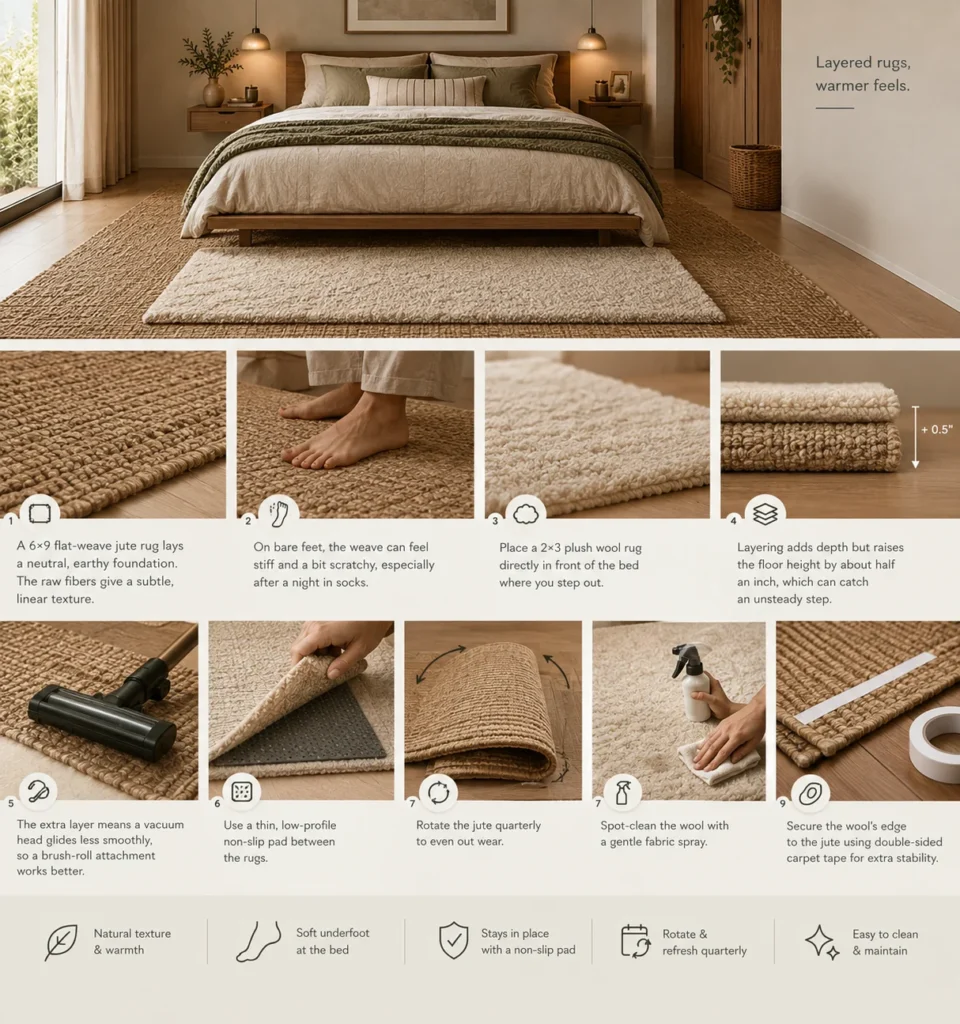
A 6‑by‑9 flat‑weave jute rug lays a neutral, earthy foundation on the bedroom floor. The raw fibers give a subtle, linear texture that reads as modern and organic.
On bare feet, the weave can feel stiff and a bit scratchy, especially after a night in socks.
Place a 2‑by‑3 plush wool rug directly in front of the bed where you step out.
The soft pile cushions the feet and creates a visual contrast between the smooth jute and the fluffy wool. This pairing adds depth without overwhelming the room’s palette.
Layering rugs introduces a gentle texture shift but also raises the floor height by about half an inch, which can catch an unsteady step.
The extra layer also means a vacuum head glides over the surface less smoothly, so a brush‑roll attachment works better.
To keep both rugs from sliding, lay a thin, low‑profile non‑slip pad between them.
Rotate the jute quarterly to even out wear, and spot‑clean the wool with a gentle fabric spray. Secure the wool’s edge to the jute using a strip of double‑sided carpet tape for extra stability.
6. Install a DIY Birch Branch Hanging Rod
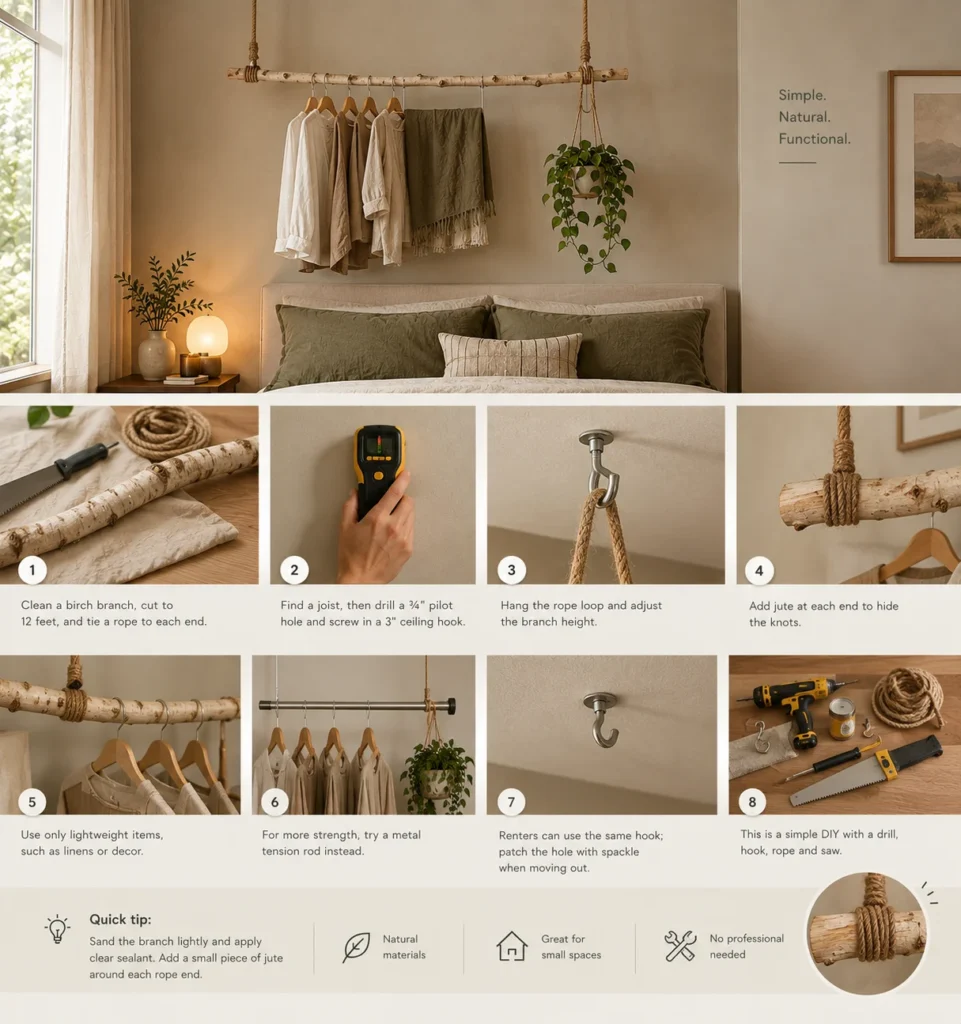
Tie a 12‑foot length of manila rope to a cleaned birch branch and suspend it from the ceiling. Locate a joist with a stud finder, then drill a ¾‑inch pilot hole and screw in a 3‑inch ceiling hook.
Hang the rope loop over the hook and adjust the branch height so light linens rest just below eye level.
The branch can hold only lightweight decorative items, so avoid coats or heavy blankets. If you need more strength, replace the branch with a metal tension rod that spans the same width.
Renters can use the same hook; the small screw hole can be patched with spackle when moving out.
The project needs a drill, a hook, rope, and a saw to trim the branch; no professional assistance required.
Quick tip: sand the branch lightly and apply a clear sealant to prevent splinters and protect the wood. Add a small piece of jute around each rope end to hide the knots.
7. Hang an Oversized Wabi-Sabi Paper Pendant Light
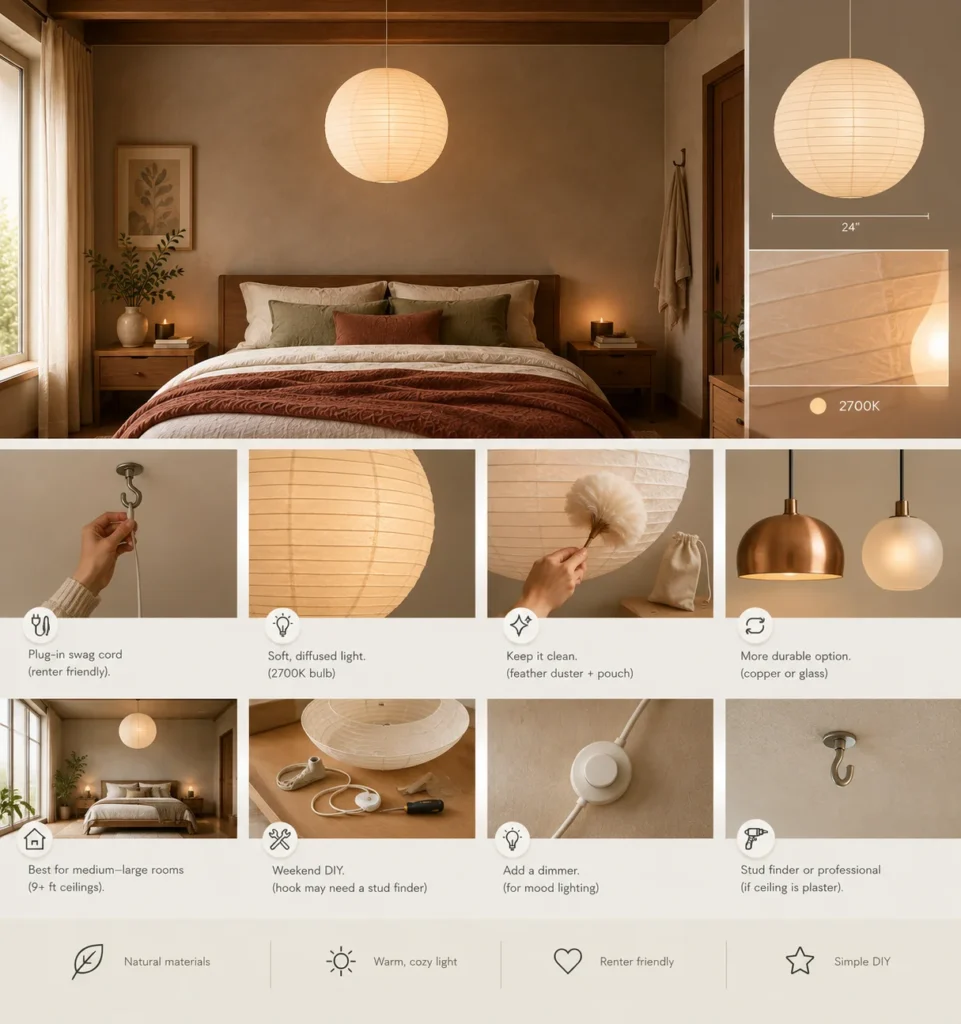
A 24‑inch, hand‑woven paper lantern hangs from a thin, natural‑tone cord, its soft ribs casting a diffused glow.
The light adds a gentle focal point without crowding the ceiling, and a 2700K bulb keeps the surrounding wood tones warm rather than yellow.
For renters, use a plug‑in swag cord and a single ceiling hook; no wiring changes are needed, and the hook can be removed cleanly.
Large paper lanterns are fragile, so they collect dust easily and can tear if handled roughly; they also lack strong directional light for reading or dressing.
If durability is a priority, swap the paper for a brushed‑copper or frosted‑glass pendant that offers the same shape but resists damage.
To keep the paper clean, dust with a soft feather duster and store a tiny microfiber pouch inside the lantern for quick wipes.
The piece works best in medium‑to‑large bedrooms with at least 9‑foot ceilings; a compact room may feel visually heavy.
Assembling the lantern is a weekend DIY, but installing the hook may require a stud finder or a professional if the ceiling is plaster. Add a small dimmer to the swag cord for adjustable mood lighting.
8. Repurpose an Unfinished Wooden Stool as a Nightstand
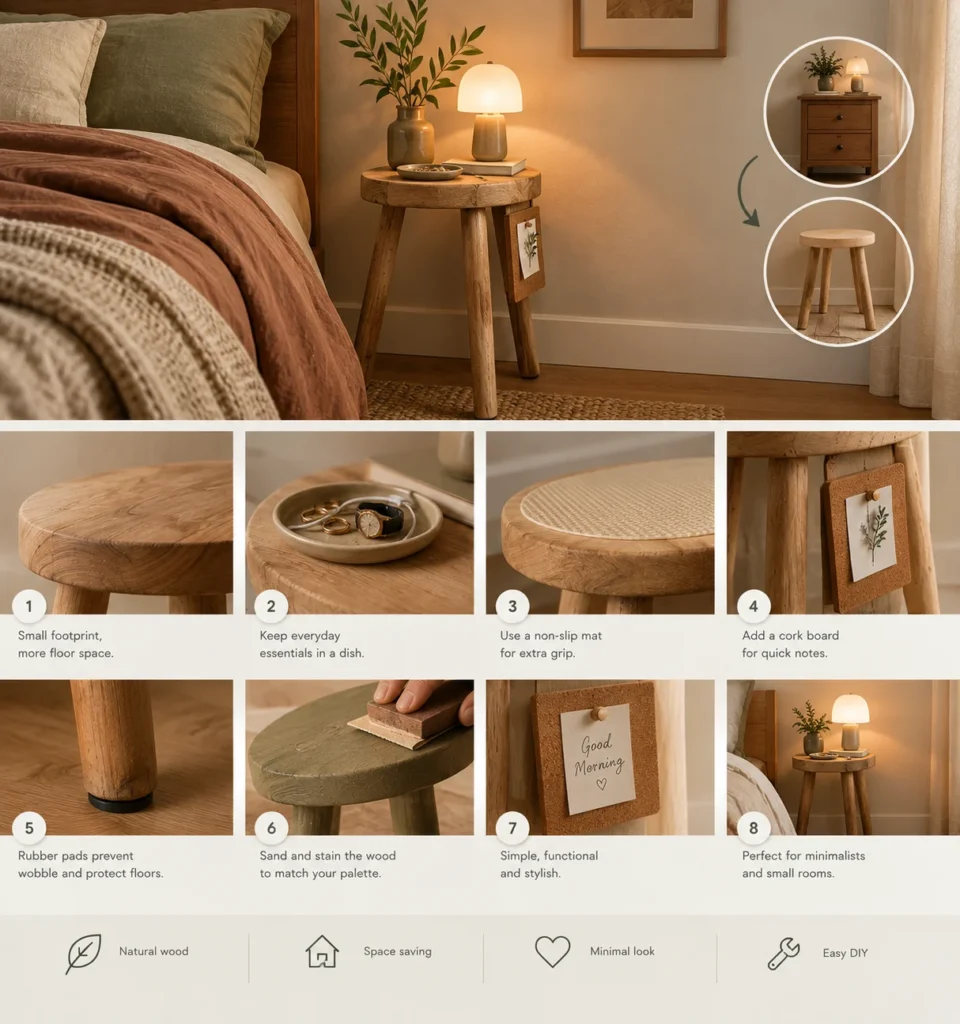
A traditional nightstand with drawers gives you hidden storage, while an unfinished wooden stool provides only a flat surface and three legs.
The stool’s tiny footprint frees floor space and adds a natural texture that blends with earthy tones.
Because there’s no drawer, everyday essentials need a separate holder.
A small, heavy ceramic dish placed on top keeps rings, chargers, and a watch from sliding off. For extra grip, line the stool top with a non‑slip silicone mat before adding the dish.
Ideal for minimalists who keep just a phone, lamp, and book at the bedside. It works best in small to medium bedrooms where a bulkier nightstand would crowd the room.
The raw pine can be sanded smooth and stained in a muted sage or walnut to echo the room’s palette. A rubber pad under each leg protects hardwood floors and prevents wobble.
Attach a small cork board to the stool’s side with two 1‑inch screws to create a quick note holder.
9. Position Low-Maintenance Greenery in Unglazed Terracotta Pots
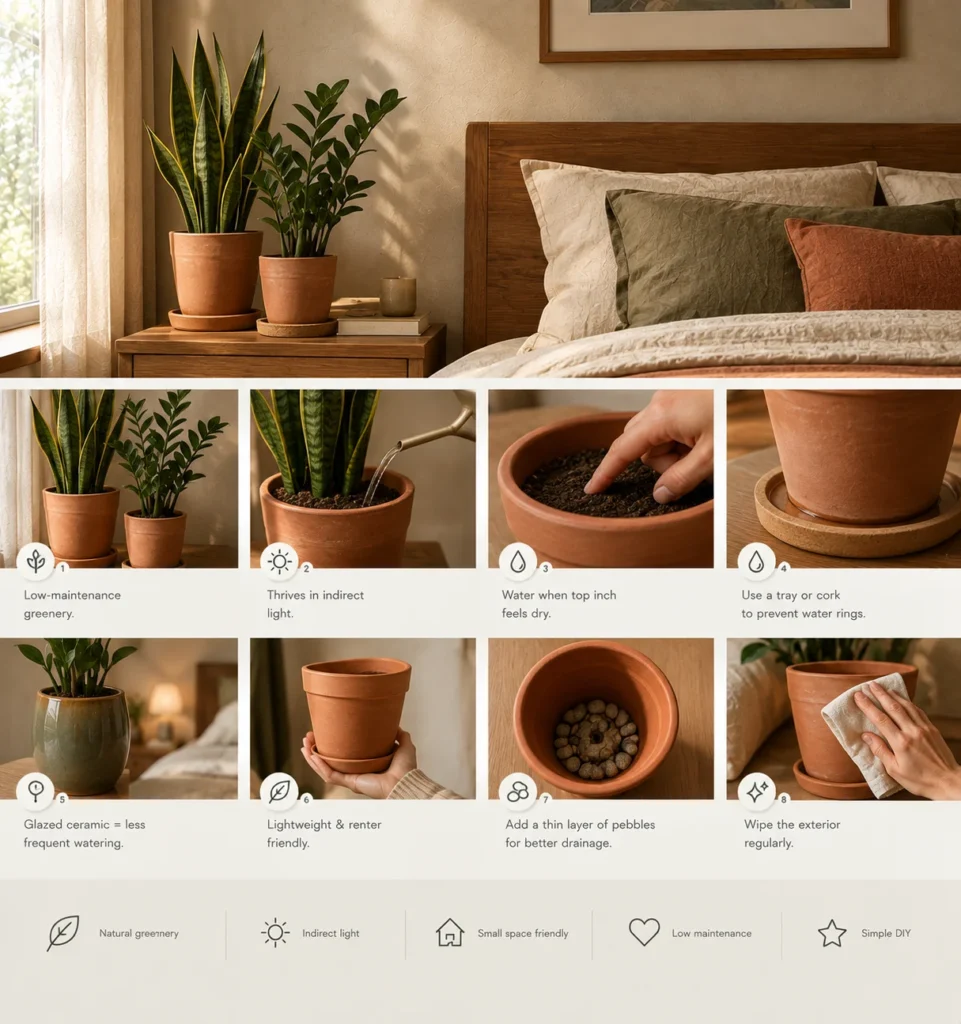
In a master bedroom with a wooden headboard, place low‑maintenance greenery in unglazed terracotta pots.
Snake plants and ZZ plants thrive under the soft, indirect light typical of a bedroom window. The porous clay lets soil breathe, which reduces the risk of root rot that glossy plastic containers often trap.
Because the pot absorbs moisture quickly, check the soil every few days and water when the top inch feels dry.
Without a saucer, the terracotta may leave water rings on the nightstand, so add a shallow tray or a piece of cork underneath.
If the constant watering feels too demanding, a glazed ceramic pot with a built‑in drainage hole offers a similar look with less frequent attention.
For a renter, choose a lightweight, unglazed pot that can be moved easily and won’t damage walls.
Quick tip: line the pot’s interior with a thin layer of pebbles; this creates a buffer that catches excess water and makes repotting simpler.
Regularly wipe the pot’s exterior with a damp cloth to keep the earthy texture looking fresh.
10. Anchor the Warm Palette with Matte Black Hardware

An all‑beige bedroom often feels washed out, leaving the space looking flat.
Adding small matte black elements, drawer pulls, light‑switch plates, or thin picture frames creates visual weight that grounds the soft textures without darkening the whole room.
Swap out existing brass or chrome hardware with a quick spray‑paint job. A can of matte‑black spray costs about $5‑$10; mask the surrounding area with painter’s tape, give each piece a light coat, and let it dry for 15 minutes before handling.
This DIY step keeps the budget low and lets you keep the original pieces for later removal.
Black finishes attract fingerprints, so wipe them weekly with a damp microfiber cloth and avoid abrasive cleaners.
For renters, choose hardware that screws in rather than glued, or use removable adhesive strips that hold the pulls without damaging the wall.
Be careful not to overdo the black; too many pieces can shift the vibe toward a stark industrial look.
Seal the painted pulls with a clear matte sealant to protect the finish during daily use.
Pick Your Favorite Solution
From the soothing limewash accent wall to the grounding matte black hardware, each tip gives a real way to pull earth’s palette into your bedroom.
Begin with a simple swap: use a reclaimed wooden stool as a nightstand or hang a birch‑branch rod for dried eucalyptus, then add richer layers like linen sheets or a plush wool rug as confidence builds.
Before you paint, test a small patch and seal high‑traffic areas with a mineral sealer; when mounting floating shelves, secure them to studs or heavy‑duty toggle bolts.
Choose the idea that feels most doable this weekend, try it, and watch the space soften instantly. Save this guide for your next project board and share it with anyone craving an organic bedroom upgrade.
Frequently Asked Questions
What are some good earthy tones to use in bedrooms?
Terracotta, sage green, muddy ochre, warm taupe, and charcoal are excellent earthy colors that ground a bedroom without feeling cold.
How do I make my bedroom organic modern without spending a lot?
Focus on thrifting solid wood accent pieces, using linen-blend pillow covers instead of full linen sheet sets, and bringing in outdoor branches for DIY decor.
Are jute rugs too scratchy for a bedroom floor?
Yes, raw jute is rough on bare feet, which is why layering a soft cotton or shag rug over the jute base where you step out of bed is highly recommended.
How can I keep an organic modern bedroom from looking cluttered?
Incorporate closed storage like under-bed drawers or lidded seagrass baskets to hide everyday clutter, leaving open shelves free for a few curated clay pieces.