11 Dark Scandinavian Bedroom Ideas That Feel Moody (But Practical)
11 Dark Scandinavian Bedroom Ideas That Feel Moody (But Practical)
You’ve probably stared at a bedroom where the dark paint makes the space feel closed in, and the only thing missing is a hint of Scandinavian calm.
In this list, you’ll find eleven practical ideas, from lime‑wash walls that keep charcoal tones lively, to low‑profile black oak frames that free up floor space, and warm‑tone lighting that softens deep hues.
The suggestions also cover forest‑green accents, heavy linen bedding, vertical wood paneling, monochrome art, concrete‑effect accents, smoked oak slats, chocolate‑brown palettes, and sheer dark curtains.
1. Textured Charcoal Lime Wash Walls
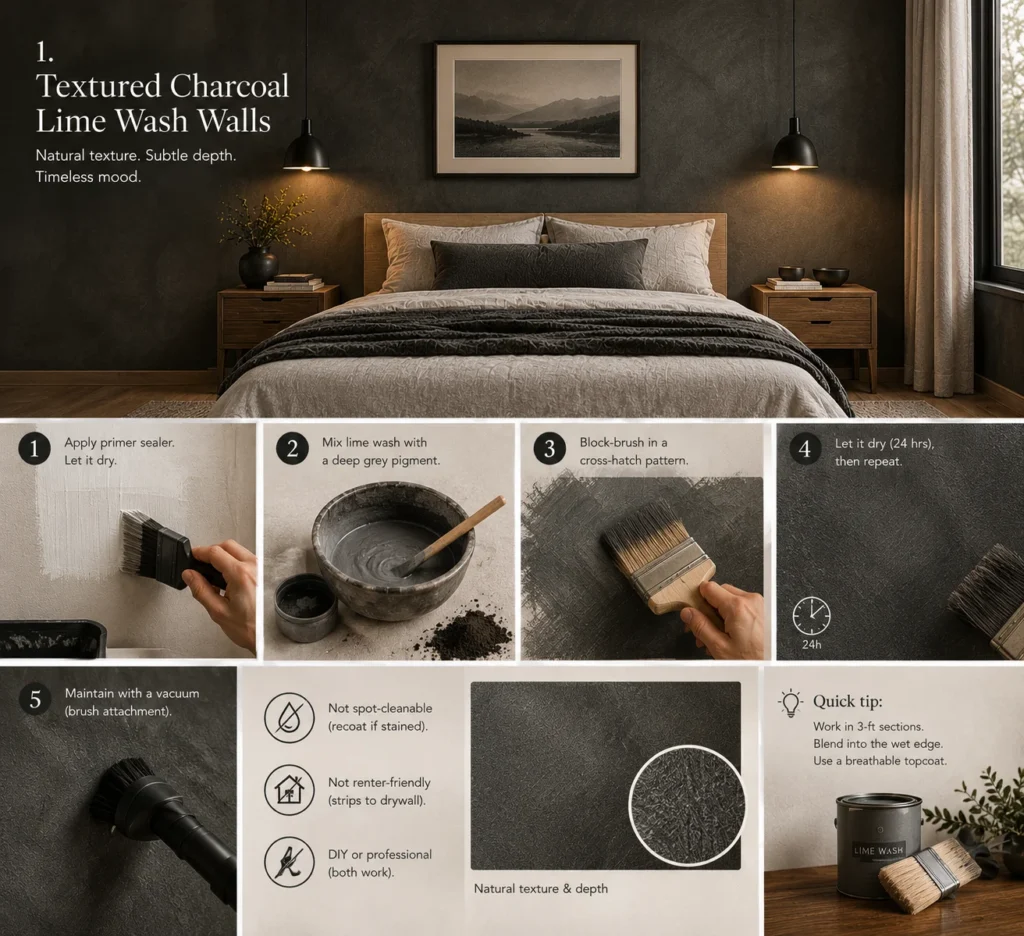
Block‑brush the lime wash in a cross‑hatch pattern to achieve a textured charcoal finish. Choose a deep slate or soot‑grey pigment for a moody backdrop that still shows light.
The lime’s calcium hydroxide reacts with carbon dioxide, forming a thin calcium carbonate skin that clings to drywall and creates natural depth.
Start with a coat of primer sealer; it evens out absorption and prevents streaky patches. Use a wide, natural‑bristle brush kept slightly damp to keep pigment from drying in the bristles.
Apply the first layer thinly, let it dry for 24 hours, then repeat the cross‑hatch for a richer surface.
Because lime wash is highly porous, it cannot be spot‑cleaned; any stain usually requires a full recoat of the affected area.
Dust settles into the texture, so a weekly gentle vacuum with a brush attachment keeps the wall looking fresh. This finish is not renter‑friendly; removing it means stripping the wall back to raw drywall and repainting.
DIYers can handle the process with patience and a quality brush, but a professional painter will deliver a more uniform pattern and avoid uneven absorption.
Quick tip: work in 3‑foot sections and blend each new stroke into the wet edge to maintain consistent texture. After the final coat, apply a clear, breathable topcoat to lock in color and simplify future touch‑ups.
2. Forest Green and Warm Oak Contrast
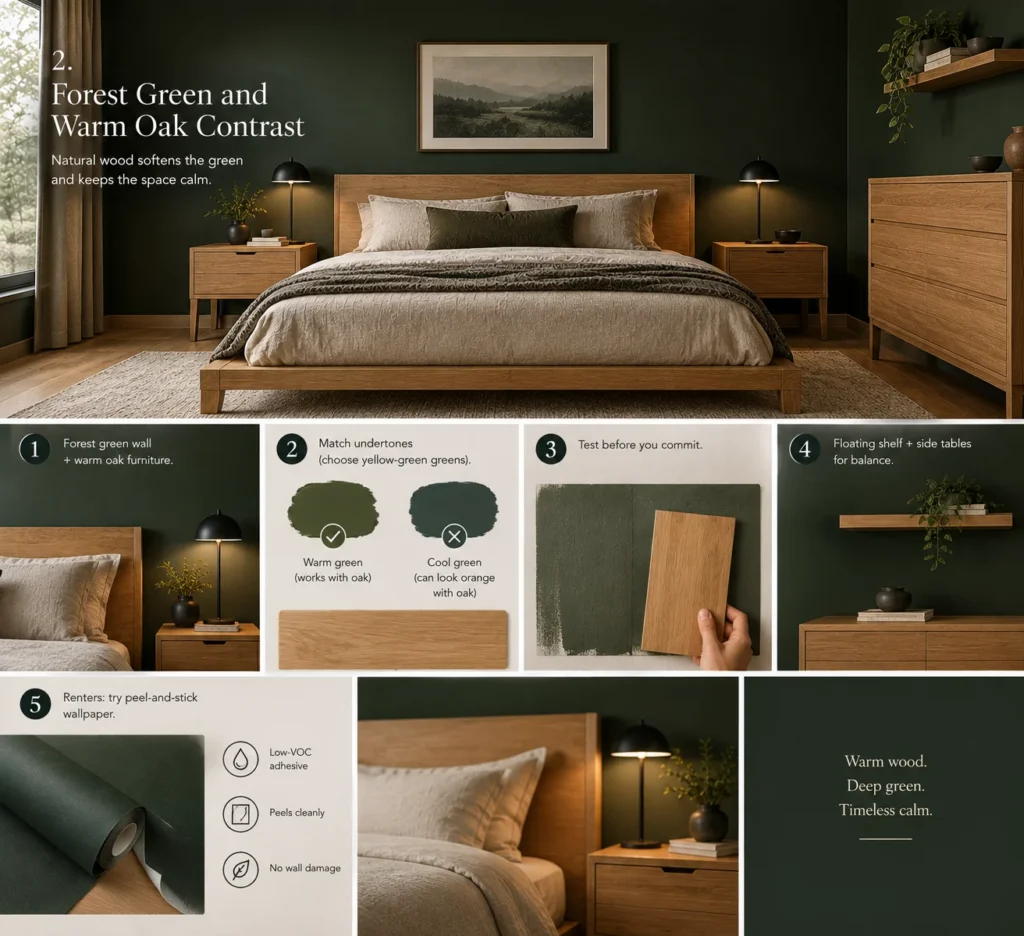
A deep forest‑green wall stretches behind the low‑profile oak platform bed, creating a moody backdrop that feels anchored yet inviting.
The light‑toned oak nightstand and a matching headboard break up the green expanse; the visible grain adds texture and keeps the room from feeling sealed in.
Position a single oak side table on each side of the bed, and choose a floating oak shelf above the dresser to echo the wood’s warmth without overwhelming the dark hue.
The contrast works because the natural wood reflects just enough light to soften the green while maintaining the Scandinavian minimalism.
Match the undertones carefully. Oak with a warm, golden finish pairs best with a green that leans toward yellow‑green.
A cool, blue‑based forest green can turn the oak’s warm tones into an unsettling orange cast.
Test a large paint swatch next to a sample oak piece before committing.
Renters can still enjoy the look by opting for peel‑and‑stick wallpaper in a forest‑green matte finish instead of traditional paint.
When it’s time to move out, the wallpaper peels cleanly, leaving the original wall untouched. For a seamless finish, use a low‑VOC adhesive that releases easily with warm water.
3. Low-Profile Black Oak Bed Frames

Matte black oak forms the frame, letting the wood’s grain peek through the dark finish. The low silhouette keeps the ceiling line open, so a dark room feels airy instead of cramped.
Aim for a clearance of 12‑14 inches from floor to mattress top; this height lets the bed sit close to the ground while still providing enough room for a simple linen duvet and a narrow knit throw that drapes just past the foot.
Solid wood construction outlasts veneer when the frame endures daily hops and weight shifts, so the piece stays sturdy for years.
Quick tip: place a thin, slip‑resistant rug pad under the legs before positioning the frame to avoid floor scratches and wobble.
This style shines in minimalist master suites with high ceilings and in compact apartments where floor space is at a premium.
Rooms up to about 150 sq ft benefit most; larger spaces may look under‑scaled.
The trade‑off is that the low profile removes the chance for under‑bed boxes and can make climbing in and out tougher for anyone with limited mobility.
Add a low, non‑slip rug runner at the foot to protect the floor and give a gentle step‑up for easy access.
4. Matte Black Wall Sconces with Warm-Tone Bulbs

Harsh overhead fixtures glare off deep charcoal walls, turning the space into a dim cave.
Matte black wall sconces soften the light by directing it downward, creating a warm pocket of illumination that hugs the bed.
A 2700K warm‑white bulb keeps the walls from looking clinical or ash‑colored, preserving the moody Scandinavian vibe.
Position the fixture about 66 inches from the floor, so the light falls just above the mattress headboard and avoids shadows on the sleeping surface.
Hardwired sconces need an electrician to run wiring and patch drywall, which adds cost and a permanent alteration.
If you rent or prefer a non‑permanent solution, a plug‑in sconce with a short cord can work, but the visible cable may break the clean, minimalist wall line.
Quick tip: use a small stud finder to locate framing before drilling, then pre‑drill holes to prevent the matte finish from chipping.
For a renter‑friendly option, consider battery‑powered LED puck lights mounted with removable adhesive strips; they provide similar directional glow without any wiring.
Add a dimmer switch to the circuit so you can dial the warm glow down for late‑night reading without sacrificing the overall mood.
5. Layered Heavy Linen Bedding in Earthy Tones
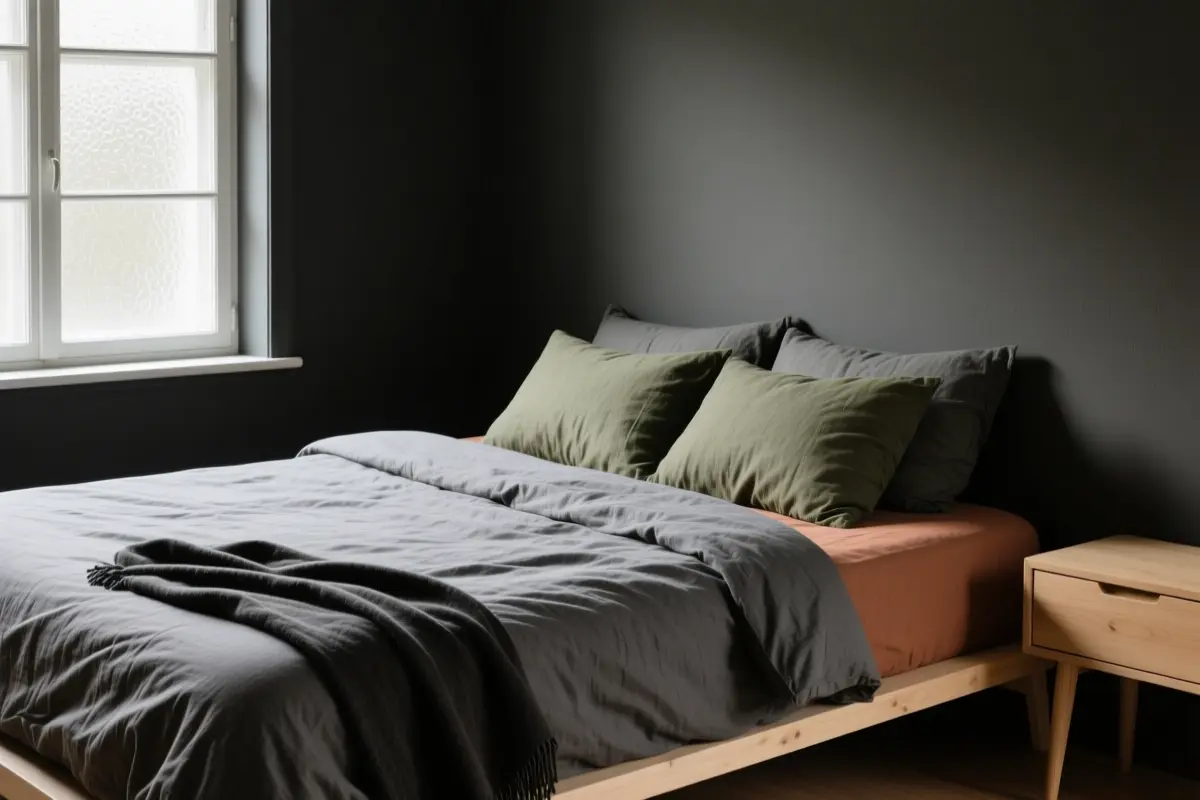
Compared to crisp cotton sheets, heavy linen duvet covers add depth while keeping the room tactile.
Choose a charcoal‑gray linen cover, layer a warm‑clay cotton fitted sheet, and finish with muted‑olive linen pillow shams. The linen’s natural texture prevents a dark, minimalist bedroom from feeling stark.
Linen softens after each wash, gaining a lived‑in feel that suits moody palettes. Expect the fabric to crease naturally; those who demand a perfectly pressed look may find the folds untidy.
To keep creases from looking sloppy, tumble‑dry on low and remove while still damp, then smooth with hands.
Mix a high‑quality flax linen cover, usually $80‑$120 per set, with budget‑friendly cotton sheets priced around $30‑$45.
This combo delivers the luxe feel without breaking the bank. If the creasing bothers you, a brushed cotton duvet in the same hues offers a smoother surface while still providing comfort.
Quick tip: tuck a thin, dark linen throw at the foot of the bed; it adds visual weight and makes it easy to pull up on cooler evenings.
Adding a 2‑inch linen throw in muted olive at the foot of the bed gives extra texture and ties the color scheme together.
6. Deep-Toned Tongue-and-Groove Wood Paneling
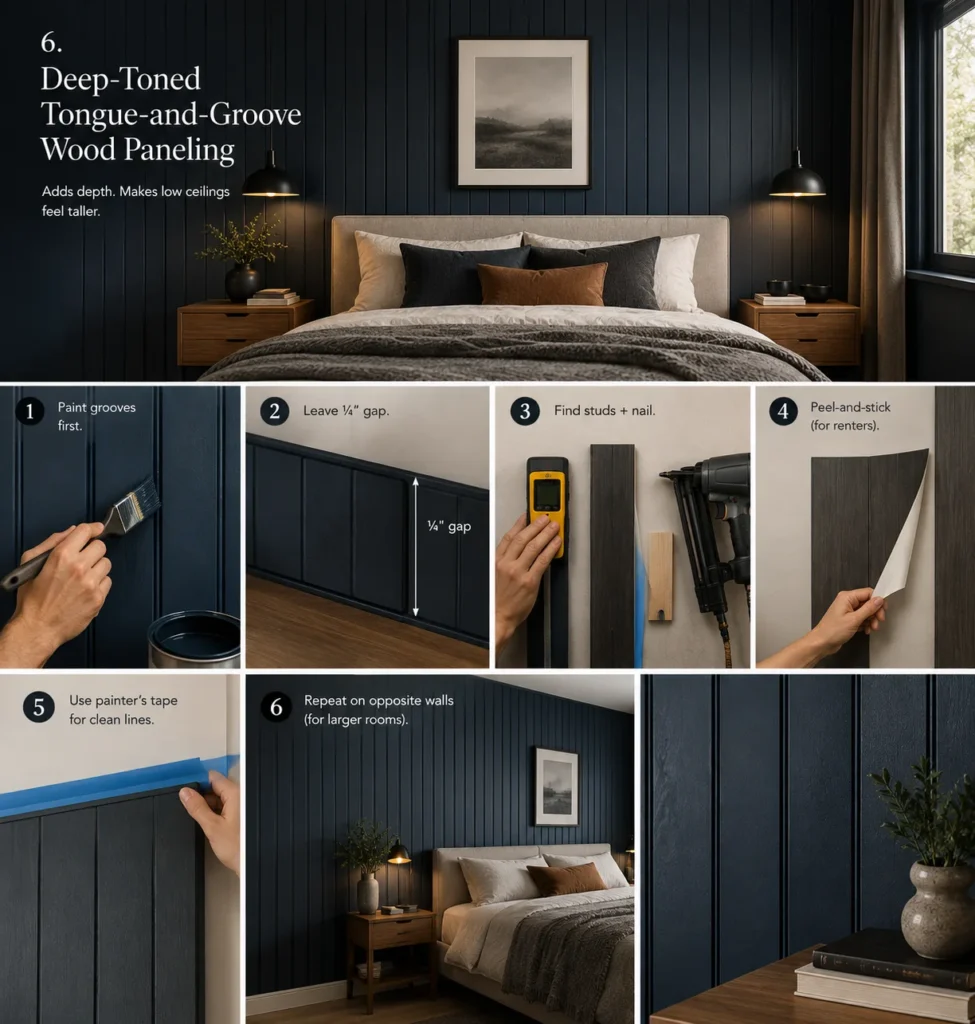
A floor‑to‑ceiling strip of navy‑painted tongue‑and‑groove wood runs vertically across the wall, turning plain drywall into a statement surface.
The vertical lines draw the eye upward, which helps low ceilings feel taller.
Before you nail or glue the planks, paint the inside of each groove; this prevents the raw wood from showing through the seams later.
Leave a ¼‑inch expansion gap at the floor and ceiling to accommodate seasonal movement.
Use a stud finder, a 2‑by‑4 shim, and a pneumatic nail gun for a tight fit, but a hammer and finishing nails work for a weekend DIYer.
The method is best for a master bedroom or a guest room with a modest ceiling height, where the moody tone adds drama without overwhelming the space.
If you rent, the permanent nail pattern can damage the wall when removed.
In that case, peel‑and‑stick wood‑look planks provide the same visual impact and can be pulled off without leaving large holes.
A quick tip: tape a thin strip of painter’s tape along the top edge of each board before installing; it creates a clean, straight line and protects the paint while you work.
For larger rooms over 200 sq ft, consider repeating the paneling on two opposite walls to balance the depth.
If you’re unsure about cutting the boards yourself, a local carpenter can finish the cuts for about $30 per hour, leaving you to handle the painting and hanging.
7. Minimalist Framed Monochrome Art with Wide Mats

A 24‑by‑36‑inch black‑and‑white photograph of a lone tree stretches across the wall, its stark silhouette framed in a wide, cream‑colored mat that pops against the charcoal paint.
The mat creates a bright border, stopping the image from melting into the dark backdrop.
Pair the piece with non‑reflective acrylic or museum‑grade glass to keep glare off the glossy surface, especially when the room faces a window.
The high‑contrast image draws the eye, while the generous mat adds a visual pause that balances the moody palette.
Because custom wide mats and anti‑glare glass add weight, the frame can easily exceed 30 lb.
Budget‑wise, expect to spend $150‑$300 for a professionally matted piece, plus $50‑$100 for the specialty glass.
If the wall can’t support that load, mount the frame on a sturdy picture rail or use heavy‑duty adhesive strips designed for large frames, which won’t damage rental walls.
Quick tip: measure the wall opening first and leave at least six inches of space around the mat to maintain proportion and avoid a cramped look.
For an extra level of safety, attach a small, stud‑rated hook behind the frame to distribute weight evenly.
Adding a discreet leveler at the bottom lets you fine‑tune the placement without rehanging the whole piece.
8. Industrial Concrete-Effect Accents

A microcement finish on one wall creates a seamless concrete look that feels industrial yet Nordic.
The grey surface pairs naturally with warm oak nightstands and soft wool throws, keeping the room grounded without overwhelming the space.
Real concrete side tables add weight and texture, but they can’t be moved easily and may chip if they bump against a dresser.
For homes where that risk is too high, a high‑density resin slab painted with concrete‑look paint offers the same visual punch with a fraction of the mass.
DIYers can apply a thin‑set microcement kit using a trowel and a flexible roller; the process takes two days for curing and a second day for sanding.
Professionals are recommended for full‑wall applications because they handle mixing ratios and moisture barriers more reliably.
A clear sealant protects the finish from spills and helps maintain the matte tone over time.
If you opt for a concrete‑effect overlay on a wooden headboard, sand the wood smooth, prime it, then roll on the overlay kit and finish with a water‑based polyurethane.
This extra coating shields the surface from everyday wear and keeps the moody aesthetic intact.
9. Smoked Oak Slatted Wall Panels

A thin bead of construction adhesive spreads across the back of each smoked oak slat before it meets the wall.
Measure the wall height in 2‑foot sections, then cut the slats to match using a fine‑toothed saw; a 1‑inch gap between boards creates the signature Scandinavian rhythm.
Apply the adhesive to the back of the first row, press firmly, and hold for 30 seconds.
For extra security, drive a black drywall screw through the center of every fourth slat, countersinking the head to keep the surface flush.
A quick tip: run a laser level along the ceiling line and snap a chalk line at the desired height; this guarantees each row stays level and the gaps remain uniform.
A common mistake is laying the slats without a spacer, which causes uneven spacing and a jagged visual. Use ¼‑inch shims between boards while the adhesive cures to avoid that issue.
The narrow gaps between the wood act as dust traps, so a vacuum brush attachment should be run along the surface weekly.
Renters can skip the screws and opt for heavy‑duty removable mounting strips; they hold the panels securely yet leave no holes.
DIYers with basic carpentry skills can complete this project, but achieving perfectly even gaps may require a professional’s eye.
Finish the installation with a clear matte sealant to protect the dark walnut finish from humidity.
10. Chocolate Brown and Charcoal Color Palettes
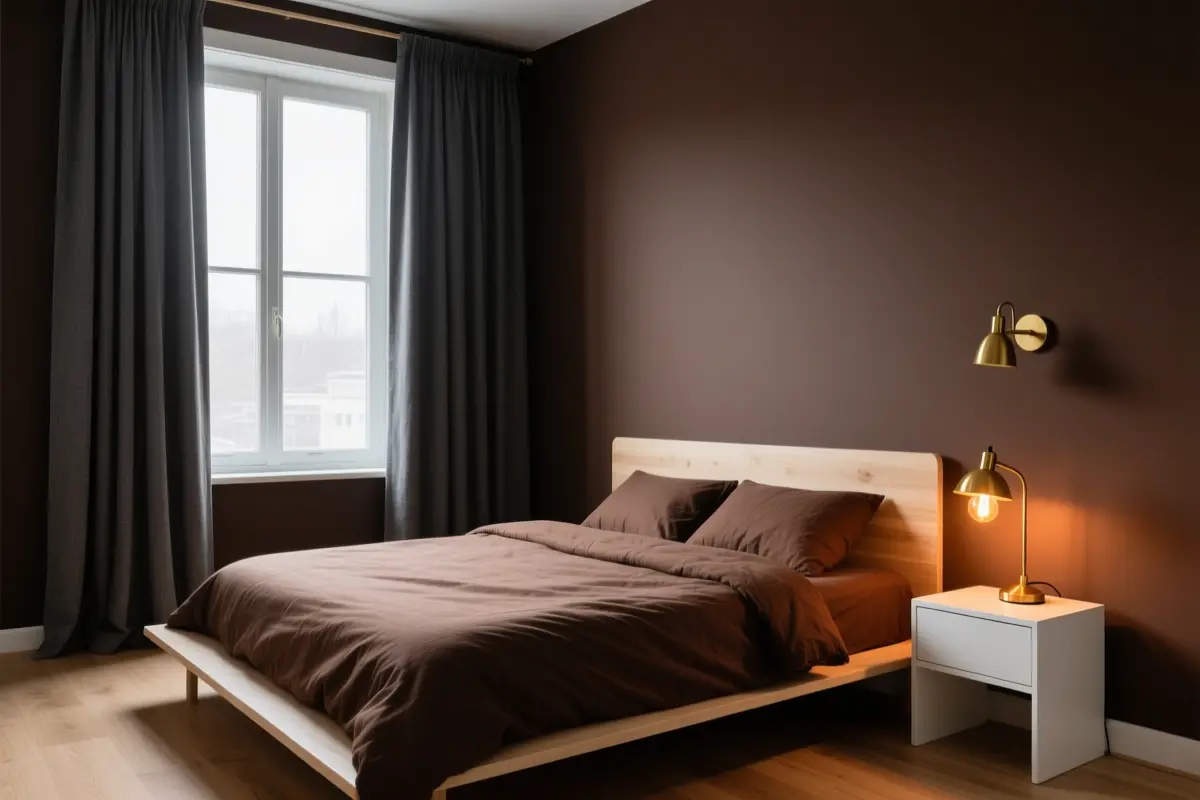
In a north‑facing bedroom, the walls painted chocolate brown instantly soften the weak daylight.
The deep hue traps warm light, making the space feel snug instead of the cold, flat vibe you get with a grey‑dominant room on overcast mornings.
When the same room receives bright afternoon sun, charcoal accents keep the look from feeling washed out, while a grey palette can look stark and clinical.
This palette suits couples who enjoy a hygge atmosphere and anyone who prefers a retreat rather than a studio‑style space.
Start by hanging a chocolate‑colored duvet cover and charcoal curtains; the textiles act as a live sample and let you see how the colors interact with your existing lighting.
If you notice the brown turning muddy, add a brass table lamp or a wall sconce with a warm LED bulb to boost contrast.
The quick tip is to buy a low‑cost fabric swatch or thrift‑store throw in the same shade and drape it on the wall for a weekend test before buying paint.
When the chocolate is paired with adequate lighting and high‑contrast textiles, it stays modern and moody; without those, it can look dated.
Finish the walls with a matte low‑sheen enamel topcoat to protect the color and keep it from flattening over time.
11. Sheer Dark Curtains for Soft Light Diffusion
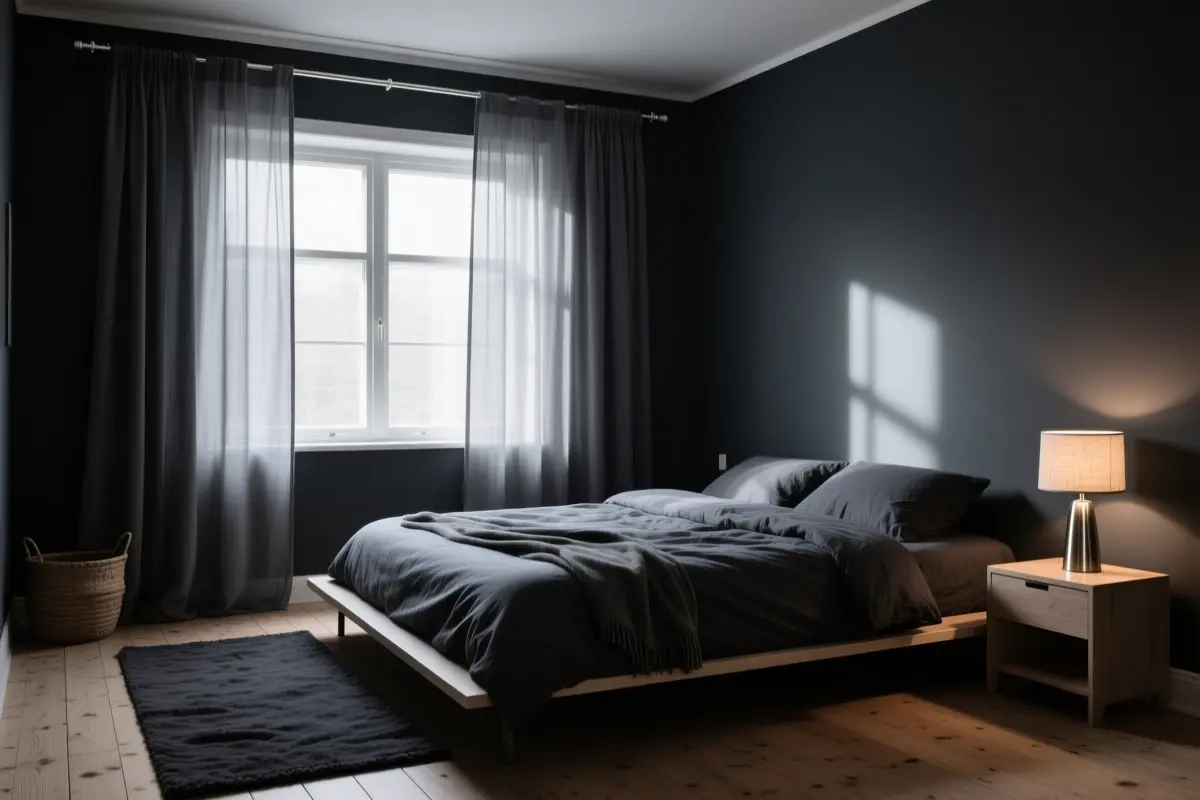
Harsh morning light spilling across a charcoal duvet can ruin the intended moody feel.
Replacing solid blackout panels with dark‑grey sheer curtains lets daylight filter softly, preserving the low‑key vibe while revealing the room’s wood grain and textured throws.
The sheer fabric catches the sun at an angle, creating a subtle glow that highlights a matte rug or a brushed‑nickel lamp without turning the space bright.
Hang the panels high, just above the ceiling line, and extend them a few inches beyond each side of the window.
This visual trick makes the window appear larger and keeps the ceiling height prominent, a key element in Scandinavian design.
Avoid cheap polyester sheers; they reflect light and look plasticky, breaking the organic mood.
A drawback is the limited privacy once the bedroom lights are on; the curtains won’t block evening illumination or early sunrise for light‑sensitive sleepers.
Pair them with a removable blackout liner or a second, heavier set of drapes if privacy is a priority.
For renters, install the curtains on a tension rod or adhesive brackets to avoid permanent holes.
Select a matte, 12‑oz cotton‑linen blend for durability and a natural drape that resists unwanted shine.
Pick Your First Moody Upgrade
These eleven ideas show how a dark Scandinavian bedroom can feel both moody and livable.
Start with the easiest win, apply a lime‑wash technique or swap in matte black sconces, to see instant depth without a full remodel.
If you’re ready for a bigger change, pair a forest‑green accent wall with light oak furniture, then layer heavy linen bedding for texture. Remember to test colors with swatches before committing,
Frequently Asked Questions
What are some examples of dark Scandinavian interior design?
Examples of dark Scandinavian design include bedrooms utilizing deep charcoal, forest green, or soot black matte walls paired with light oak furniture, minimalist low-profile layouts, and rich natural textiles like heavy flax linen and wool to create a cozy, layered look known as ‘Scandi Noir’.
Will a dark Scandinavian bedroom make my small space feel like a cave?
No, if you incorporate reflective elements, varied textures, and strategic accent lighting, a dark palette can actually make the walls of a small room appear to recede, creating an intimate, cozy atmosphere rather than a cramped one.
What wood tones pair best with dark Nordic walls?
Light-toned woods like white oak, ash, and birch offer the best contrast to dark walls, preventing the space from feeling overly heavy while keeping the classic Scandinavian natural warmth.
How do you choose the right light bulbs for a dark bedroom?
Opt for warm-tone LED bulbs in the 2700K to 3000K range to keep the dark colors looking rich and inviting; avoid daylight or cool white bulbs (4000K+), which will make dark charcoal or blue walls look clinical and washed out.
Is dark paint high maintenance in a bedroom?
Yes, ultra-matte dark paint shows dust, scuffs, and natural skin oils much more easily than lighter colors, so it is best to use a high-quality scrubbable flat or eggshell finish in high-touch areas.