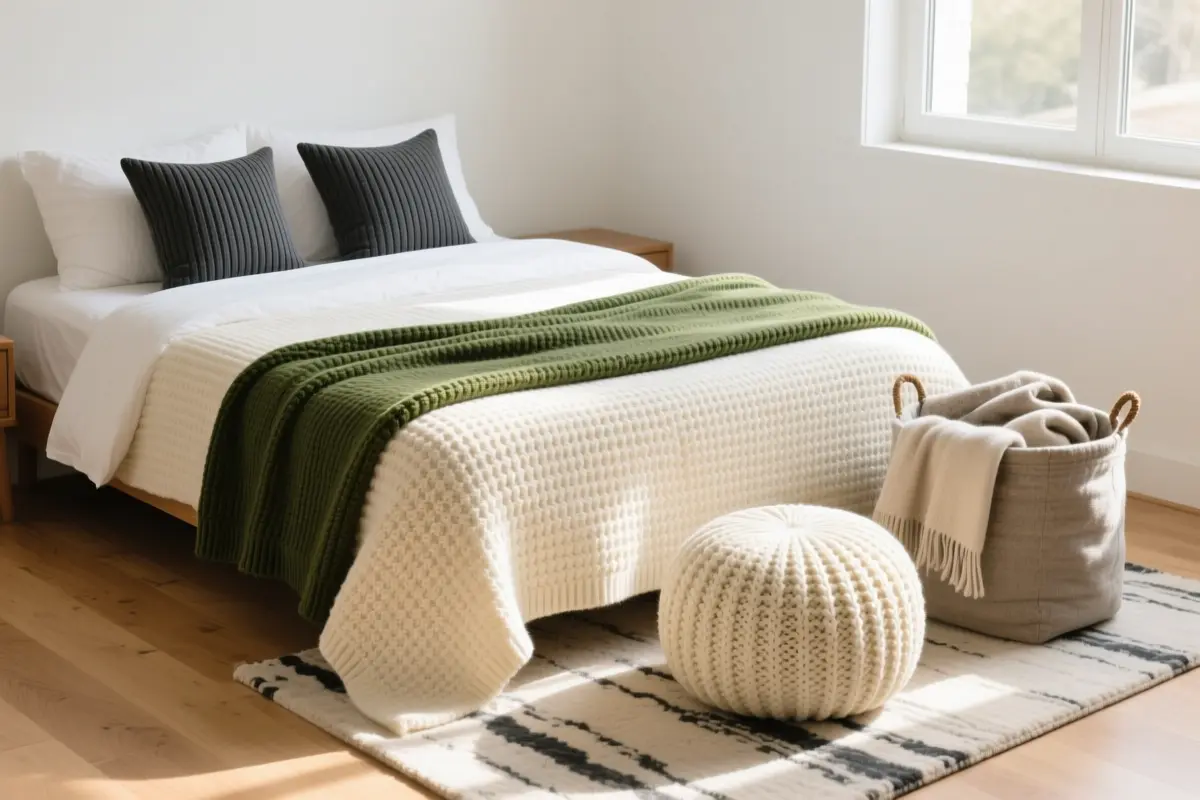
12 Textured Modern Bedroom Ideas With Knits (That Are Actually Practical)
12 Textured Modern Bedroom Ideas With Knits (That Are Actually Practical)
You’ve probably stared at a sleek bedroom that feels flat because the hard surfaces lack any tactile warmth.
The modern vibe is there, but without texture, the space can feel sterile, especially when you’re juggling a pet, a tight budget, or a rental agreement that limits permanent changes.
This list rounds up twelve knit‑focused upgrades that add depth without sacrificing style. From moss‑stitch cotton throws and ribbed pillow shams to pet‑proof bed runners and renter‑friendly headboard slipcovers, each idea balances durability, washability, and visual interest. Expect a bedroom that feels inviting, stays practical, and still looks modern.
1. Moss-Stitch Cotton Throw Blankets
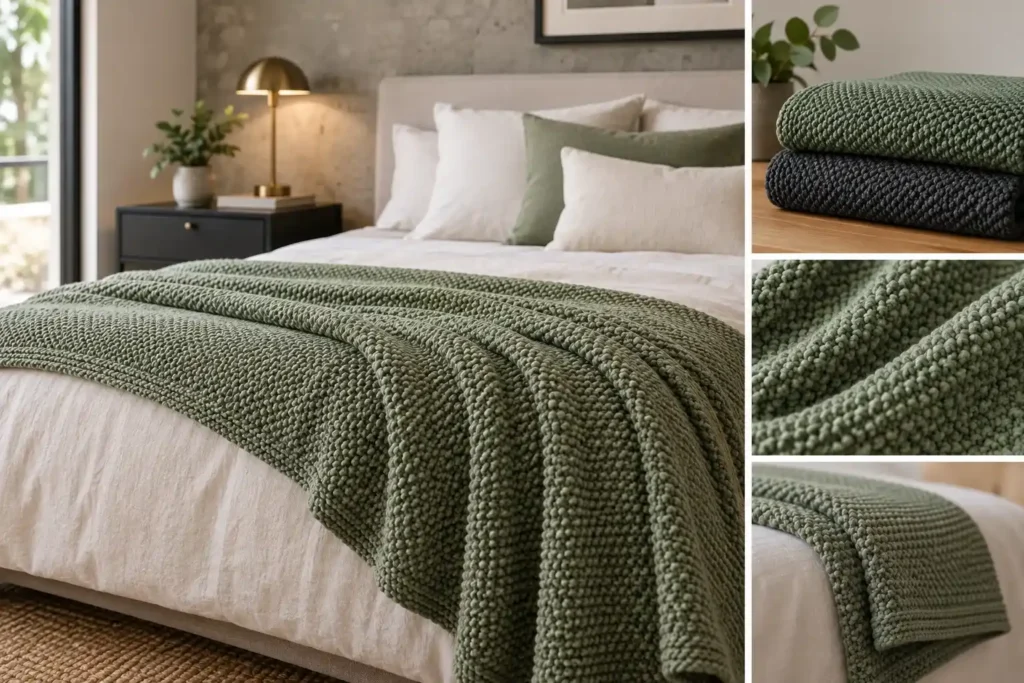
Unlike the pill‑prone unspun acrylic roving wool, moss‑stitch cotton stays smooth after each wash.
The tightly woven stitch creates a structured surface that resists fuzz, so the blanket looks fresh even after weekly laundering.
In a typical bedroom, a cotton throw survives the tumble without shrinking enough to distort the edges, unlike acrylic that can balloon and lose shape.
Choose a sage‑green or charcoal hue to anchor a modern palette; the muted tones complement concrete walls and metal nightstands without overwhelming the space.
The trade‑off is that moss‑stitch cotton lacks the high loft and fluffy warmth of unspun wool, making it heavier and less insulated for freezing winters.
If you need extra coziness in a chilly climate, pair the cotton throw with a thin merino‑wool blanket or swap for a blended bamboo‑cotton knit that offers more loft while retaining easy care.
Maintenance is straightforward: machine wash on a cold, gentle cycle, then tumble dry low or lay flat to avoid stretching. Avoid bleach, as it can weaken the cotton fibers over time.
With this routine, the throw retains its texture for years, providing a durable, low‑maintenance accent that adds tactile interest without the constant pilling of synthetic roving.
For a quick visual boost, drape the blanket over the foot of the bed and tuck the corners under the mattress to create a sleek, layered look.
2. Ribbed Knit Accent Pillow Shams
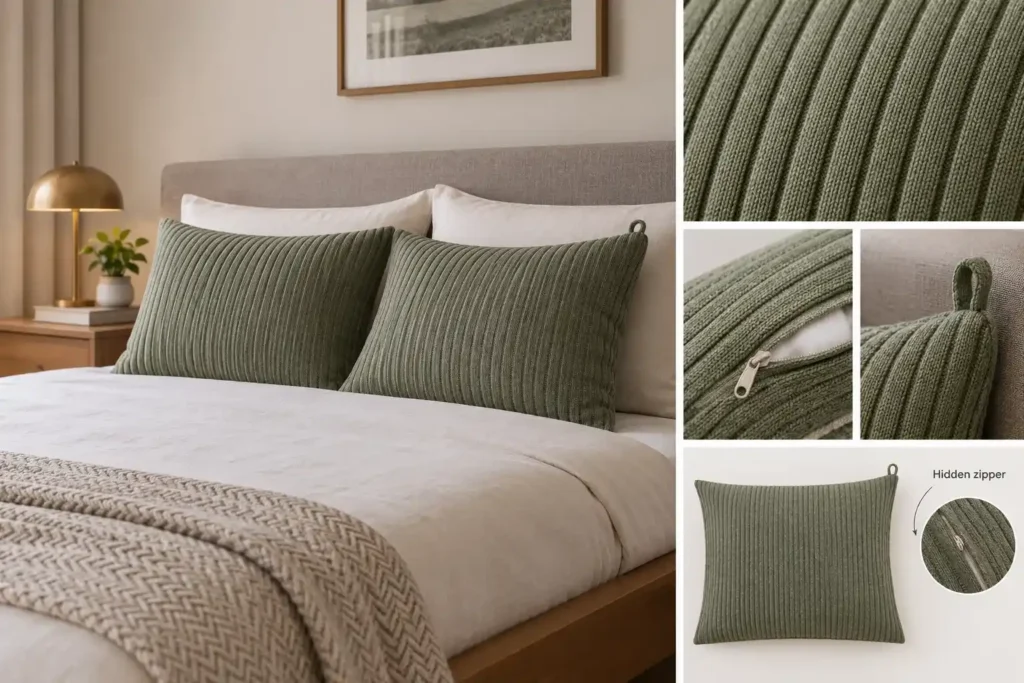
Sew the ribbed knit fabric with a narrow ¼‑inch seam allowance to preserve the vertical ribs.
The raised ribs run up and down, creating structured lines that echo the clean geometry of mid‑century modern nightstands and low‑profile platform beds.
Choose a tight rib‑knit cotton‑linen blend; the natural fibers keep the texture crisp after years of use.
Avoid polyester‑knit covers, which tend to lose tension after three washes and look saggy.
Loose rib‑knit designs are highly susceptible to stretching out permanently if washed or pulled aggressively, ruining the clean geometric lines.
For durability, wash the shams in cold water, tumble dry on low, and reshape the ribs while damp.
A quick tip: insert a hidden zip at the back so you can replace the insert without opening the seams.
This detail works best in a minimalist bedroom where the pillows act as subtle accent pieces rather than bold statements.
It suits homeowners who favor a sleek, low‑key aesthetic and want a texture that ages gracefully.
Add a small fabric loop at the top edge to keep the pillow from sliding off the headboard.
3. Cable-Knit Bed Runners for Pet Owners
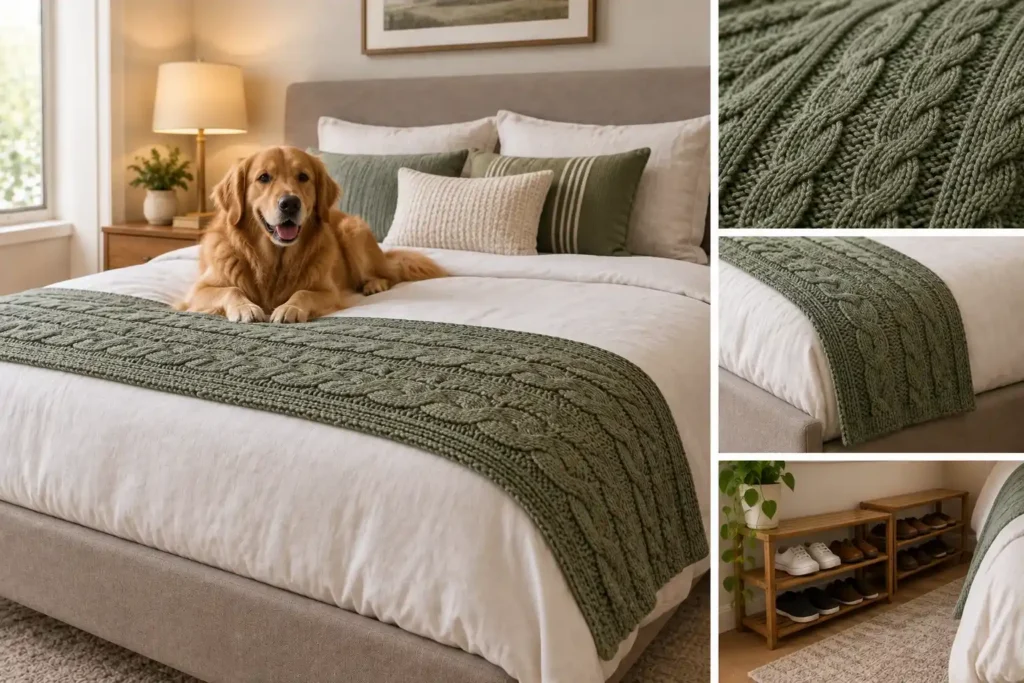
Every night your dog’s paws swipe across the duvet, pulling threads and leaving fur clumps.
A cable‑knit runner placed at the foot of the bed offers a textured look while shielding the most vulnerable strip of fabric.
The knit’s tight weave resists snagging, and a cotton‑poly blend can survive the machine‑wash cycle without shrinking.
Center the runner so the pattern aligns with the headboard, then tuck the edges under the footboard to keep it from shifting when the pet hops up.
This setup works well in studio apartments where space is limited, and a full‑size knit duvet would overwhelm the room.
If the runner’s narrow coverage feels insufficient, a washable pet blanket in a coordinating hue provides complete protection.
Expect the knit to pill after several washes; a gentle lint roller restores its smoothness between laundering.
Quick tip: fold the runner in half lengthwise before slipping it under the footboard for a snug, low‑profile finish.
The solution suits single‑pet owners who need a quick visual upgrade without committing to a permanent fabric change.
Add a pair of low‑profile, slip‑on shoe racks beside the bed to keep muddy paws off the runner entirely.
4. Structured Boiled Wool Storage Baskets
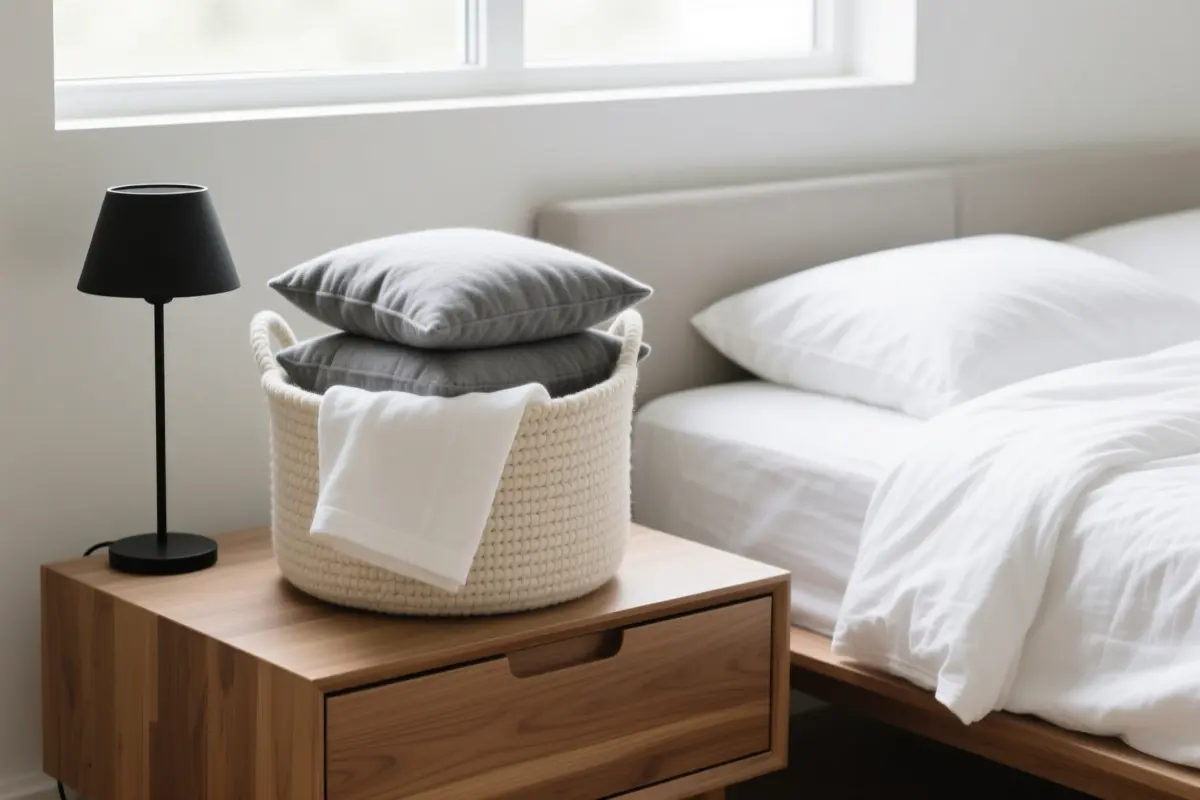
Boiled wool, with its dense, heat‑set fibers, feels firm to the touch and holds shape without a frame.
The boiling process condenses the fibers, creating a self‑supporting basket that stays upright even when empty.
Unlike flimsy felt bins, these baskets can hold a stack of throw pillows or a folded set of bed linens without sagging.
Their natural loft also adds a subtle texture that complements a modern bedroom palette.
The main drawback is cost; boiled‑wool baskets run noticeably higher than standard felt options.
They also tend to attract pet hair, which can embed in the fibers and resist vacuuming. For homes with dogs or cats, a weekly lint‑roller pass or a quick shake outdoors keeps the surface tidy.
If the price or pet‑hair issue is a deal‑breaker, a tightly woven canvas tote offers similar rigidity at a lower price point and is easier to clean.
Because the wool can compress over years of heavy use, rotate the basket’s position every few months to distribute wear evenly.
Place the basket on a low nightstand and use a lint roller weekly to keep pet hair at bay.
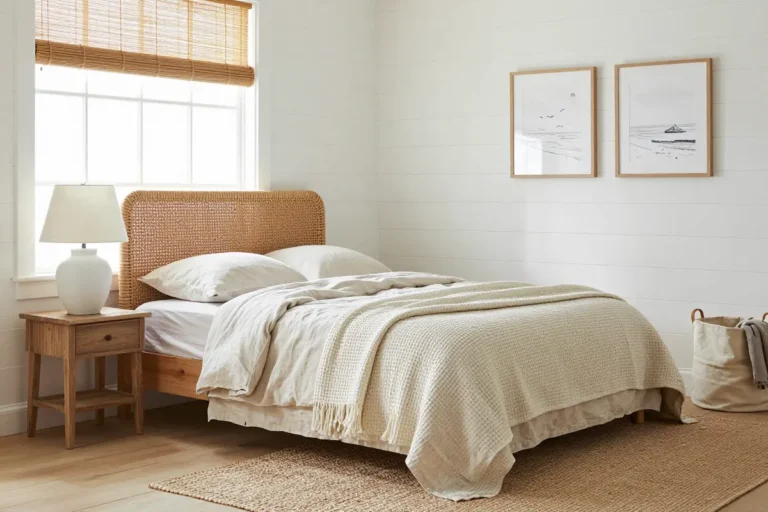
5. Waffle-Knit Cotton Coverlets
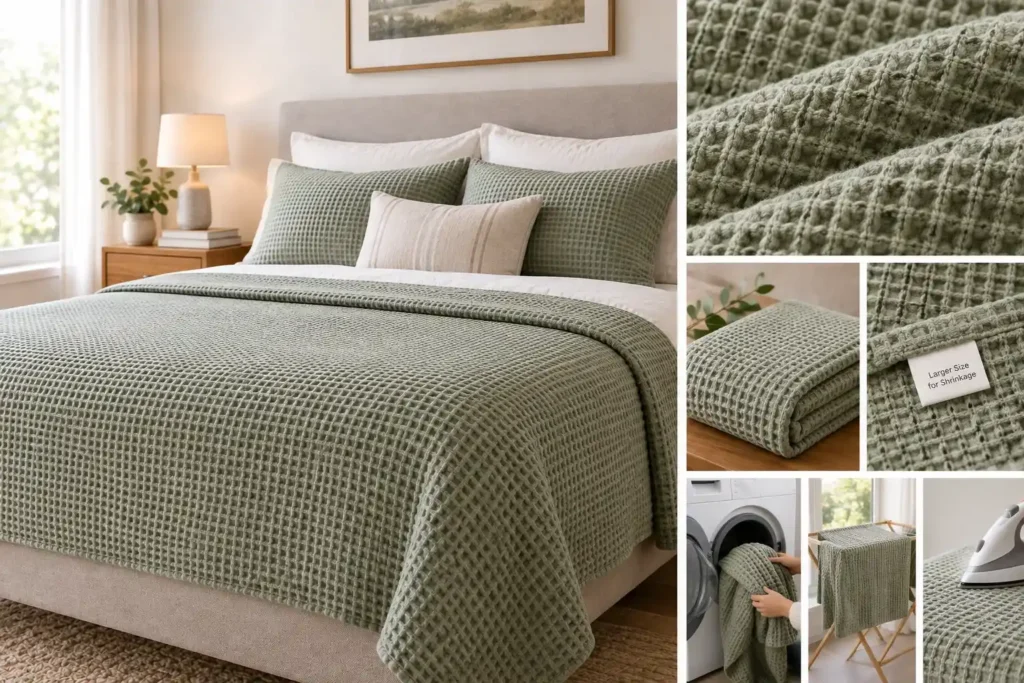
Hot sleepers often find that a thick duvet locks in heat, leaving them restless through the night.
A waffle‑knit cotton coverlet solves that by using a grid of shallow pockets that hold a thin layer of air.
The air acts as insulation without the weight of a heavy blanket, so the body stays cool while the surface still feels soft.
The coverlet works best in a master bedroom where summer temperatures climb, or in a guest room used mainly in warm months.
Choose a size one step larger than your mattress; the extra fabric gives room for the typical 3‑5 % shrinkage that occurs after the first hot wash. After washing, lay the coverlet flat to dry on low heat or air‑dry.
High‑heat drying can shrink the cotton unevenly, pulling the square pockets out of shape and reducing the breathable effect.
Cotton waffle weave holds up well to regular use, but the fabric can pill after many washes. To extend its life, turn it inside out and wash on a gentle cycle with cold water.
For the final touch, iron the coverlet on a low setting while it’s still slightly damp to smooth any puckering without flattening the pockets.
6. Dense Garter-Stitch Floor Poufs
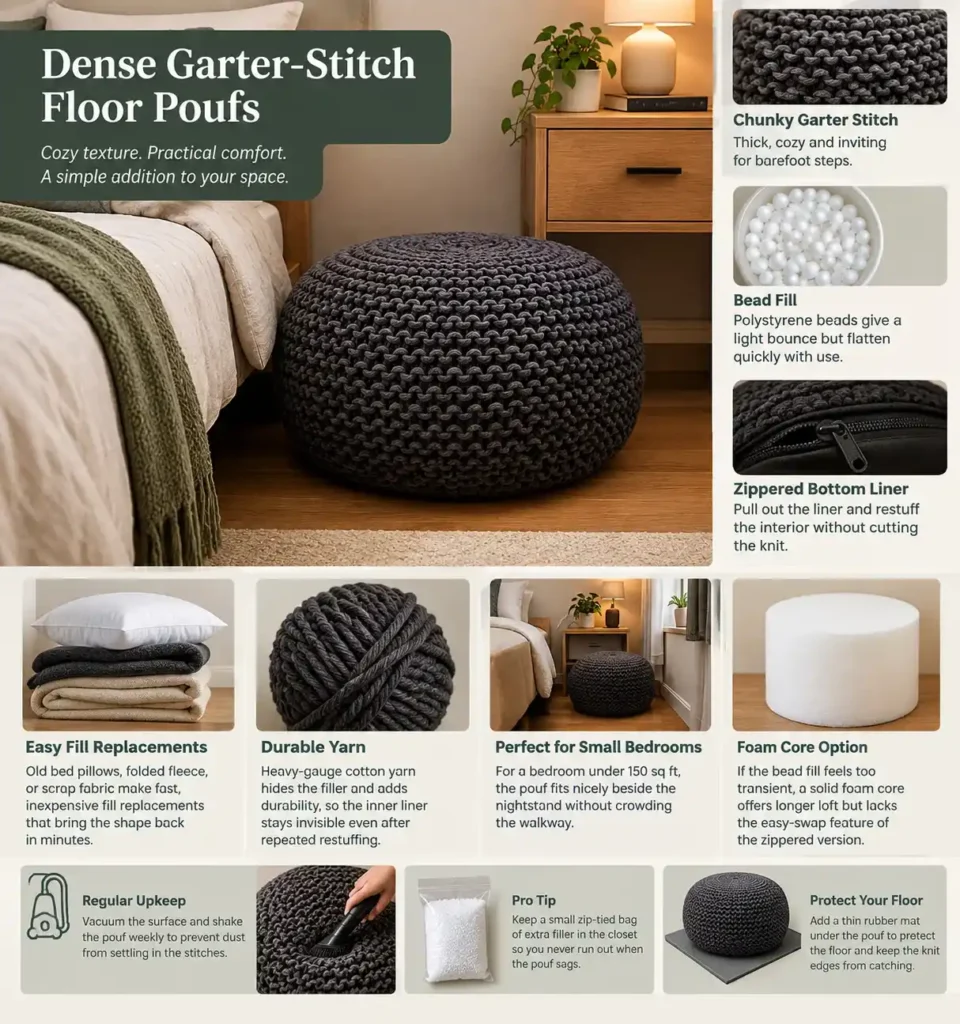
A thick, garter‑stitch knit pouf in muted charcoal sits flush against the hardwood, its chunky texture inviting barefoot steps.
The pouf’s body is filled with polystyrene beads, which give a light bounce but flatten quickly when you sit on it for a few minutes.
Choose a model with a zippered bottom liner; the zip lets you pull the liner out and restuff the interior without cutting the knit.
Old bed pillows, folded fleece, or scrap fabric make fast, inexpensive fill replacements that bring the shape back in minutes.
Heavy‑gauge cotton yarn hides the filler and adds durability, so the inner liner stays invisible even after repeated restuffing.
For a bedroom under 150 sq ft, the pouf fits nicely beside the nightstand without crowding the walkway.
If the bead fill feels too transient, a solid foam core offers longer loft but lacks the easy‑swap feature of the zippered version.
Regular upkeep means vacuuming the surface and shaking the pouf weekly to prevent dust from settling in the stitches.
A quick tip: keep a small zip‑tied bag of extra filler in the closet so you never run out when the pouf sags. Add a thin rubber mat under the pouf to protect the floor and keep the knit edges from catching.
7. Bouclé-Knit Bedroom Seating
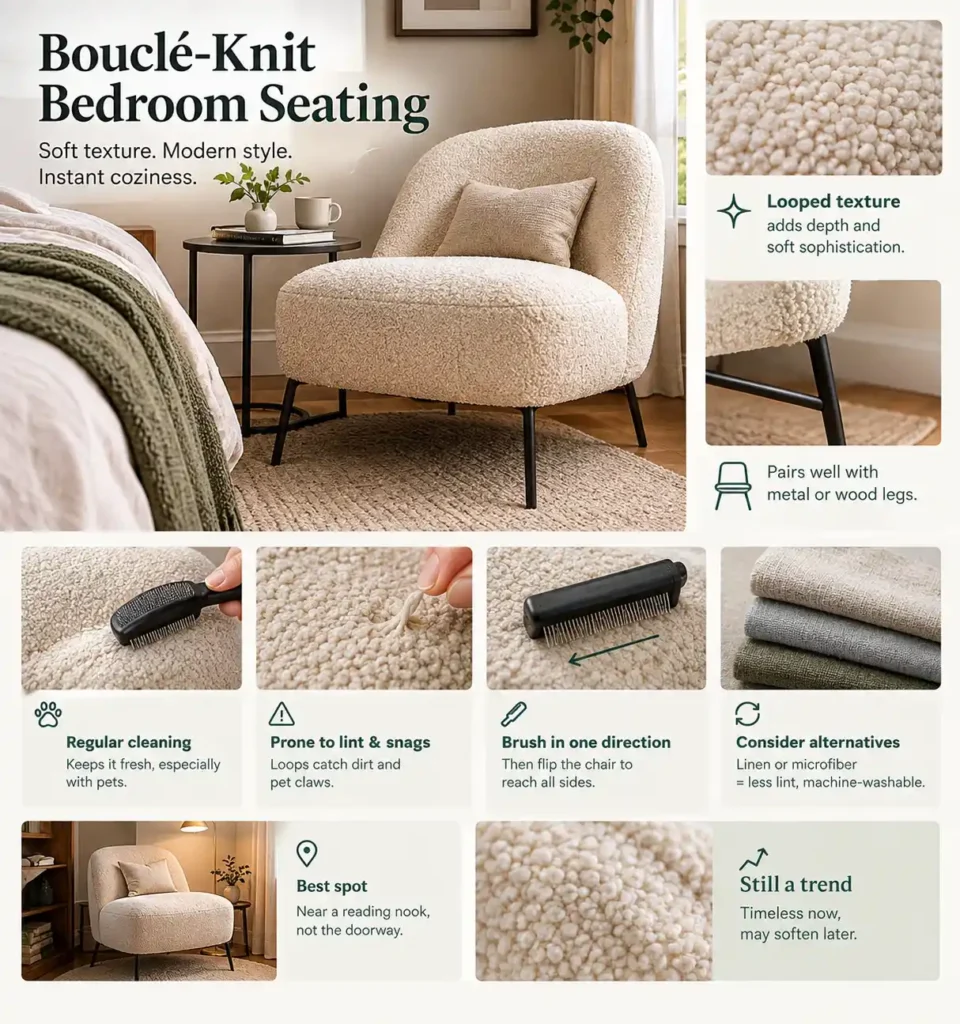
Bouclé knit’s soft, looped texture adds a tactile layer to a modern bedroom accent chair and instantly signals cozy sophistication.
The loops catch light, creating subtle depth that complements sleek metal legs or a low-profile wooden frame.
Pair the chair with a simple metal side table and a neutral duvet to let the fabric be the focal point without overwhelming the room’s clean lines.
The looped surface acts like a magnet for lint, dirt, and pet claws, which can easily pull and snag the delicate threads.
Expect regular cleaning to keep the chair looking fresh, especially in homes with cats or dogs. A rubber pet‑hair brush glides over the loops, lifting debris without tearing the fibers.
Brush in one direction, then flip the chair to reach the back and underside.
If the maintenance feels too demanding, consider swapping bouclé for a tightly woven linen or microfiber slipcover.
These alternatives still offer texture but shed lint far less and are machine‑washable.
Bouclé remains a current trend in textured interiors, though its popularity may soften as smoother fabrics re‑emerge in design forecasts.
Position the chair near a reading nook rather than the doorway to reduce daily brushing and preserve the fabric’s integrity.
8. Framed Vintage Knit Textile Art
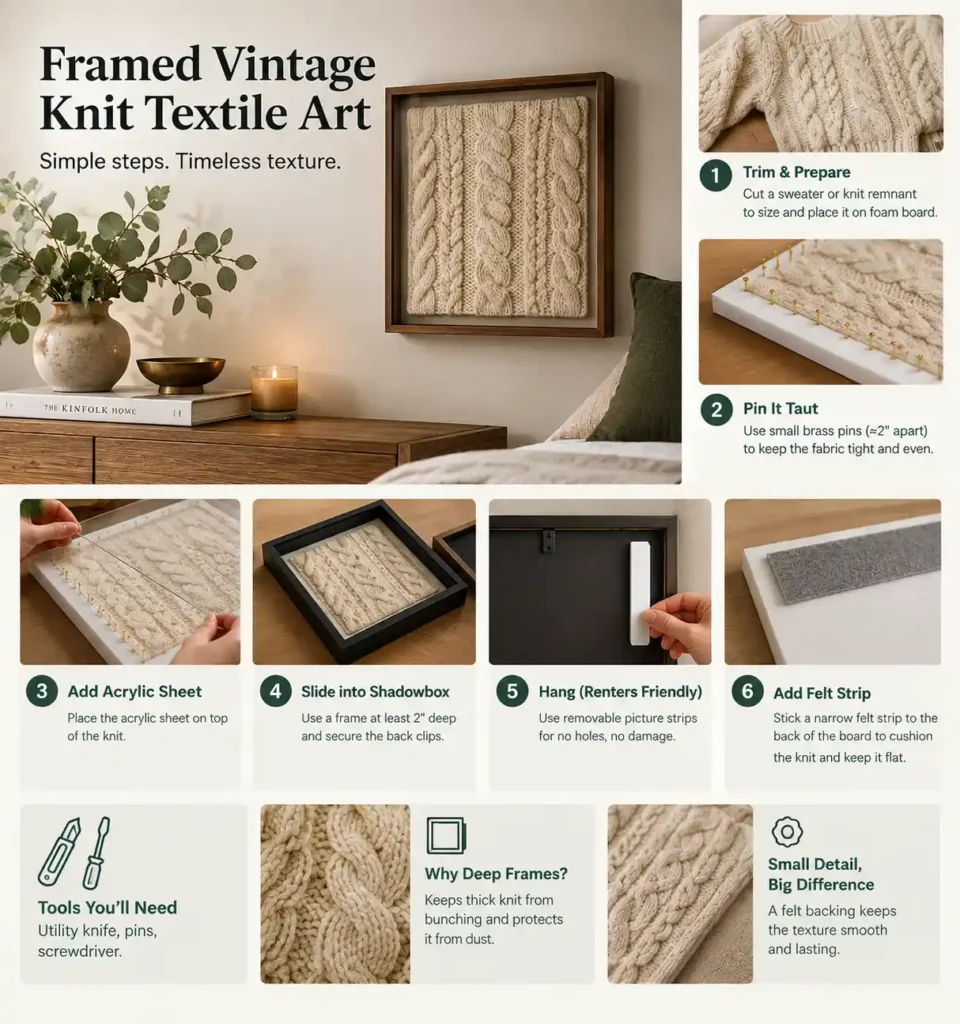
Lay a piece of acid‑free foam board on a clean tabletop before you begin pinning the knit.
Trim a thrifted cable‑knit sweater or a lace‑knit remnant to the desired display size, then stretch it over the board.
Use small brass pins placed about two inches apart to hold the fabric taut; the pins prevent sagging and keep the texture even.
Position an acrylic sheet on top of the knit, then slide the assembly into a deep‑shadowbox frame that is at least two inches deep. Secure the back with the frame’s clips, making sure the board sits flat and the fabric does not shift.
Heavy knit fragments often bunch in standard shallow frames, so the extra depth of a shadowbox is essential for a clean, dust‑free look.
The whole process requires only a utility knife, pins, and a screwdriver for the frame’s hardware, so a professional is unnecessary.
For renters, attach the frame to the wall with removable picture‑hanging strips; this leaves no holes and can be taken down without damage.
Add a narrow strip of felt to the back of the foam board to cushion the knit and keep it flat over time.
9. Stretch-Knit Headboard Slipcovers
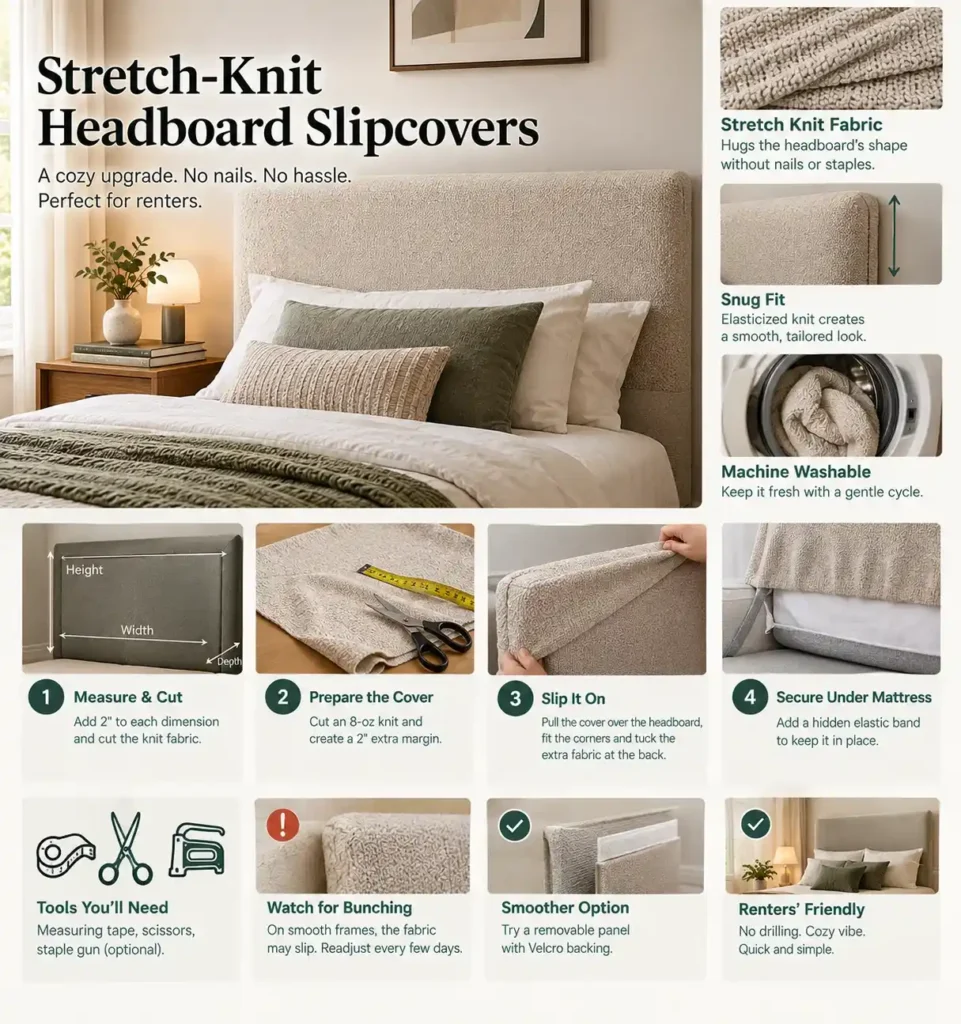
In a compact studio bedroom, a thick elasticized knit slipcover can turn a plain headboard into a soft focal point.
The stretch fabric hugs the sharp lines of a modern headboard without nails or staples, making it safe for renters.
Measure the headboard’s width, height, and depth, then cut a piece of 8‑ounce knit that exceeds each dimension by two inches; the extra fabric creates a snug pocket when folded over the edges.
Slip the cover on, pull the corners tight, and tuck the excess into the back. This method lets you wash the cover in a gentle cycle, so you avoid spot‑cleaning a traditional upholstered headboard.
On smooth faux‑leather or polished wood frames, the knit may bunch or slip, so you’ll need to readjust the fabric every few days to keep it taut.
If you prefer a smoother finish, a removable upholstered panel with Velcro backing works better on those surfaces.
The solution suits renters who want a cozy vibe without drilling, and it can be completed with a measuring tape, scissors, and a staple gun for a final hidden seam if desired.
Add a hidden elastic band under the mattress to keep the slipcover snug when you pull the bedding aside.
10. Marled Yarn Bedside Rugs
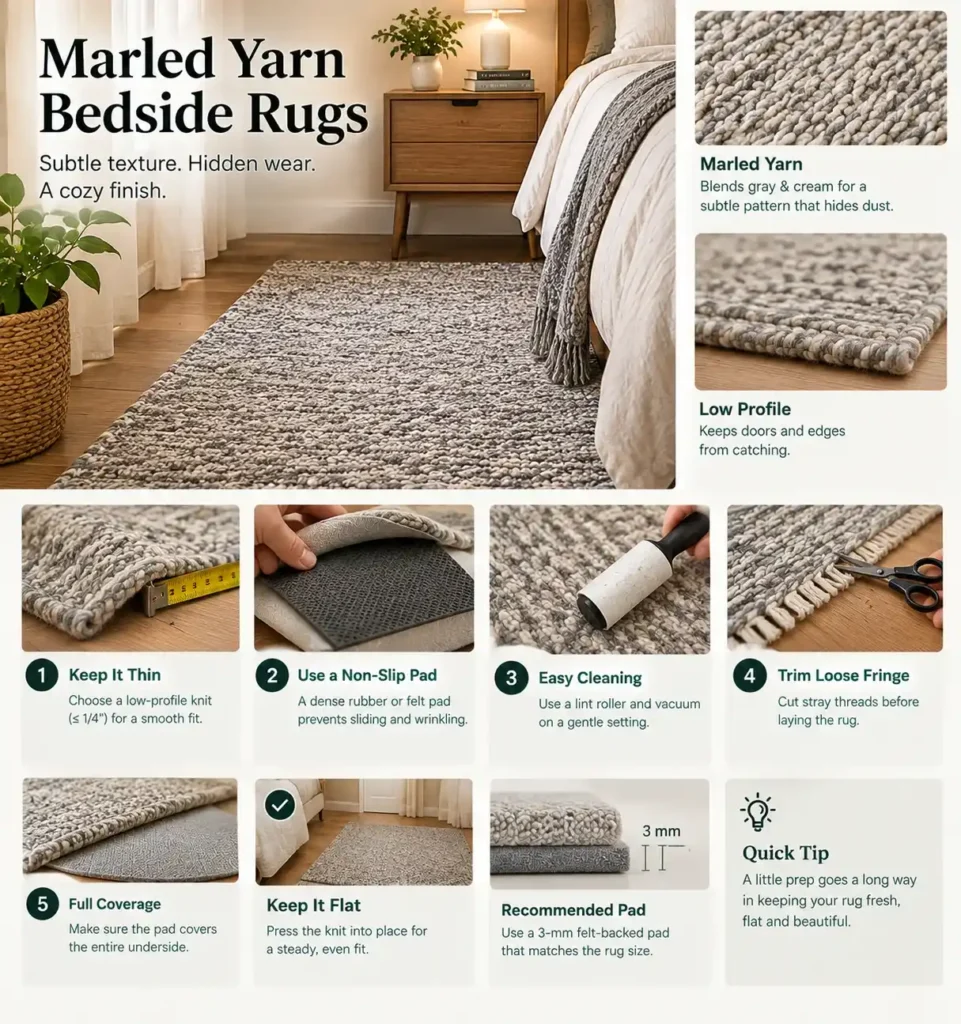
A marled yarn bedside rug displays speckled strands of dove‑gray and soft cream that swirl together, creating a subtle pattern that disguises dust and footprints.
The two‑tone blend tricks the eye, so everyday wear stays hidden while the room retains a textured, modern feel.
Because knit rugs lack a stiff, structured backing, they tend to wrinkle, slide, and warp underfoot if they rest directly on hardwood.
A high‑quality non‑slip rug pad, preferably a dense rubber or felt‑backed version, locks the fibers in place and prevents movement.
Choose a low‑profile knit, no thicker than a quarter‑inch, to avoid catching on bedroom doors or pulling the rug when the door swings.
For upkeep, spot‑clean with a lint roller and vacuum on a gentle setting; avoid machine washing, which can stretch the yarn and reduce its ability to hide stains.
A quick tip: trim any loose fringe before laying the rug so the edges sit flush and the pad stays centered.
Position the pad so it fully covers the rug’s underside, then press the knit firmly into place. This simple step ensures the rug stays flat, safe, and visually consistent throughout daily use.
Place a 3‑mm felt‑backed pad that matches the rug’s dimensions before laying the knit down to lock it in place.
11. Knit Pendant Light Cord Sleeves
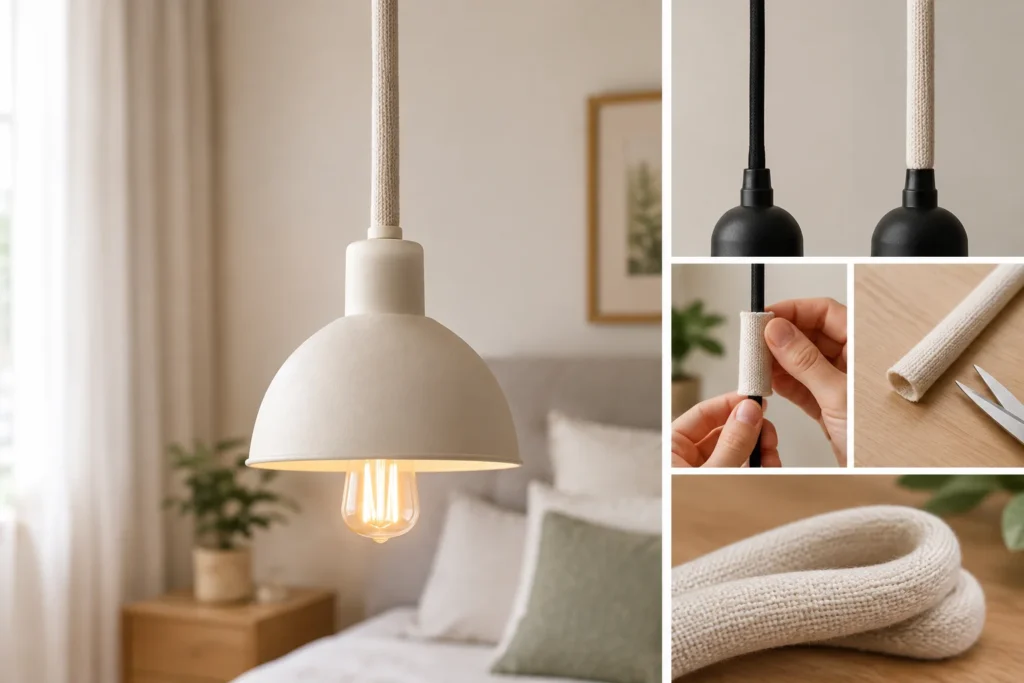
A soft, off‑white linen‑knit tube slides over the black cord of a pendant light, turning the harsh industrial glare into a warm, tactile accent.
The sleeve hugs only the insulated part of the cord, staying well clear of the bulb socket. It works best on fixtures that already have a UL‑certified cord; the fabric never contacts the live tip.
Natural linen‑knit covers keep the look Scandinavian‑modern while adding a subtle texture that blends with neutral bedding.
Painted cords can trap heat, act as an insulator and even melt, while compromised insulation raises shock and fire risks.
Wrapping the cord in fabric avoids those hazards and follows safety recommendations that favor cord covers over painted wires.
Because the sleeve is removable, it leaves no marks on walls or ceilings, making it a renter‑friendly upgrade that won’t void a lease.
Installation requires just a slip‑on motion and a pair of scissors to trim excess length, no tools or wiring changes.
However, if the existing cord shows wear, frays, or belongs to a vintage fixture without certification, a licensed electrician should verify safety before any cover is applied.
This simple swap adds texture without sacrificing function.
12. Weighted Open-Loop Knit Blankets
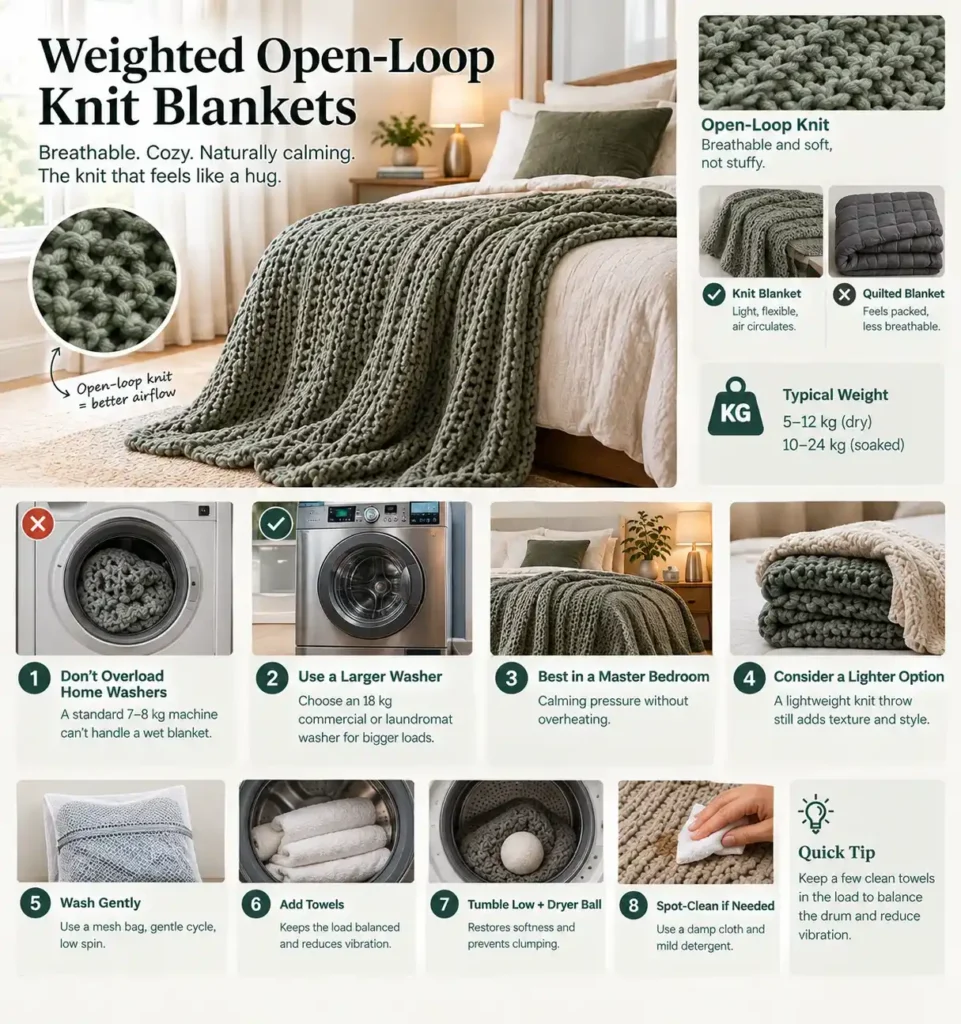
A hand‑knitted weighted blanket drapes like a soft shawl, while a typical quilted version feels like a packed sack of glass beads.
The open‑loop knit lets air circulate, so the blanket stays breathable even under heavy pressure. Most dry knits weigh between 5 kg and 12 kg; soaked, they can reach 10 kg to 24 kg.
A standard residential washer holds 7 kg or 8 kg, so a wet blanket will overload the machine, cause imbalance, and wear the bearings.
Use a commercial or laundromat washer with an 18 kg drum for blankets over 5 kg dry.
This texture works best in a master bedroom where an adult seeks calming pressure without overheating.
If the weight or size is a concern, swap the weighted knit for a lightweight knit throw that still adds visual interest.
For upkeep, wash the blanket in a mesh laundry bag and select a gentle cycle; avoid high spin speeds to protect the yarn.
Quick tip: add a few clean towels to the load to balance the drum and reduce vibration.
After drying, tumble on low heat with a dryer ball to restore softness and prevent clumping. If a washer isn’t available, spot‑clean stains with a damp cloth and mild detergent.
Your Next Texture Upgrade
We’ve walked through everything from moss‑stitch cotton throws and ribbed pillow shams to bouclé seating, knit art frames, and weighted open‑loop blankets. Each option was chosen for its durability, washability, and ability to add texture without overwhelming a modern bedroom.
Start with the piece that solves your most pressing need, maybe a pet‑proof runner for a furry friend or a slipcover that lets a renter refresh a headboard in minutes. Swap one element, live with it a week, then layer another. When the results feel right, you’ll have a cohesive, cozy retreat that still feels sleek.
Pin this guide for your next weekend project and share it with anyone looking to soften a modern bedroom without a full remodel.
Frequently Asked Questions
How do you wash chunky knit blankets without ruining the texture?
Wash them in cold water on a delicate cycle using a mesh laundry bag, then lay them flat to dry on clean towels to prevent the heavy fibers from stretching out of shape.
What is the best knit material for someone who sleeps hot?
Organic cotton waffle-knit is the best option because its open, cellular structure naturally regulates temperature and promotes continuous airflow.
How can I prevent knit bedroom accessories from pilling?
Avoid loose, single-ply acrylic yarns and choose tightly spun, multi-ply cotton or boiled wool options that resist friction and fiber separation.
Are knit blankets safe to use if you have cats or dogs?
Tight, dense knits like moss-stitch are relatively safe, but loose, chunky cable-knits will snag easily under pet claws and are best avoided in pet-friendly homes.