Mud Kitchens Are Taking Over Backyards—And These 12 Ideas Show Why Everyone’s Obsessed:
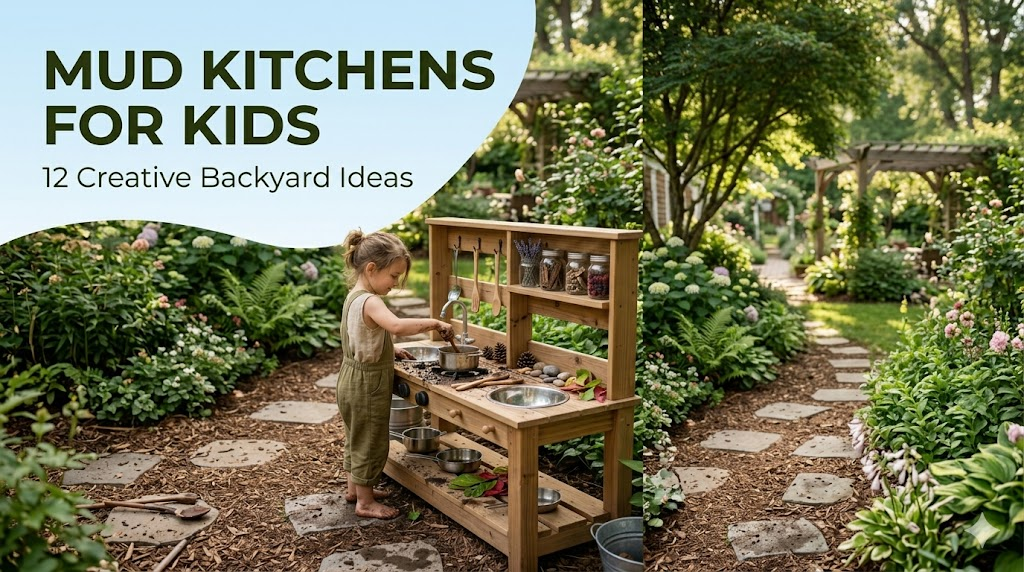
Mud kitchens are no longer just a niche backyard activity—they’ve become one of the fastest-growing outdoor play trends among parents and educators. If you’ve been searching for ways to encourage screen-free, creative play, this is exactly what you’ve been looking for.
At its core, a mud kitchen is simple: a dedicated outdoor space where kids can mix mud, water, leaves, and imagination. But the impact goes far beyond play. According to sources, mud kitchens are now widely used in early childhood education to support sensory development, creativity, and problem-solving skills.
So why are mud kitchens suddenly everywhere—and how can you create one that actually works? Let’s break it down in detail.
Why Mud Kitchens Are Becoming the Ultimate Outdoor Play Trend:
The rise of mud kitchens is closely tied to changing parenting and education philosophies. According to sources, there’s been a strong shift toward nature-based learning and hands-on experiences, especially as concerns around screen time continue to grow.
Key Reasons Behind the Trend:
- Growing concern about excessive screen time
- Increased awareness of sensory play benefits
- Popularity of Montessori-inspired learning
- More families investing in outdoor spaces
- Social media inspiration showcasing DIY outdoor setups
Reports suggest that outdoor play environments like mud kitchens help improve motor skills, social interaction, and independent thinking in children.
From a broader perspective, mud kitchens represent a return to simple, unstructured play—something many experts believe is essential for healthy child development in a digital age.
What Exactly Is a Mud Kitchen?
A mud kitchen is essentially an outdoor play station designed to mimic a real kitchen—but instead of food, kids use natural materials.
Typical Features Include:
- Wooden counters or tables
- Old sinks or water containers
- Shelves for storage
- Hooks for utensils
- Pots, pans, and mixing tools
Most setups are made using recycled materials like pallets, old furniture, or scrap wood. This not only keeps costs low but also promotes sustainability—an added benefit many parents appreciate.
12 Creative Mud Kitchen Ideas to Transform Your Backyard:
1. Rustic Pallet Mud Kitchen:
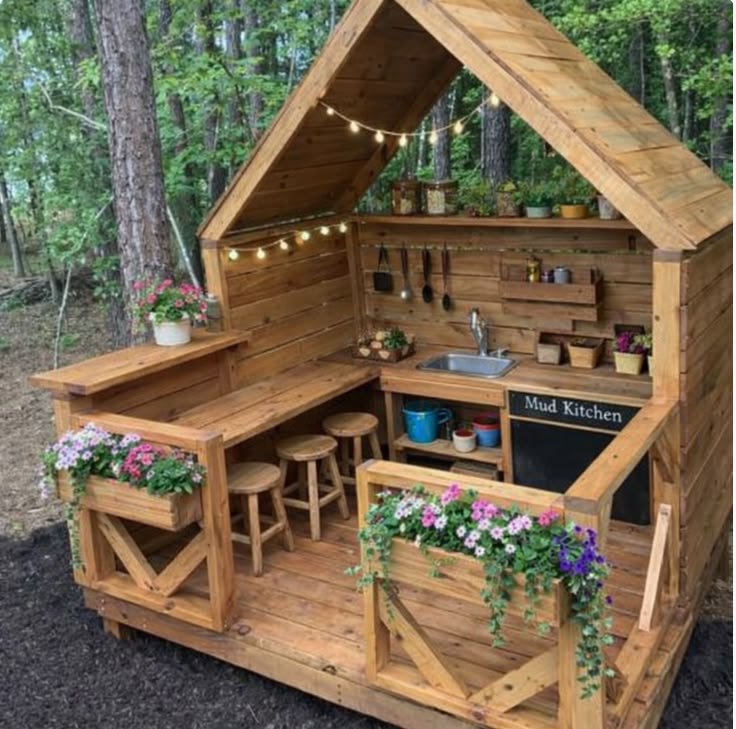
A budget-friendly option using wooden pallets.
- Easy DIY setup
- Natural, outdoor aesthetic
- Perfect for beginners
2. Old Furniture Transformation:
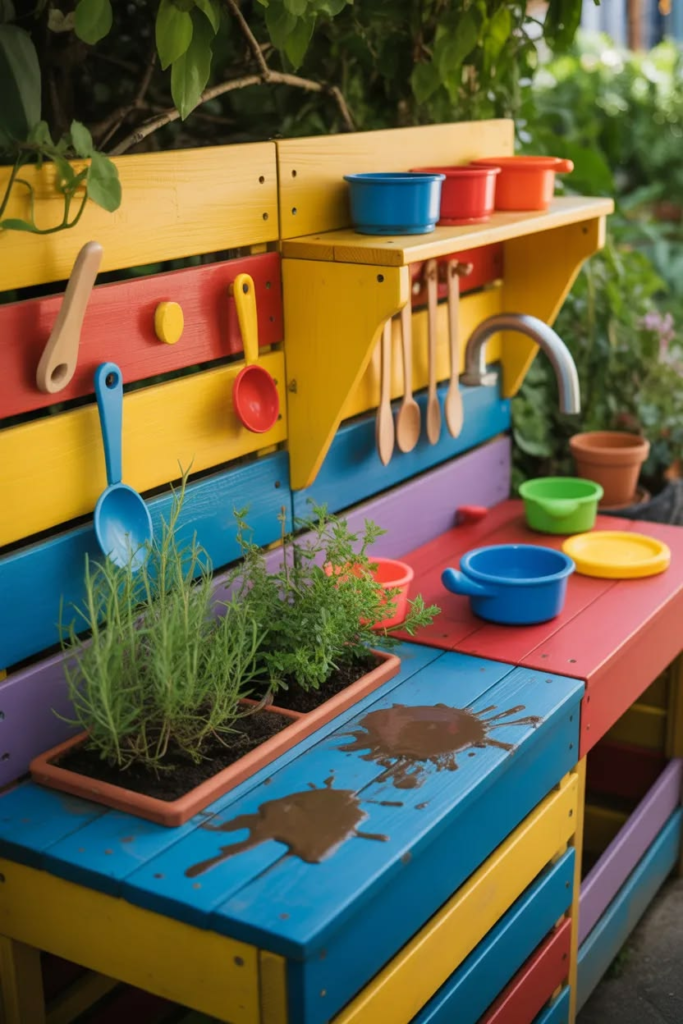
Repurpose an old cabinet, dresser, or table.
- Cost-effective solution
- Built-in storage for tools
- Durable and stable
3. Mini Outdoor Café Setup:
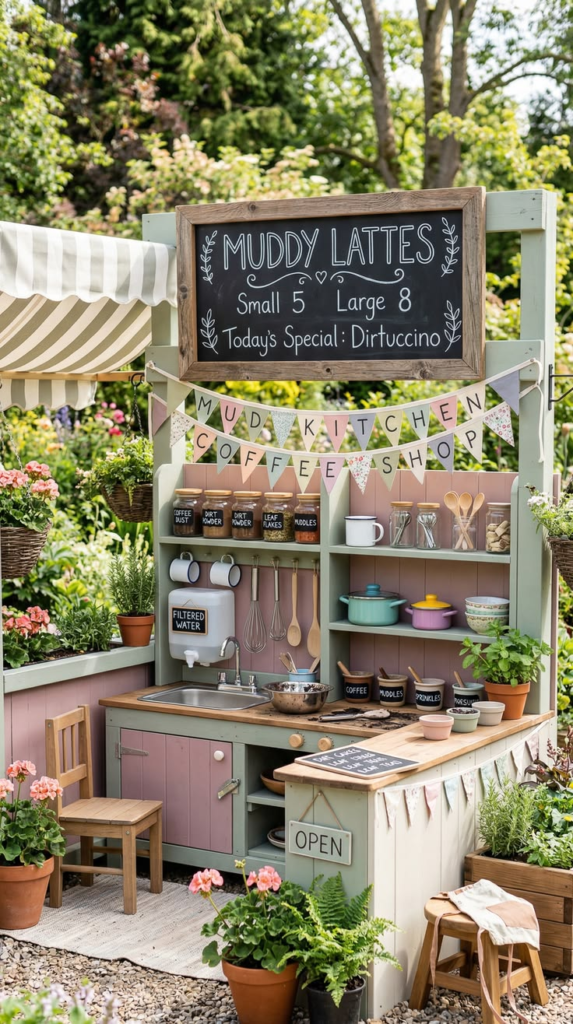
Turn your mud kitchen into a pretend café.
- Encourages role-playing
- Enhances social interaction
- Great for group play
4. Sink & Water Station Kitchen:
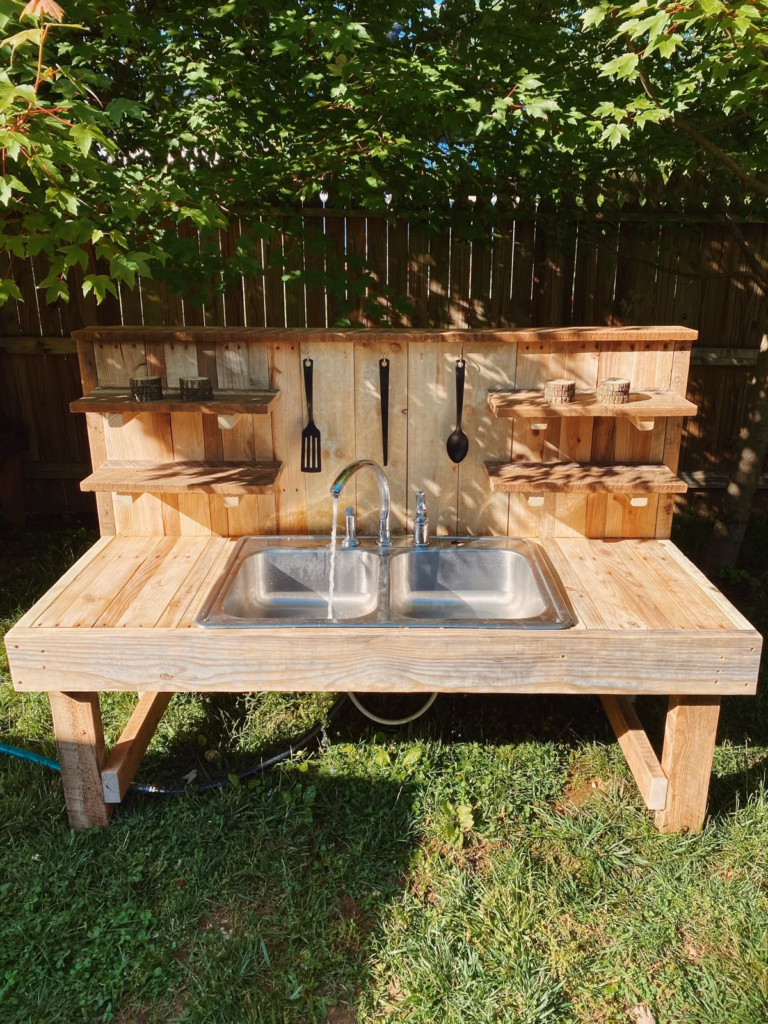
Add a real or DIY water feature.
- Enhances sensory play
- Makes the experience more realistic
- Keeps kids engaged longer
5. Nature-Inspired Mud Kitchen:
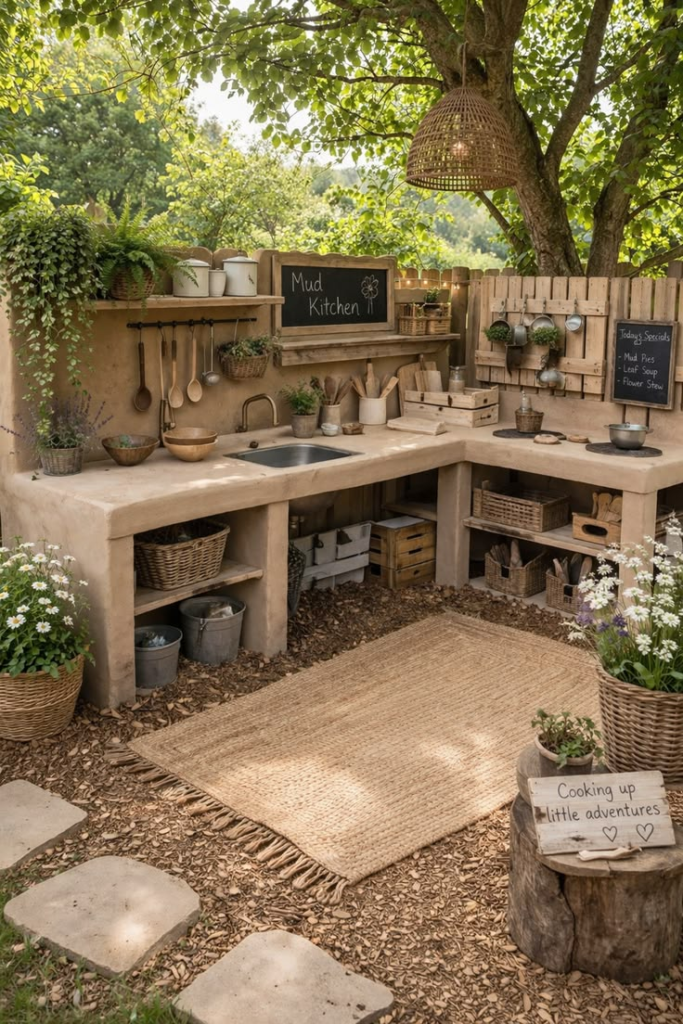
Blend the kitchen into your garden environment.
- Use logs, stones, and plants
- Creates an immersive outdoor experience
- Encourages connection with nature
6. Colorful Painted Kitchen:
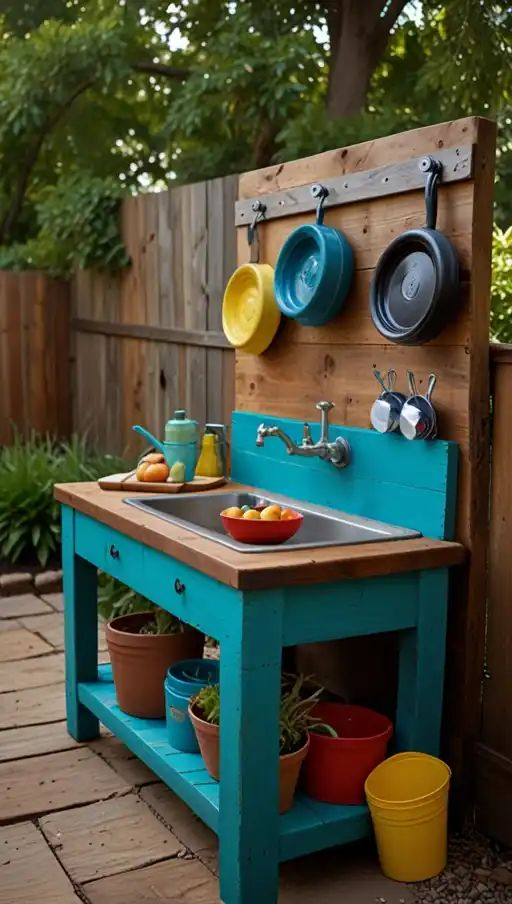
Add bright colors for visual appeal.
- Attracts children’s attention
- Makes the space feel playful
- Easy to customize
7. Compact Balcony Mud Kitchen:
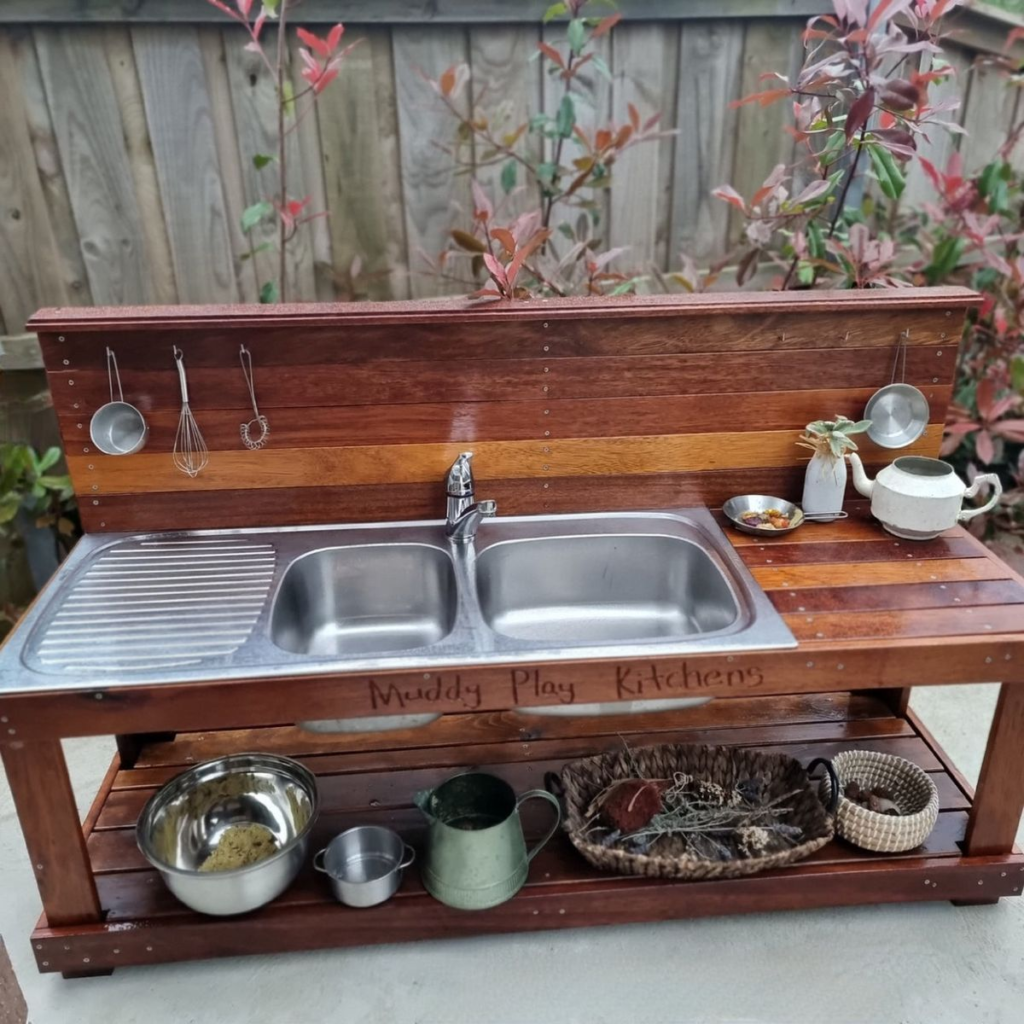
Perfect for small outdoor areas.
- Space-saving design
- Ideal for apartments or urban homes
- Simple and functional
8. Double Station Kitchen:
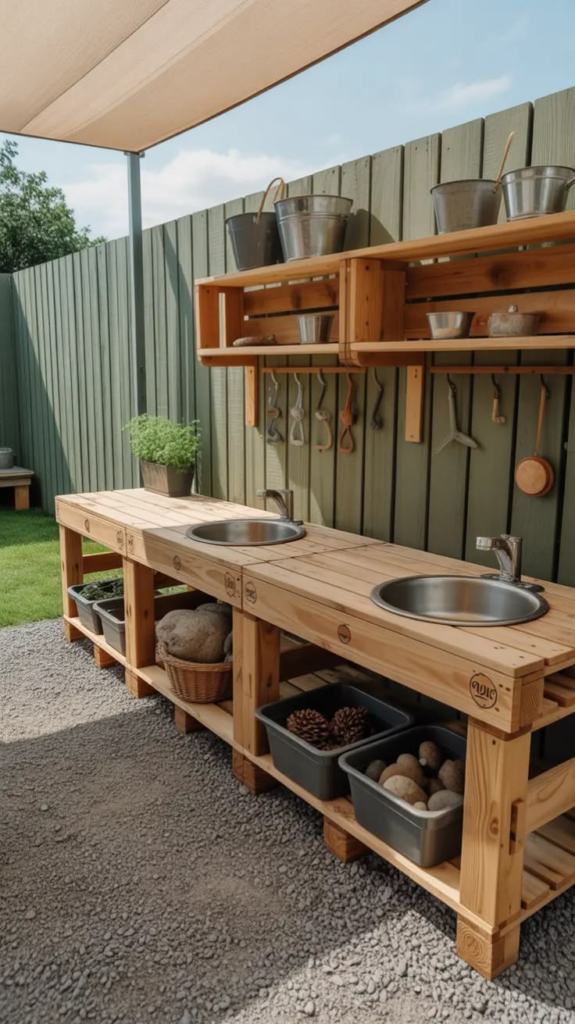
Designed for multiple children.
- Encourages teamwork
- Reduces conflicts during play
- Ideal for families or daycare setups
9. Themed Bakery Mud Kitchen:
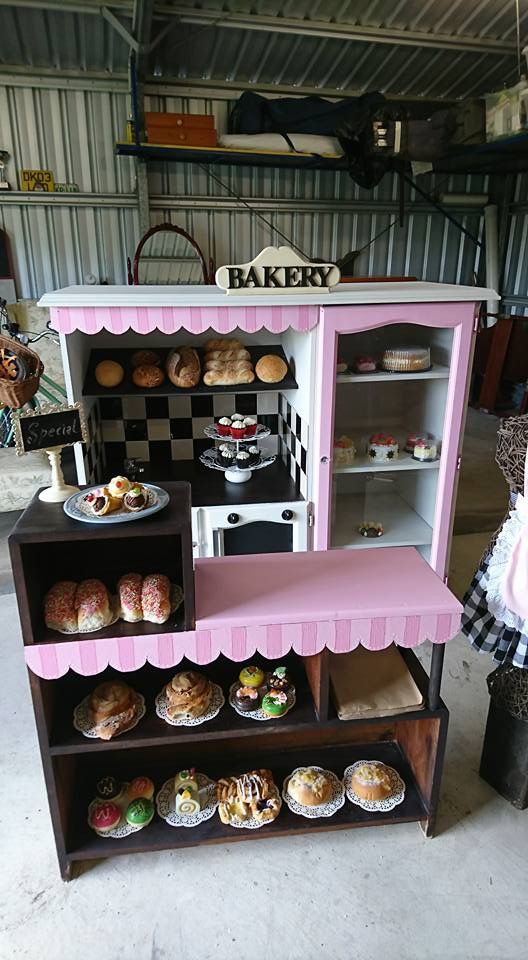
Focus on pretend baking and cooking.
- Boosts imagination
- Great for storytelling activities
- Adds a creative twist
10. Mobile Mud Kitchen:
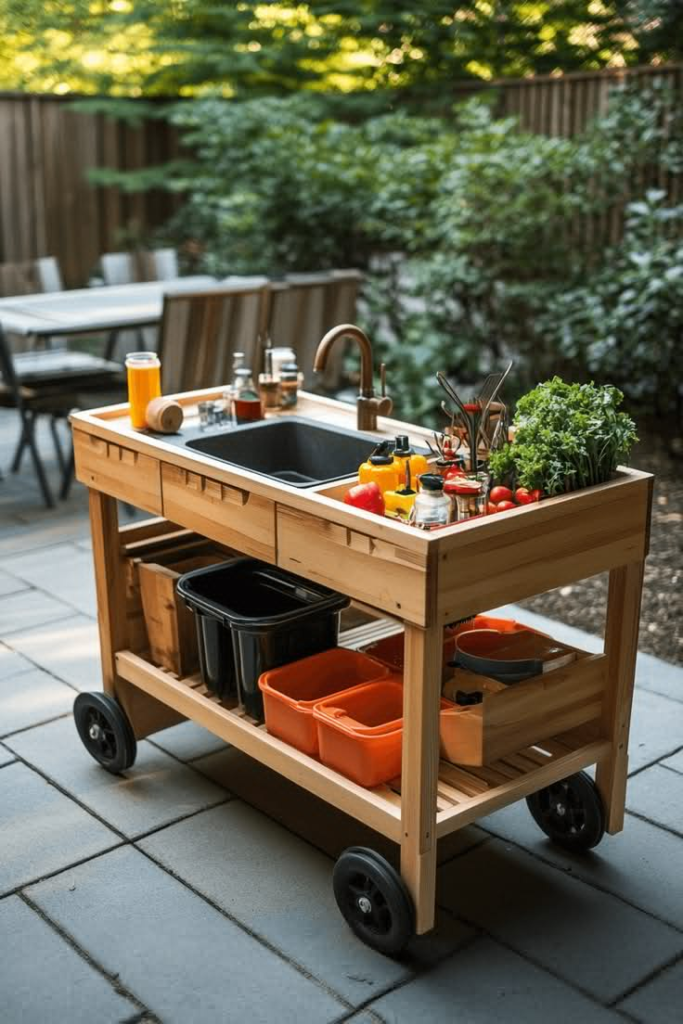
Add wheels for flexibility.
- Easy to move and store
- Adaptable to different spaces
- Great for seasonal setups
11. Recycled Materials Kitchen:
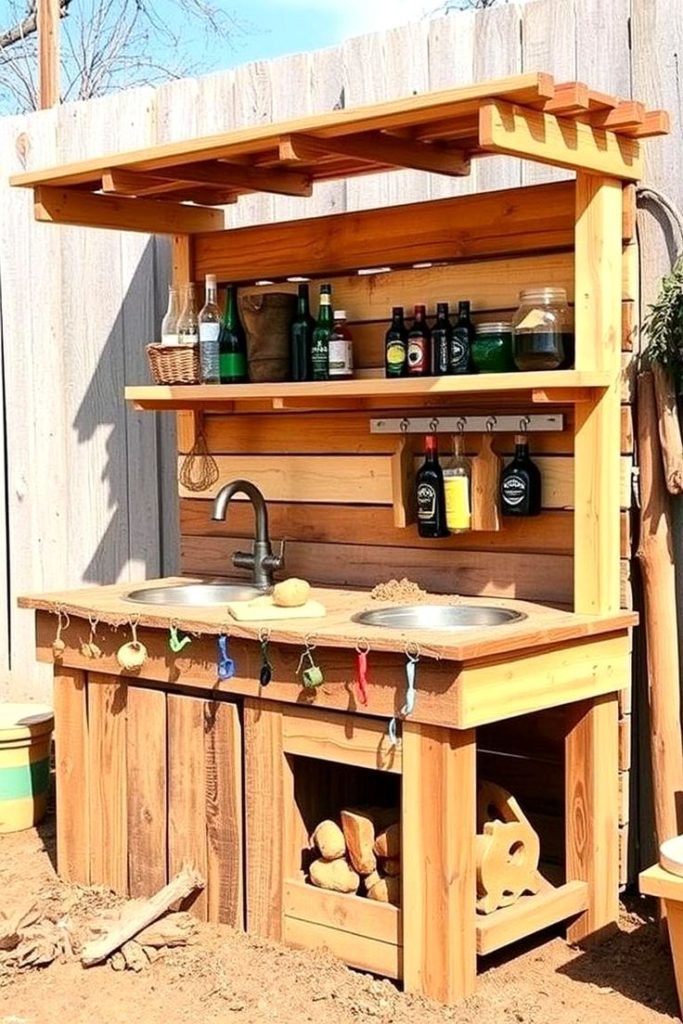
Use buckets, jars, crates, and containers.
- Eco-friendly approach
- Teaches sustainability
- Encourages creativity through reuse
12. Deluxe Garden Kitchen Setup:
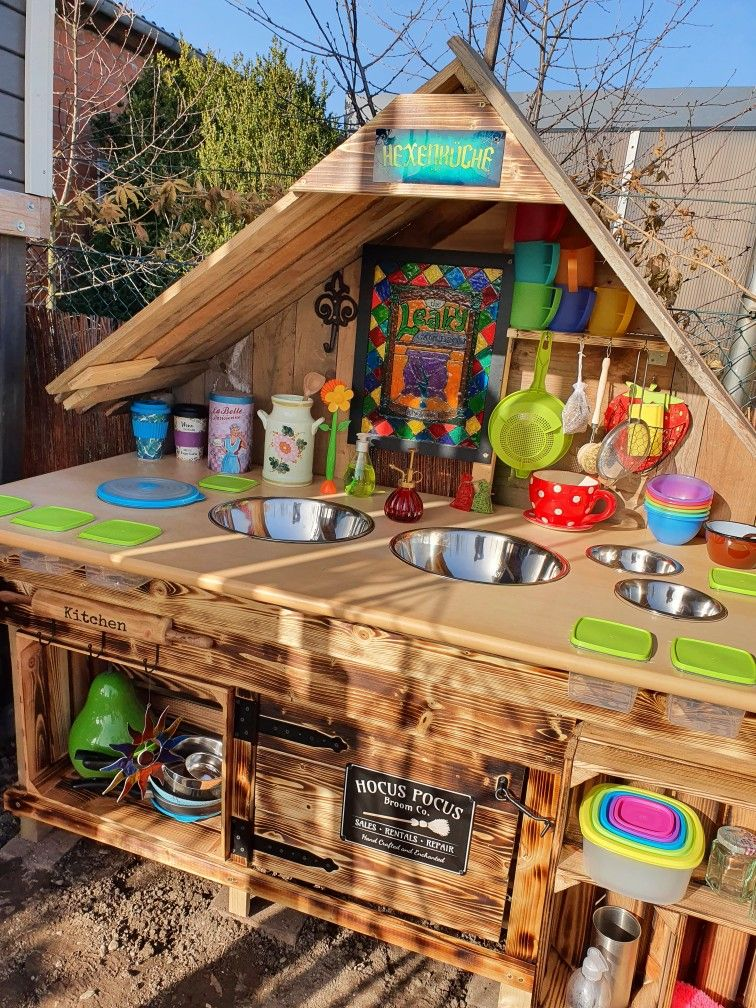
A more advanced, fully-featured design.
- Includes shelves, hooks, and storage
- Looks like a real mini kitchen
- Long-lasting and visually appealing
The Developmental Benefits of Mud Kitchens:
Mud kitchens aren’t just fun—they’re deeply educational.
1. Sensory Development:
Children engage with textures like mud, water, sand, and leaves, stimulating their senses and improving awareness.
2. Fine Motor Skills:
Actions like pouring, mixing, scooping, and stirring help develop hand-eye coordination and control.
3. Creativity & Imagination:
Kids create their own “recipes,” stories, and play scenarios—building imagination naturally.
4. Social Skills:
Playing together encourages sharing, communication, and teamwork.
5. Problem-Solving Abilities:
Children experiment with materials, learning cause-and-effect through play.
According to sources, open-ended play environments like mud kitchens are linked to improved cognitive flexibility and emotional resilience.
Safety Tips Every Parent Should Know:
While mud kitchens are safe by design, proper setup is essential.
Essential Safety Guidelines:
- Use non-toxic, child-safe materials
- Smooth out rough edges
- Ensure the structure is stable
- Avoid sharp or heavy objects
- Supervise younger children
- Keep tools age-appropriate
Extra Tip:
Place the mud kitchen in a shaded area to prevent overheating during summer.
How to Set Up a Mud Kitchen (Simple Approach):
Creating a mud kitchen doesn’t require professional skills or expensive materials.
Basic Setup Steps:
- Choose a safe outdoor location
- Use a sturdy table or build a simple frame
- Add containers for water and mud
- Include utensils like spoons, bowls, and cups
- Organize tools using shelves or hooks
Optional Add-Ons:
- Chalkboard for writing menus
- Hanging hooks for tools
- Small garden area for “ingredients”
- Storage bins for easy cleanup
Mud Kitchens vs Traditional Toys: A Quick Comparison:
| Feature | Mud Kitchen | Traditional Toys |
| Creativity | High (open-ended) | Limited |
| Screen-Free Play | Yes | Sometimes |
| Physical Activity | High | Low to moderate |
| Cost | Low (DIY options) | Often expensive |
| Learning Value | Experiential | Structured |
This comparison highlights why many parents are shifting toward outdoor, hands-on play setups.
Common Mistakes to Avoid When Building a Mud Kitchen:
Even simple setups can go wrong without planning.
Avoid These Mistakes:
- Overcomplicating the design
- Using unsafe or untreated materials
- Ignoring drainage (water buildup issues)
- Placing it in direct sunlight
- Not providing storage for tools
Keeping things simple often leads to the best results.
Why This Trend Is Expected to Grow Further:
Mud kitchens are not just a passing trend—they reflect a larger shift in how children play and learn.
According to sources, future developments will likely include:
- More eco-friendly and sustainable designs
- Integration with garden-based learning environments
- Increased adoption in schools and daycare centers
- Focus on low-cost, DIY-friendly solutions
The emphasis will remain on natural, hands-on experiences rather than digital entertainment.
Final Thoughts:
Mud kitchens are more than just a fun backyard addition—they’re a powerful tool for creativity, learning, and development. In a world increasingly dominated by screens, they offer something refreshingly simple yet incredibly valuable.
Whether you choose a basic DIY setup or a fully designed outdoor play station, the goal remains the same: giving children the freedom to explore, imagine, and create in their own unique way.
And perhaps that’s why this trend isn’t slowing down—it’s not just about play. It’s about raising curious, creative, and confident kids through the power of simple outdoor experiences.